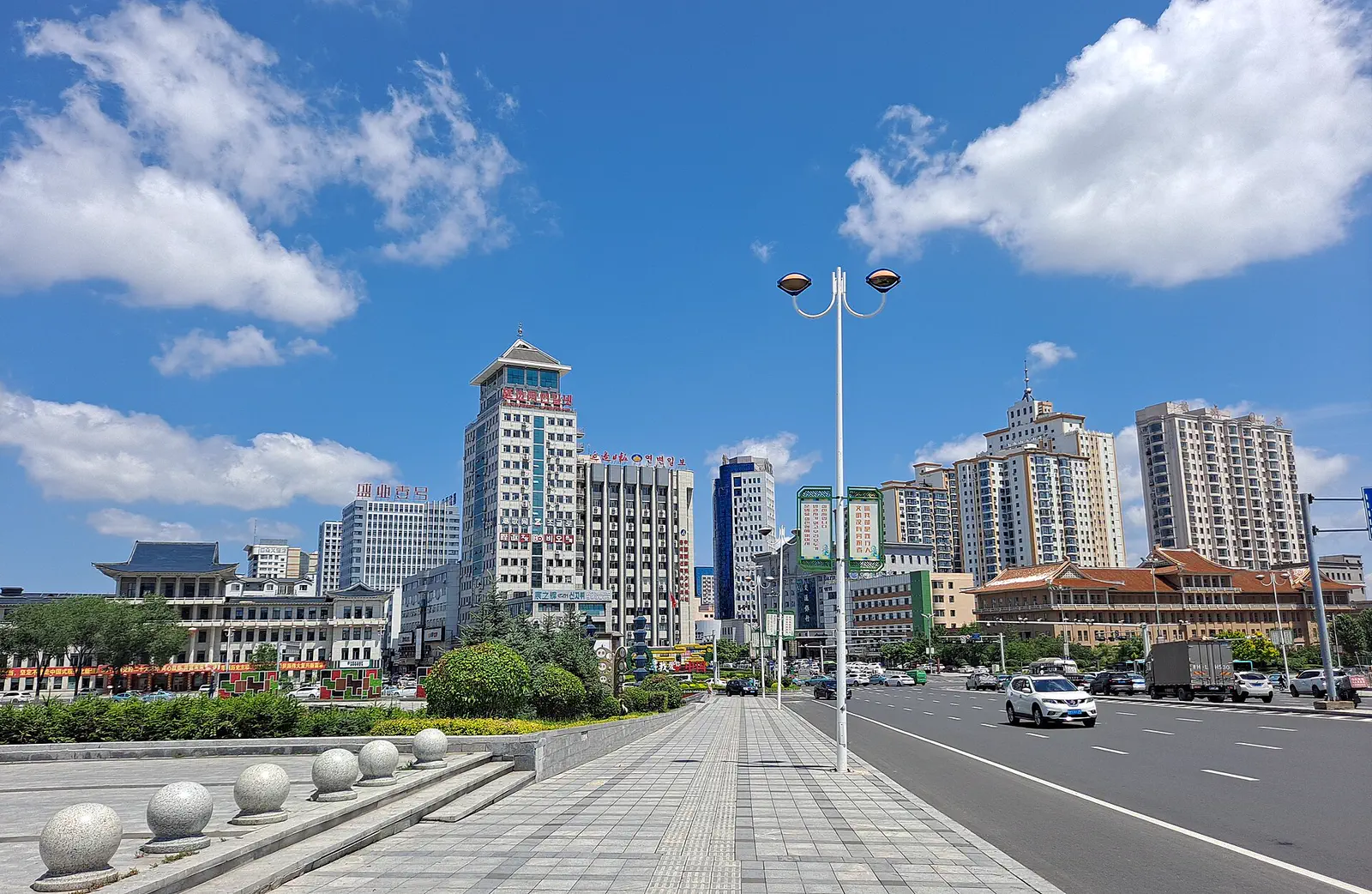
CITY · JILIN
Yanji
延吉 · Yánjí
Overview
Capital of Yanbian Korean Autonomous Prefecture in Jilin, close to the North Korean border. The Korean-Chinese culture of Yanbian gives the city a distinct culinary and social character; Changbai Mountain (Baekdu/Tianchi) is 200 km south.
Yanji is the capital of Yanbian Korean Autonomous Prefecture, an area of Jilin Province that borders North Korea and Russia and has a substantial Korean-Chinese (Joseonjok) population — the result of waves of Korean migration dating from the late Qing dynasty through the Japanese colonial period. The cultural texture of Yanji is genuinely distinct from other northeast Chinese cities: Korean-language signage appears alongside Chinese throughout the city, Korean food is the local default, and the music, fashion and popular culture of South Korea (via satellite and internet) have a visible influence on the younger population.
For visitors primarily interested in landscape, Yanji is the base for Changbai Mountain (Baekdu Mountain in Korean), which lies about 200 km south on the North Korean border. Changbai's centrepiece is Heaven Lake (Tianchi) — a large volcanic caldera lake at 2,189 m filled with clear water, one of the deepest crater lakes in the world. The lake sits directly on the China-North Korea border and is visible from both sides. From the Chinese side it is accessible by vehicle to a parking area then a walk to the crater rim — the full view depends entirely on weather, and cloud frequently obscures the lake even in summer.
The Yanbian Prefecture area also includes Hunchun at the Russia-North Korea-China trijunction (unique among China's geographic novelties), and the border town of Tumen which faces North Korea across the Tumen River from a viewing platform. The proximity to North Korea gives the border towns an unusual character.
Yanji itself has a lively food culture centred on Korean barbecue, naengmyeon (cold noodles) and the full range of Yanbian Korean-Chinese cooking, which differs from Korean food in South Korea in ways reflecting the specific northeastern regional tradition.
Cultural & access notes
The Joseonjok (Korean-Chinese) community maintains distinct cultural practices and the Korean language is actively used. South Korean pop culture has significant influence — do not conflate this with North Korean cultural identity. The community has complex feelings about both Koreas.
What to see
- Changbai Mountain and Heaven Lake (Tianchi) — volcanic crater lake on the North Korean border, 200 km south
- Yanbian Museum — Korean-Chinese migration history and regional culture
- Yanji city Korean cultural district — bilingual streetscape, Korean food market
- Tumen border viewing platform — views across the Tumen River into North Korea
- Hunchun — China's trijunction with Russia and North Korea
- Jurassic Park Forest Scenic Area near Hunchun — wetland and mountain scenery
- Yanji riverside park
What to eat
- Korean-Chinese naengmyeon (cold buckwheat noodles in chilled broth) — the signature Yanbian dish
- Yanbian-style Korean barbecue — beef and pork ribs, table grill
- Topokki (rice cake in spicy sauce) at Korean street food stalls
- Kimchi and fermented vegetable side dishes — made in the Yanbian tradition, generally less spicy than South Korean versions
- Yanji cold noodle restaurants — multiple competing family restaurants with distinct recipes
- Dog meat broth (boshintang) — available at specialist restaurants, a traditional Korean cold-weather dish
Getting there
Yanji Airport (YNJ) has flights from Beijing, Shanghai, Qingdao and other cities. By high-speed rail: Yanji West station is on the Changchun-Tumen HSR line — from Changchun approximately 2.5 hours; from Shenyang approximately 4 hours. For Changbai Mountain: organised tour buses run from Yanji in summer; the journey takes 3–4 hours.
Getting around
Taxis and city buses in Yanji. Hired vehicles or tours for Changbai Mountain. Local buses to Tumen and Hunchun.
Where to stay
Hotels in the city centre. Budget guesthouses in the Korean commercial district. For Changbai Mountain, guesthouses and resort hotels near the north slope entrance at Erdao Baihe operate in summer.
We list neighbourhoods, not specific hotels — we don't endorse hotels.
When to go
May–September for Changbai Mountain access and comfortable temperatures. July–August is the warmest period. The mountain road to Heaven Lake is closed October–May due to snow. Winter in Yanji is very cold (-20°C or below) but the city remains functional.
Budget guide (CNY per day)
| Backpacker | ¥250 |
| Mid-range | ¥520 |
| Comfortable | ¥1200 |
Safety notes
The North Korean border area requires attention — do not approach the border fence or river crossing points at Tumen except at designated viewing areas. Photography toward the North Korean side from the viewing platform is generally permitted but avoid photographing North Korean military personnel.
Other cities in Jilin
- Beidahu北大壶
Compact resort village 56 km from Jilin City, operating one of northeast China's most technically challenging ski areas on 43 runs with 900 m of vertical drop; renowned for the rime-ice (wusong) phenomenon that coats the trees in winter.
- Changbaishan长白山
Gateway town to the Changbai Mountain Nature Reserve on the Chinese-Korean border, centred on Tianchi — the caldera lake at the summit of the dormant volcano — with significant ski infrastructure, hot springs, and the cultural landscape of the Yanbian Korean Autonomous Prefecture.
- Changchun长春
Capital of Jilin and former capital of the Japanese puppet state of Manchukuo (1932–45). Manchurian palace, automobile industry, Lake Songhua winter sports nearby.
Food of Northeastern China
- Di San Xian地三鲜
A simple Dongbei stir-fry of aubergine, potato and green pepper — the vegetarian staple of northeastern China.
- Dongbei Braised Pork Stew东北乱炖
A robust northeastern 'everything pot' of pork ribs, aubergine, potato, beans and corn braised together in a clay pot.
- Guo Bao Rou锅包肉
Crispy battered pork slices in a sweet-and-sour vinegar sauce — a northeastern Chinese dish created in Harbin.
- Pickled Cabbage and Pork Stew酸菜炖猪肉
A long-simmered northeastern stew of fermented cabbage with fatty pork — warming, sour and deeply satisfying.
Yanji weather by month
| Month | Jan | Feb | Mar | Apr | May | Jun | Jul | Aug | Sep | Oct | Nov | Dec |
|---|---|---|---|---|---|---|---|---|---|---|---|---|
| High °C | -5 | 0 | 9 | 15 | 22 | 25 | 28 | 27 | 23 | 15 | 5 | -4 |
| Low °C | -14 | -11 | -3 | 1 | 8 | 14 | 19 | 18 | 12 | 3 | -4 | -12 |
| Rain mm | 7 | 11 | 29 | 31 | 71 | 112 | 110 | 207 | 79 | 30 | 47 | 5 |
| Rain days | 2 | 3 | 5 | 8 | 11 | 14 | 14 | 18 | 10 | 5 | 6 | 1 |
2019–2023 average via Open-Meteo ERA5 (ERA5 reanalysis). "Rain days" = days per month with ≥1 mm precipitation.
Frequently asked questions
- When is the best time to visit Yanji?
- The best months to visit Yanji are May, June, July, August, and September. May–September for Changbai Mountain access and comfortable temperatures. July–August is the warmest period.
- How many days do you need in Yanji?
- Plan 3 days for Yanji if you want to see the headline sights without rushing — Changbai Mountain and Heaven Lake (Tianchi), Yanbian Museum, Yanji city Korean cultural district. Add an extra day for day trips from the city or for repeat visits to your favourite neighbourhood.
- Is Yanji safe for tourists?
- The North Korean border area requires attention — do not approach the border fence or river crossing points at Tumen except at designated viewing areas. Photography toward the North Korean side from the viewing platform is generally permitted but avoid photographing North Korean military personnel.
- How do you get around Yanji?
- Taxis and city buses in Yanji. Hired vehicles or tours for Changbai Mountain. Local buses to Tumen and Hunchun.
- What's the daily budget for Yanji?
- Budget guide for Yanji: backpackers from around ¥250/day, mid-range travellers ¥520/day, comfortable trips from ¥1200/day. These ranges cover accommodation, food, local transport and one paid sight per day, and exclude flights to and from the city.
- Where should you stay in Yanji?
- Hotels in the city centre. Budget guesthouses in the Korean commercial district. For Changbai Mountain, guesthouses and resort hotels near the north slope entrance at Erdao Baihe operate in summer.
Spotted something out of date? Submit a correction.
Research
Cross-checked against primary sources
Verified
Address, hours, fees confirmed at the date shown
Updated
Re-verified periodically; corrections welcome