CITY · JILIN
Changchun
长春 · Chángchūn
Overview
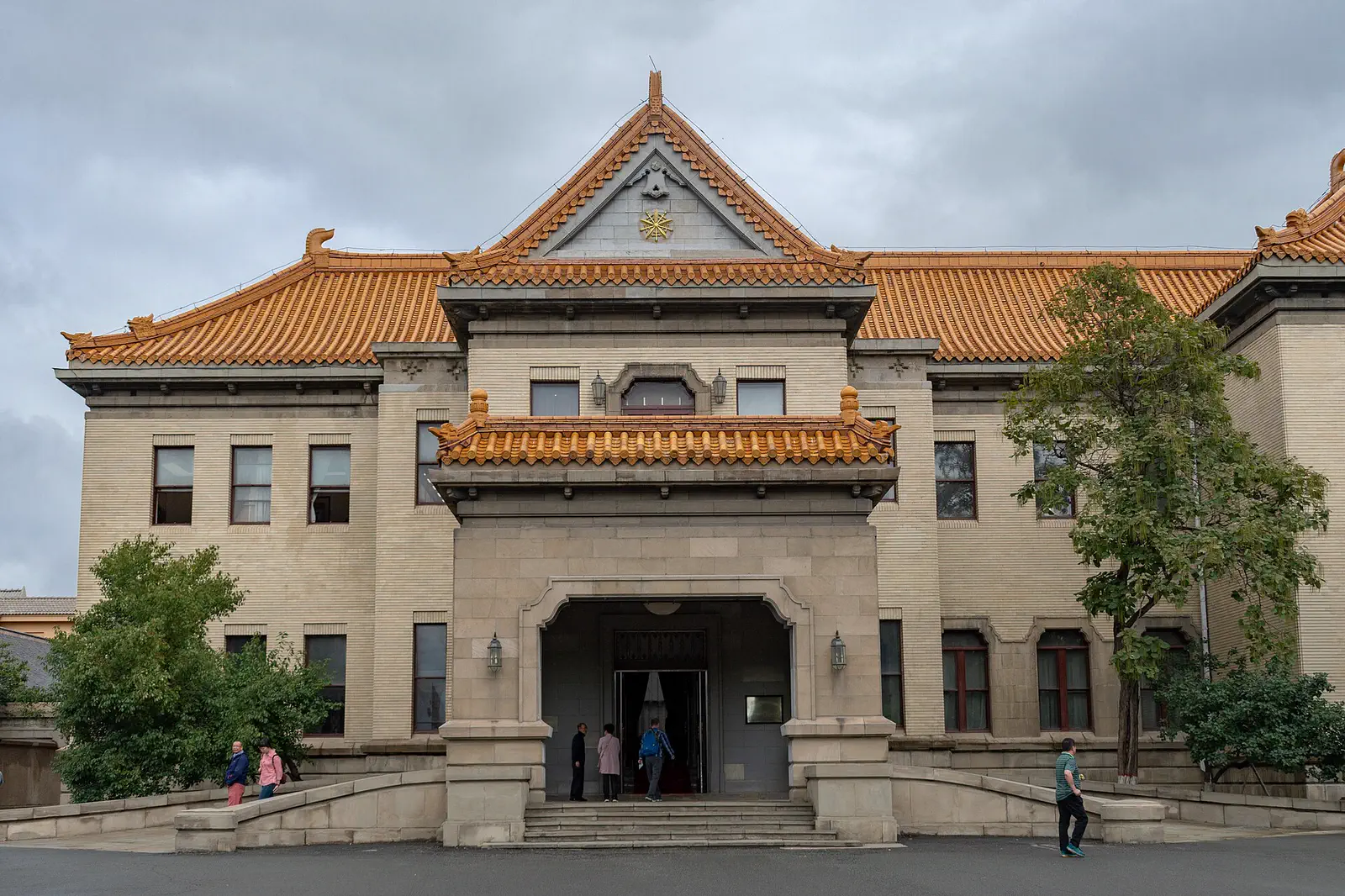
Capital of Jilin and former capital of the Japanese puppet state of Manchukuo (1932–45). Manchurian palace, automobile industry, Lake Songhua winter sports nearby.
Changchun is the provincial capital of Jilin, in China's northeast, and carries one of the more complex historical identities of any Chinese city. Between 1932 and 1945 it was Hsinking — the capital of Manchukuo, the Japanese puppet state that controlled Manchuria under the nominal rule of Puyi, the last Qing emperor. The Japanese planned and built it as a showcase imperial capital, with broad boulevards, Western neoclassical government buildings, and a rail network; many of those structures survive and define the city's central grid in ways that have no counterpart elsewhere in China.
The Manchurian Imperial Palace Museum (Weiman Huanggong) is the central historical site: the complex of official and residential buildings where Puyi lived from 1934 until the Soviet invasion of Manchuria ended the puppet state in August 1945. The buildings are modest by imperial standards — Puyi was a controlled figurehead rather than a sovereign — and the museum's most effective exhibits trace the political machinery of the occupation and the personal circumstances of a man who had already lost his throne once as a child. The palace sits alongside older Qing-dynasty gardens at the same site.
The post-war city was remade as an industrial centre under the People's Republic. First Automobile Works (FAW), established in Changchun in 1953, was the cradle of China's automobile industry; the Jiefang (Liberation) brand truck produced here was the first domestically manufactured motor vehicle. FAW still operates in the city; a museum traces the industry's history.
Changchun retains one of the few surviving urban tram networks in China — a practical legacy rather than a tourist attraction, but a useful way to understand the city's older layout.
The surrounding landscape rewards a day trip. Jingyuetan National Forest Park, 20 kilometres southeast, covers a large reservoir surrounded by Manchurian pine and larch forest. In winter, the ski resort here runs alongside ice and snow activities that are genuinely wintry — Changchun's winters reach -20°C. Lake Songhua, 90 minutes east, is the venue for the Vasaloppet China cross-country ski race (the China edition of the famous Swedish race).
The Changchun World Sculpture Park in the south of the city holds over 400 monumental sculptures from artists across more than 70 countries, accumulated since the 1990s — an unexpected institution in a northeast industrial city.
What to see
- Manchurian Imperial Palace Museum
- Jingyuetan National Forest Park
- Changchun World Sculpture Park
What to eat
- Dongbei stews
- Cold-noodle soup
- Northeastern dumplings
Getting there
Changchun Longjia (CGQ) airport. Changchun West HSR: Beijing 5h, Harbin 1h.
Getting around
Metro and trams (one of the few remaining tram networks in China).
Where to stay
Central People's Square area.
We list neighbourhoods, not specific hotels — we don't endorse hotels.
When to go
June–September.
Budget guide (CNY per day)
| Backpacker | ¥240 |
| Mid-range | ¥520 |
| Comfortable | ¥1200 |
Other cities in Jilin
- Beidahu北大壶
Compact resort village 56 km from Jilin City, operating one of northeast China's most technically challenging ski areas on 43 runs with 900 m of vertical drop; renowned for the rime-ice (wusong) phenomenon that coats the trees in winter.
- Changbaishan长白山
Gateway town to the Changbai Mountain Nature Reserve on the Chinese-Korean border, centred on Tianchi — the caldera lake at the summit of the dormant volcano — with significant ski infrastructure, hot springs, and the cultural landscape of the Yanbian Korean Autonomous Prefecture.
- Yanji延吉
Capital of Yanbian Korean Autonomous Prefecture in Jilin, close to the North Korean border. The Korean-Chinese culture of Yanbian gives the city a distinct culinary and social character; Changbai Mountain (Baekdu/Tianchi) is 200 km south.
Itineraries visiting Changchun
- China ski resorts in 7 days
7d · Wanlong near Beijing, then a flight north to Jilin province for Beidahu or Yabuli in Heilongjiang — the best ski in China.
- Northeast China — Harbin, Changchun, Shenyang and Dalian, 7 days
7d · Seven days through China's northeast — the Manchurian industrial heartland, Russian-influenced Harbin, the ice festival in winter, and Dalian's coastal promenades.
Food of Northeastern China
- Di San Xian地三鲜
A simple Dongbei stir-fry of aubergine, potato and green pepper — the vegetarian staple of northeastern China.
- Dongbei Braised Pork Stew东北乱炖
A robust northeastern 'everything pot' of pork ribs, aubergine, potato, beans and corn braised together in a clay pot.
- Guo Bao Rou锅包肉
Crispy battered pork slices in a sweet-and-sour vinegar sauce — a northeastern Chinese dish created in Harbin.
- Pickled Cabbage and Pork Stew酸菜炖猪肉
A long-simmered northeastern stew of fermented cabbage with fatty pork — warming, sour and deeply satisfying.
Changchun weather by month
| Month | Jan | Feb | Mar | Apr | May | Jun | Jul | Aug | Sep | Oct | Nov | Dec |
|---|---|---|---|---|---|---|---|---|---|---|---|---|
| High °C | -8 | -3 | 7 | 15 | 22 | 25 | 28 | 25 | 22 | 13 | 2 | -8 |
| Low °C | -17 | -13 | -4 | 2 | 10 | 15 | 20 | 18 | 13 | 3 | -6 | -15 |
| Rain mm | 5 | 4 | 13 | 25 | 52 | 137 | 172 | 199 | 98 | 31 | 46 | 9 |
| Rain days | 1 | 1 | 4 | 5 | 8 | 15 | 15 | 17 | 9 | 5 | 6 | 2 |
2019–2023 average via Open-Meteo ERA5 (ERA5 reanalysis). "Rain days" = days per month with ≥1 mm precipitation.
Frequently asked questions
- When is the best time to visit Changchun?
- The best months to visit Changchun are June, July, August, and September. June–September.
- How many days do you need in Changchun?
- Plan 2 days for Changchun if you want to see the headline sights without rushing — Manchurian Imperial Palace Museum, Jingyuetan National Forest Park, Changchun World Sculpture Park. Add an extra day for day trips from the city or for repeat visits to your favourite neighbourhood.
- How do you get around Changchun?
- Metro and trams (one of the few remaining tram networks in China).
- What's the daily budget for Changchun?
- Budget guide for Changchun: backpackers from around ¥240/day, mid-range travellers ¥520/day, comfortable trips from ¥1200/day. These ranges cover accommodation, food, local transport and one paid sight per day, and exclude flights to and from the city.
- Where should you stay in Changchun?
- Central People's Square area.
Spotted something out of date? Submit a correction.
Research
Cross-checked against primary sources
Verified
Address, hours, fees confirmed at the date shown
Updated
Re-verified periodically; corrections welcome