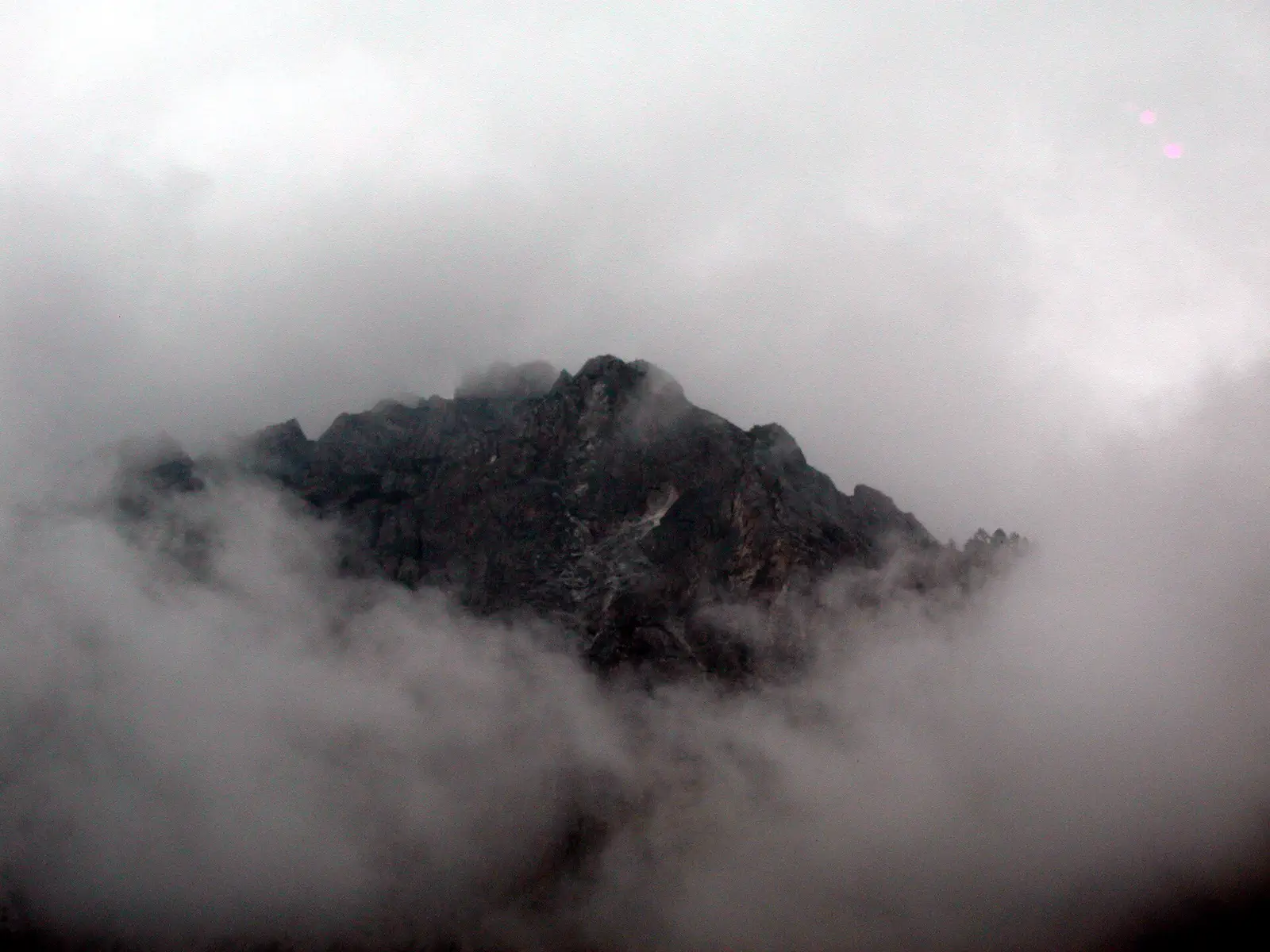
Natural site · SICHUAN · UNESCO
Jiuzhaigou Valley
九寨沟 · Jiǔzhàigōu
About
UNESCO-listed Y-shaped alpine valley with 100+ travertine pools and lakes ranging emerald to turquoise to sapphire. Reopened progressively after 2017 quake.
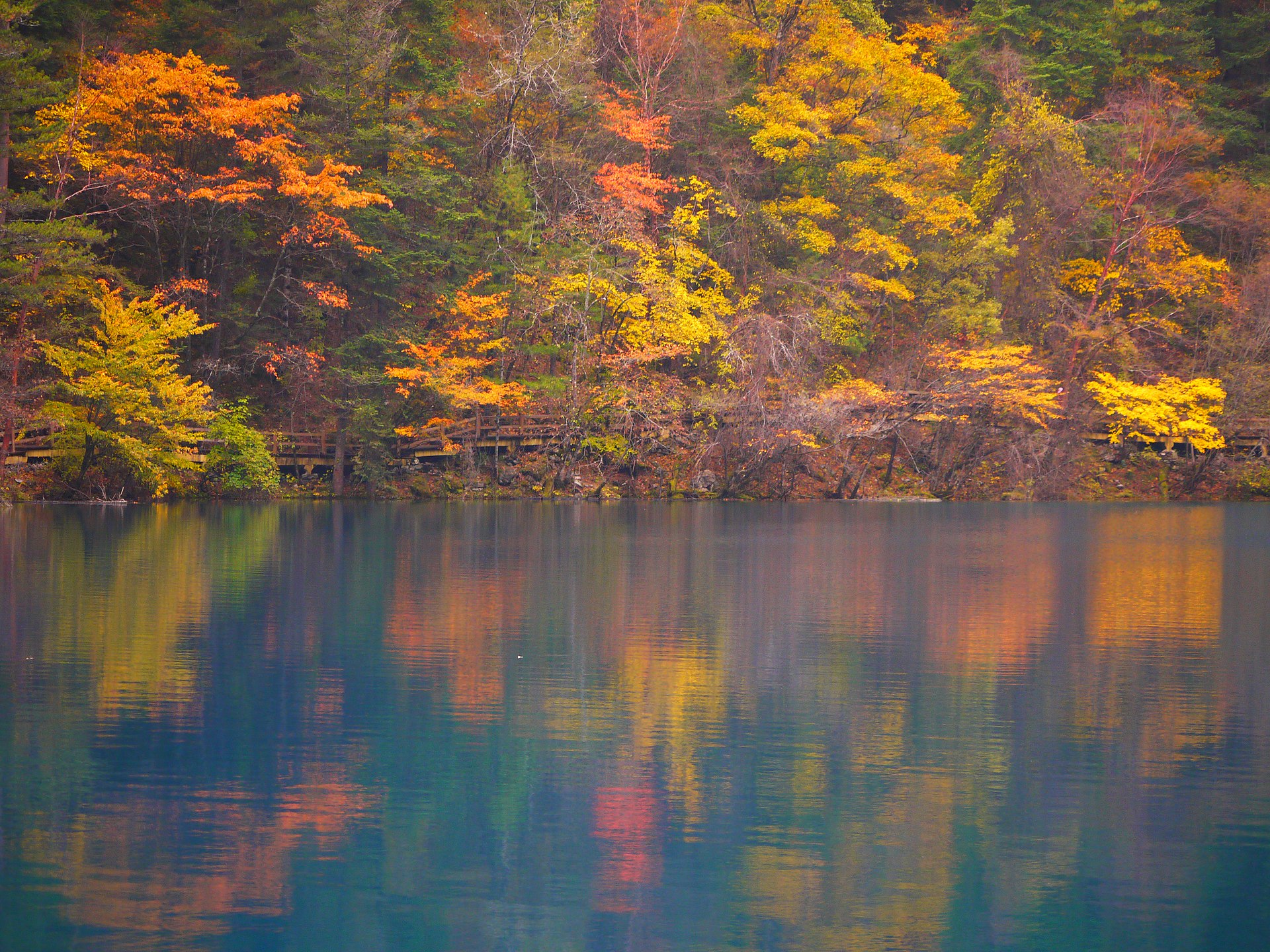
Jiuzhaigou ('Nine Village Valley') is named for the nine Tibetan villages historically along the Y-shaped valley system. The 240 km² UNESCO site contains around 100 travertine-bottomed pools and lakes, 17 named waterfalls, old-growth conifer forest, and Tibetan religious sites. The colour palette of the lakes — Five Flower Lake, Long Lake, Mirror Lake — is the result of mineral concentration in the travertine and is genuinely the same range you see in postcards. The 2017 Jiuzhaigou earthquake (M7.0) damaged sections; reopening continued through 2023, with most areas accessible.
Visitors take a mandatory in-park shuttle bus along the valleys; trails connect the lakes for short walks. A full day covers the major lakes; two days allow for the side valleys.
How to get there
Bus from Chengdu (9 hours) or fly to Jiuzhai Huanglong (JZH) airport (3,400m, weather-prone).
When to visit
Mid-October to early November for autumn colour. Late April–May for spring.
Official channels
Verified official contacts and booking flow — no affiliate links.
- Website
- www.jiuzhai.com/en
- Booking flow
- Online booking required. Passport ID required at booking / gate. Book at least 1 day ahead.
- Notes
- Daily visitor cap (real-name booking). Book on the official site or WeChat mini-programme the day before. Sightseeing bus ticket included.
History and context
The nine villages the valley is named for are ethnically Tibetan, with cultural ties to the Bön tradition that predates Buddhism in the region; Yi communities live in the surrounding Aba prefecture. The valley was designated a UNESCO World Heritage site in 1992 and added to the Man and the Biosphere network in 1997. The August 2017 earthquake (M7.0) damaged Sparkling Lake and several boardwalks; the park reopened partially in 2019 and returned to broader access through 2020–2023.
What the visit is like
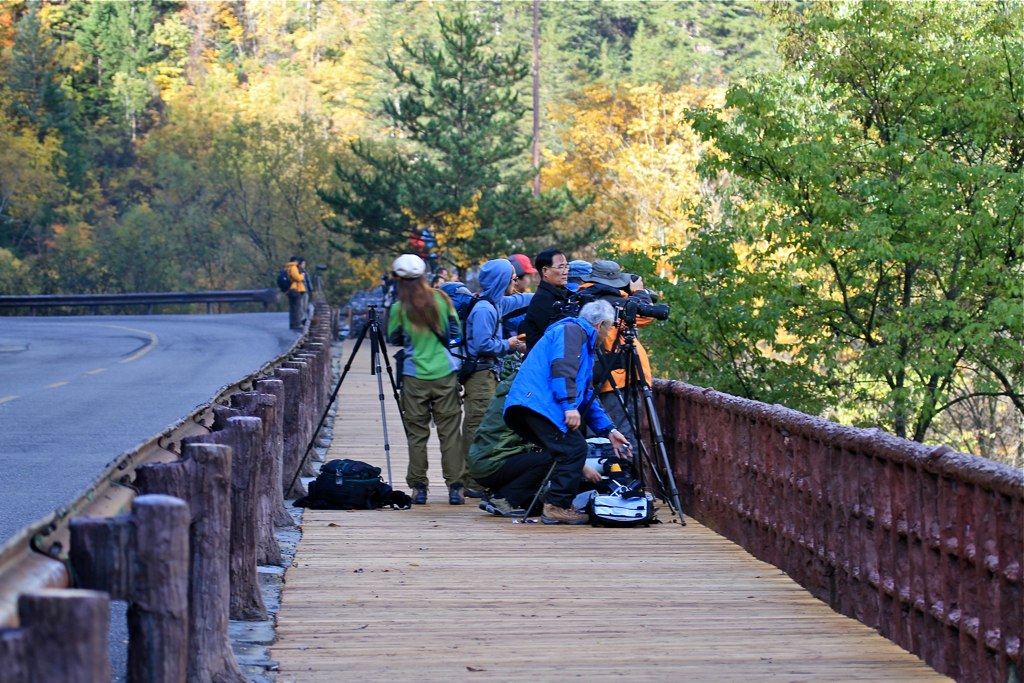
A mandatory shuttle-bus loop links the three arms of the Y-shaped valley; you hop on and off at lake stops. Altitude runs from around 2000m at the entrance to 3400m at Long Lake, so pace matters. Actual walking is modest — a full circuit on foot along the boardwalks between stops adds up to roughly 15–20km if you walk the lower valley, less if you bus between clusters. Queues for buses at 8am and for the return in late afternoon are typical. Boardwalks are wooden and can be slick after rain.
Photography
The autumn colour window is narrow — typically mid-October to early November — when larch and birch turn against the lake colours. Early morning brings mist over Mirror Lake and Shuzheng before the surface stills. A polariser helps cut glare but at altitude the sky darkens quickly so ease off compared to sea-level settings. Drones are prohibited inside the park without prior permit from park administration; casual flying will get the aircraft confiscated.
Overlooked details
The travertine dams that hold the lakes show sedimentation banding where calcium carbonate has laid down in seasonal layers — visible along the rims of Nuorilang and the Pearl Shoal cascades. The lake colours come from a combination of dissolved calcium carbonate, submerged travertine, and mats of cyanobacteria and diatoms that shift the light-scattering profile. Long Lake, at 3100m, is the largest and holds a single deep colour; Five-Flower Lake is shallow and mineral-streaked, which is why its palette breaks into patches rather than one tone.
UNESCO inscription
“Stretching over 72,000 ha in the northern part of Sichuan Province, the jagged Jiuzhaigou valley reaches a height of more than 4,800 m, thus comprising a series of diverse forest ecosystems. Its superb landscapes are particularly interesting for their series of narrow conic karst land forms and spectacular waterfalls. Some 140 bird species also inhabit the valley, as well as a number of endangered plant and animal species, including the giant panda and the Sichuan takin.”
Where to eat nearby
The town of Zhangzha at the entrance has Sichuan noodle shops, hotpot places and Tibetan restaurants serving yak-meat stews, tsampa (roasted barley flour) and butter tea; prices are moderate. Inside the park, food is limited to a handful of canteens at Nuorilang service centre — instant noodles, rice boxes and drinks — and costs roughly two to three times street prices in Zhangzha. Most visitors carry snacks and water in.
Common misconceptions
The park is not reliably year-round; heavy snow can close the upper valleys in December and January and the shuttle loop may run a reduced route in winter. Altitude sickness is a real risk, particularly for visitors flying directly into JZH airport at 3400m — headaches and nausea are common on day one. Entry pricing has changed since the 2017 earthquake — earlier peak-season rates of ¥220 no longer apply and the current ¥169 plus ¥90 shuttle is the standard structure; verify at the ticket office before travel.
Gallery
Itineraries featuring this site
- Chengdu and Chongqing in 5 days
5d · Two and a half days each: pandas and Leshan from Chengdu, Dazu rock carvings and hotpot from Chongqing.
- Birding China: Sichuan endemics and Yellow Sea coast in 14 days
14d · Sichuan's endemic loop through Wolong, Balang Pass, and Xinduqiao, then the Yellow Sea coast for spoonbills and cranes.
- Hiking China's national parks — Zhangjiajie, Huangshan and Jiuzhaigou, 14 days
14d · Fourteen days across three of China's most dramatic mountain and forest parks — the sandstone columns of Zhangjiajie, the granite peaks and sea of cloud at Huangshan, and the turquoise lakes of Jiuzhaigou.
Other natural sites in China
- Badain Jaran Desert — Lakes and Dunes巴丹吉林沙漠—沙山湖泊群
UNESCO · UNESCO Natural World Heritage site in Inner Mongolia — the third largest desert in China, featuring some of the world's tallest stationary dunes and a unique network of freshwater and saline lakes sustained by a still-unexplained subterranean water system.
- China Danxia中国丹霞
UNESCO · UNESCO Natural World Heritage site — a serial property of six Danxia landscapes across six provinces, representing China's defining red-cliff-and-pillar sandstone landform type, including Danxia Mountain, Zhangye, Taining and Langshan.
- Crescent Lake & Mingsha Mountain月牙泉与鸣沙山
Spring-fed crescent-shaped lake at the foot of 250m sand dunes, 5 km south of Dunhuang. Camel rides, sand-sledding, sunset viewing.
- Daocheng Yading Nature Reserve稻城亚丁
A remote highland sanctuary in south-western Sichuan centred on three sacred snow peaks venerated by Tibetan Buddhism, often called the 'last Shangri-La'.
- Dianchi Lake Kunming滇池
The largest freshwater lake in Yunnan at 300 km², historically the scenic centrepiece of the Kunming basin and now being restored after decades of water-quality degradation.
- Erhai Lake洱海
250 km² freshwater lake east of Dali Old Town. 130 km cycling loop; Bai-minority lakeside villages on the eastern shore.
- Fanjingshan梵净山
UNESCO · UNESCO Natural World Heritage site in Guizhou — an isolated mountain island rising from subtropical forest, home to two critically endangered endemic species: the Guizhou snub-nosed monkey and the Fanjingshan fir.
- Hailuogou Glacier National Park海螺沟冰川
The lowest-altitude glacier accessible in Asia, flowing from the slopes of Mount Gongga down through a bamboo and subtropical forest valley to just 2,980 m above sea level.
Other UNESCO World Heritage sites in China
- Ancient Villages of Southern Anhui — Xidi and Hongcun皖南古村落—西递、宏村
UNESCO-listed pair of Ming-Qing Huizhou merchant villages in southern Anhui, renowned for whitewashed walls, inky horsehead gables and moon-shaped ponds.
- Archaeological Ruins of Liangzhu City良渚古城遗址
UNESCO-listed archaeological site in Hangzhou preserving the remains of a 5,000-year-old city with a sophisticated water-management system, jade ritual culture and social hierarchy — regarded as one of the earliest state-level societies in East Asia.
- Badain Jaran Desert — Lakes and Dunes巴丹吉林沙漠—沙山湖泊群
UNESCO Natural World Heritage site in Inner Mongolia — the third largest desert in China, featuring some of the world's tallest stationary dunes and a unique network of freshwater and saline lakes sustained by a still-unexplained subterranean water system.
- Capital Cities and Tombs of the Ancient Koguryo Kingdom高句丽王城、王陵及贵族墓葬
UNESCO-listed capital cities and royal tombs of the Koguryo Kingdom in Jian, Jilin — the Chinese portion of a transnational heritage property shared with North Korea, representing one of the most powerful states of ancient East Asia.
- China Danxia中国丹霞
UNESCO Natural World Heritage site — a serial property of six Danxia landscapes across six provinces, representing China's defining red-cliff-and-pillar sandstone landform type, including Danxia Mountain, Zhangye, Taining and Langshan.
- Classical Gardens of Suzhou (UNESCO)苏州古典园林
UNESCO-listed collection of private gardens in Suzhou — four inscribed in 1997 and five more added in 2000 — representing the pinnacle of Chinese garden design through the refined integration of architecture, water, rock and plant.
- Couple's Retreat Garden耦园
UNESCO-listed Suzhou garden organised symmetrically around a central residence. Less crowded than the four most-visited gardens.
- Drepung Monastery哲蚌寺
Once the largest monastery in the world (10,000+ monks). 8 km west of Lhasa. Active Gelugpa monastery; debating courtyard sessions in the afternoon.
Frequently asked questions
- How much does Jiuzhaigou Valley cost to visit?
- Adult entry to Jiuzhaigou Valley is ¥169, ¥85 for children. Plus mandatory shuttle bus ¥90.
- When is Jiuzhaigou Valley open?
- Jiuzhaigou Valley opening hours: 7am–6pm Apr–Nov; 8:30am–5pm Dec–Mar.
- How long do you need at Jiuzhaigou Valley?
- Allow 8–16 hours for Jiuzhaigou Valley. Add buffer time if you plan to visit at peak season or include nearby sights in the same trip.
- When is the best time to visit Jiuzhaigou Valley?
- Mid-October to early November for autumn colour. Late April–May for spring.
- How do you get to Jiuzhaigou Valley?
- Bus from Chengdu (9 hours) or fly to Jiuzhai Huanglong (JZH) airport (3,400m, weather-prone).
Spotted something out of date? Submit a correction.
Research
Cross-checked against primary sources
Verified
Address, hours, fees confirmed at the date shown
Updated
Re-verified periodically; corrections welcome