3 days
Day 1: Changsha — Yuelu Academy, Hunan Provincial Museum (Mawangdui silks), Hunan Cuisine night market. Day 2: HSR to Zhangjiajie, Tianmen Mountain. Day 3: Zhangjiajie National Forest Park core.
Province · Central China
湖南省 · Húnán Shěng — capital Changsha, hunan / xiang (chilli-driven, smoked, fermented; differs from sichuan in using fresh and dry chillies rather than oil and sichuan pepper).
History & character
Hunan is the home province of Mao Zedong. He was born at Shaoshan village in 1893 and the site is now one of the most visited "red tourism" pilgrimages in China. The province has produced an outsized share of revolutionary, military, and political leadership across both Republican and PRC eras — a fact connected to the strong tradition of clan-based scholarly study and the presence of the Yuelu Academy in Changsha, founded in 976.
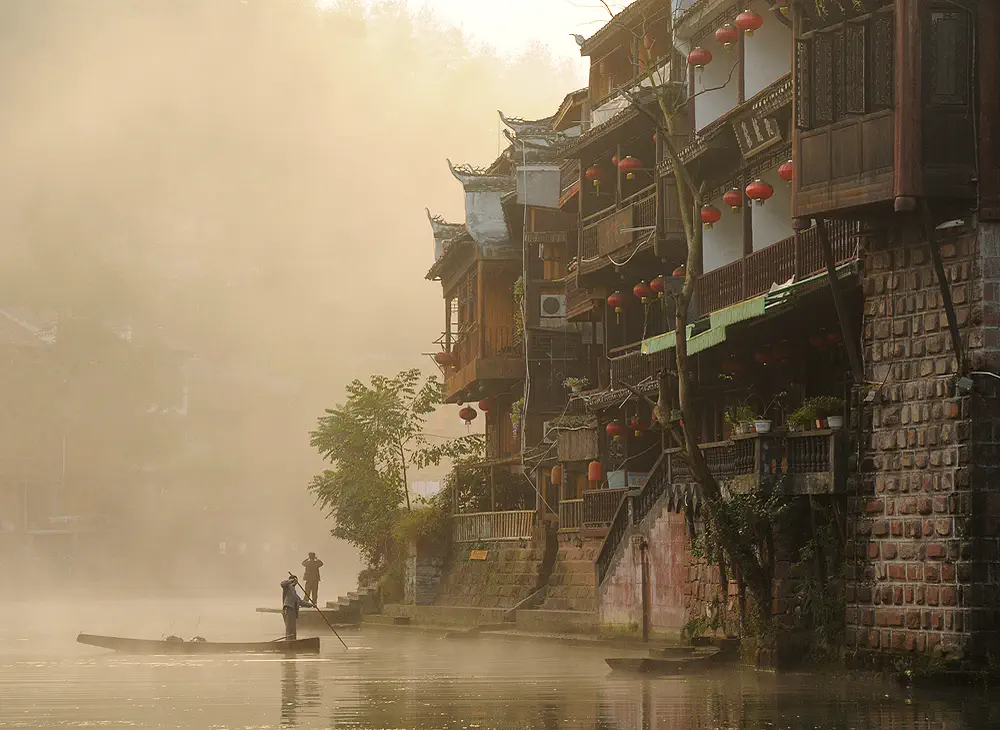
Geographically, Hunan is dominated by the Xiang River and Dongting Lake. The Wuling and Xuefeng mountain ranges in the west give the province some of the most distinctive landscapes in China. Zhangjiajie's quartz-sandstone pillars (the visual inspiration for Pandora in Avatar) and the Furong Town waterfall belt are major draws. Fenghuang's preserved Miao and Tujia minority town on the Tuojiang River is one of the most photographed old towns in China, although weekend crowds are intense.
Changsha has reinvented itself in the past decade as China's "internet entertainment capital" — Mango TV, Bilibili regional offices, hotpot and tea-shop chains spreading nationally from the city. The night-market scene is vivid; the food is hot, fermented, and unforgiving for unfamiliar palates.
When to visit
April–May and October–early November. Zhangjiajie can be foggy year-round but autumn skies are clearest. Avoid the National Day week — Zhangjiajie shuttle queues are extreme.
How to get there
Changsha Huanghua (CSX) and Zhangjiajie Hehua (DYG) are the main airports. HSR from Beijing to Changsha 5h30m, from Guangzhou 2h30m. Zhangjiajie has its own HSR station.
Key cities
All cities →Sample itineraries
Day 1: Changsha — Yuelu Academy, Hunan Provincial Museum (Mawangdui silks), Hunan Cuisine night market. Day 2: HSR to Zhangjiajie, Tianmen Mountain. Day 3: Zhangjiajie National Forest Park core.
Add Fenghuang Ancient Town (overnight), Furong Town, Shaoshan (Mao's birthplace), Hengshan (sacred mountain), Mawangdui Han Tombs.
Dishes of Hunan
Hunan-style slow-braised pork belly in soy, Shaoxing wine and chilli — the dish Mao Zedong reportedly ate weekly in Zhongnanhai.
Wuhan breakfast: layered pan-fried tofu skin and rice cake with mushroom, ham and bamboo shoots inside.
A whole silver carp head blanketed with fermented chopped red chilli and steamed until the flesh is silky and fiery.
Thin-sliced pork belly wok-fried with fresh long green chillies and fermented black beans — Hunan's most-ordered everyday dish.
Fish slices with sour pickled mustard greens in a sour-spicy broth. Originated in Sichuan, perfected in Hunan.
Wuhan ring-shaped savoury fried-dough breakfast item. Crisp on the outside, soft on the inside.
Itineraries touching Hunan
14d · Fourteen days moving through four of China's most distinctive regional cuisines — the numbing heat of Sichuan, the dry spice of Hunan, the freshness of Cantonese cooking, and the sweet-savoury balance of Shanghainese food.
14d · Fourteen days across three of China's most dramatic mountain and forest parks — the sandstone columns of Zhangjiajie, the granite peaks and sea of cloud at Huangshan, and the turquoise lakes of Jiuzhaigou.
Other Central China regions
Spotted something out of date? Submit a correction.
Research
Cross-checked against primary sources
Verified
Address, hours, fees confirmed at the date shown
Updated
Re-verified periodically; corrections welcome