CITY · FUJIAN
Yongding
永定 · Yǒngdìng
Overview
A Hakka county in western Fujian containing the largest concentration of tulou — circular and square earthen fortress buildings of the Hakka people — inscribed as a UNESCO World Heritage Site.
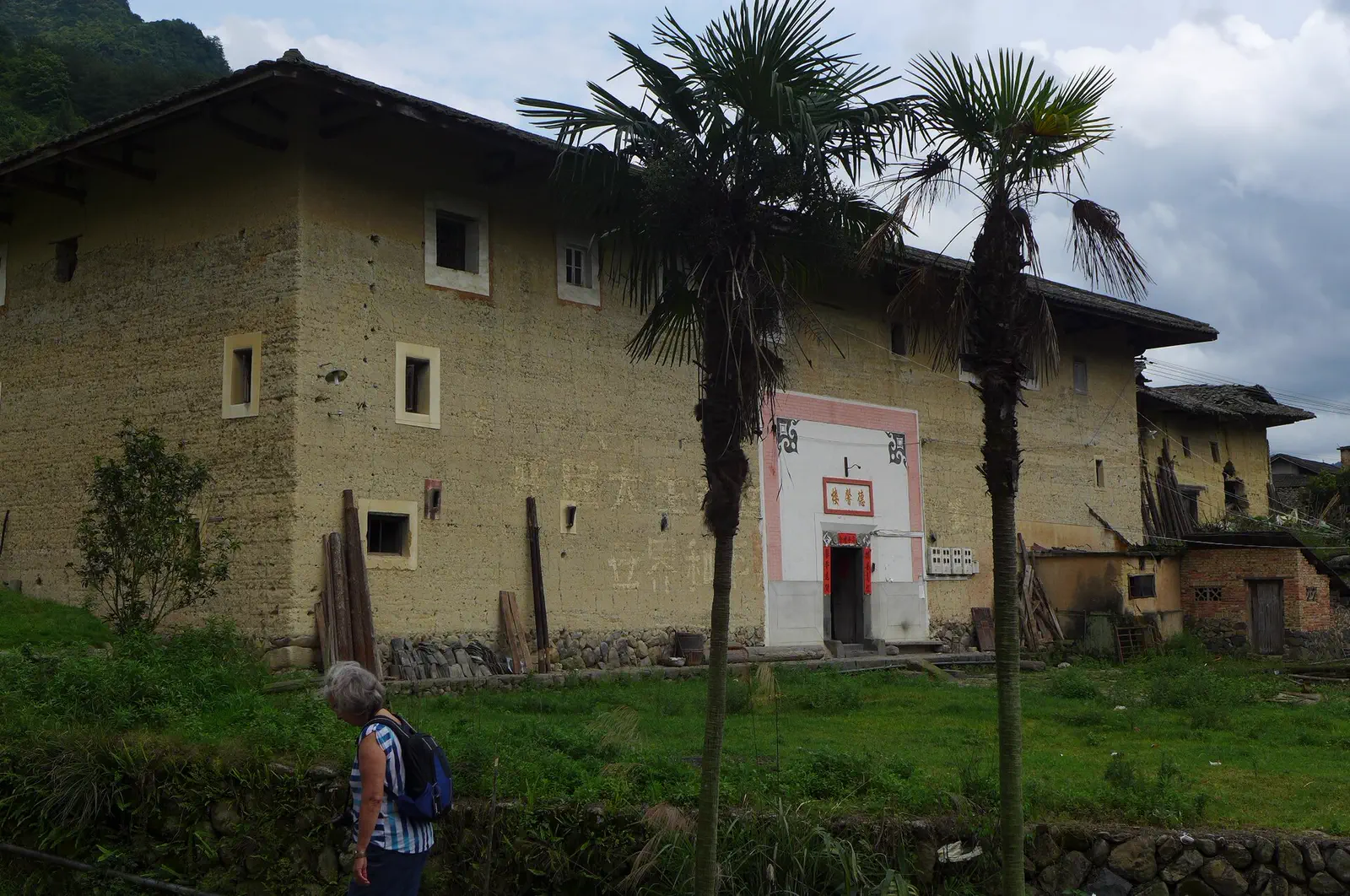
Yongding District of Longyan city in western Fujian is the heartland of the Fujian tulou — large communal earthen buildings of the Hakka people that were inscribed as a UNESCO World Heritage Site in 2008. The tulou (literally, earthen buildings) are communal fortified residences typically built in circular, square or oval plans, with thick rammed-earth outer walls and internal rings of wooden residential units arranged around a central courtyard. A single building housed an entire clan — sometimes hundreds of people — with a shared well, ancestral hall and food storage integrated into the structure.
The Hakka people (Kejia — Guest Families) are a Han Chinese sub-group who migrated south from northern China over several waves between the 4th and 17th centuries, settling in the mountainous western zones of Fujian, Guangdong and Jiangxi. The tulou architecture represents a response to the need for defensive communal living in the mountain frontier zones where bandits, wild animals and inter-clan violence were historical concerns. The buildings range in date from the Song dynasty to the 20th century; many are still inhabited.
The main tulou cluster in Yongding is the Hongkeng Tulou Cluster in Hongkeng Village, which contains the most photographed examples: the Fuyu Lou (round), the Rusheng Lou and others. The Chuxi Tulou Cluster offers a more remote and less-visited alternative with equally impressive examples.
Longyan city (the district seat) and Xiamen are the main transportation hubs for Yongding.
Cultural & access notes
The inhabited tulou are people's homes. Residents are present; treat the buildings with the respect you would offer to someone's house rather than a museum. The Hakka identity is a source of pride — the culture spread from these mountain communities across southeast Asia and further afield. Many overseas Chinese of Hakka descent visit Yongding as a form of ancestral pilgrimage.
What to see
- Hongkeng Tulou Cluster — the main scenic area with the most famous circular and square tulou
- Fuyu Lou — the most photographed round tulou, with five concentric rings
- Chengqi Lou — called the 'king of round tulou' at 62.6 metres in diameter
- Chuxi Tulou Cluster — a more remote group of tulou with fewer visitors
- Hakka customs museum within Hongkeng — exhibits on Hakka history and tulou construction
- Inhabited tulou life — many buildings remain residential, with elderly residents in residence year-round
What to eat
- Hakka salt-baked chicken — the quintessential Hakka dish
- Yam taro stew — a Hakka highland staple
- Braised pork knuckle with preserved vegetables — a rich Hakka slow-cook dish
- Fermented tofu (fu ru) — Hakka preserved bean curd with a sharp fermented flavour
- Rice wine and grain spirits — produced in the mountain counties
Getting there
From Xiamen, direct coaches to Yongding take about 2.5 hours. From Longyan station (on the Xiamen-Longyan railway), a local bus or taxi covers the 60 km to the Hongkeng cluster. From Fuzhou or Quanzhou, Longyan is the transit hub. No airport serves Yongding directly; Xiamen Gaoqi (XMN) is the main gateway airport.
Getting around
The main tulou clusters are grouped — Hongkeng is navigable on foot once inside. The Chuxi cluster is 14 km away and requires transport. Tourist shuttle buses connect the main clusters. Hiring a driver for a day covers the major sites efficiently.
Where to stay
Guesthouses within the tulou buildings themselves are available in Hongkeng — staying inside a working tulou is the recommended experience. Longyan city and Xiamen offer the full range of hotel options.
We list neighbourhoods, not specific hotels — we don't endorse hotels.
When to go
April–May and October–November are ideal — mild temperatures, clear skies, no heavy rain. Summer (June–August) is hot and wet but the tulou villages are green and atmospheric. Winter is cool but the sites remain accessible.
Budget guide (CNY per day)
| Backpacker | ¥200 |
| Mid-range | ¥420 |
| Comfortable | ¥800 |
Safety notes
The tulou interior wooden structures are old — take care on upper-level walkways, which may have limited balustrades. The earth walls of the buildings are genuinely fragile historic structures; do not touch, scratch or chip the earthen walls.
Nearby attractions
Other cities in Fujian
- Fuzhou福州
Capital of Fujian, on the southeast coast. Three Lanes and Seven Alleys historic district, the Fujian tea heritage, and the gateway to Wuyi Mountain.
- Quanzhou泉州
UNESCO World Heritage Site (2021) for its role as the maritime Silk Road's medieval emporium. Mosques, churches, Hindu temples, Buddhist monasteries — Marco Polo's 'Zaytun', the largest port in the world in the 13th century.
- Wuyishan (Mount Wuyi)武夷山
UNESCO mixed natural-and-cultural heritage site (1999). The most-celebrated oolong tea region in the world (Da Hong Pao, Lapsang Souchong), set against Danxia geological landscapes and Han-dynasty Yuewang Cheng walled-town remains.
- Xiamen厦门
Coastal Fujian island-and-mainland city. Gulangyu (UNESCO) is a car-free European-villa island; the city has clean beaches, a relaxed pace and the warmest mainland climate north of Hainan.
Itineraries visiting Yongding
Food of Eastern China
- Beggar's Chicken叫花鸡
A whole chicken stuffed with aromatics, wrapped in lotus leaves and clay, then slow-baked until the meat steams in its own juices.
- Drunken Chicken醉鸡
Chicken steamed and marinated in Shaoxing rice wine, served chilled. A Shanghai banquet starter.
- Eight-Treasure Rice八宝饭
A steamed dome of glutinous rice layered with red bean paste and decorated with eight types of preserved fruits and nuts.
- Hairy Crab大闸蟹
Yangcheng Lake mitten crab — the autumn delicacy of the Yangtze Delta. Eaten steamed with vinegar dip.
Yongding weather by month
| Month | Jan | Feb | Mar | Apr | May | Jun | Jul | Aug | Sep | Oct | Nov | Dec |
|---|---|---|---|---|---|---|---|---|---|---|---|---|
| High °C | 20 | 21 | 24 | 27 | 29 | 31 | 34 | 33 | 33 | 29 | 26 | 20 |
| Low °C | 9 | 11 | 14 | 17 | 21 | 24 | 25 | 24 | 23 | 19 | 15 | 9 |
| Rain mm | 34 | 101 | 177 | 146 | 303 | 405 | 169 | 253 | 140 | 54 | 33 | 39 |
| Rain days | 5 | 10 | 14 | 14 | 22 | 26 | 20 | 25 | 15 | 7 | 5 | 7 |
2019–2023 average via Open-Meteo ERA5 (ERA5 reanalysis). "Rain days" = days per month with ≥1 mm precipitation.
Frequently asked questions
- When is the best time to visit Yongding?
- The best months to visit Yongding are April, May, October, and November. April–May and October–November are ideal — mild temperatures, clear skies, no heavy rain. Summer (June–August) is hot and wet but the tulou villages are green and atmospheric.
- How many days do you need in Yongding?
- Plan 3 days for Yongding if you want to see the headline sights without rushing — Hongkeng Tulou Cluster, Fuyu Lou, Chengqi Lou. Add an extra day for day trips from the city or for repeat visits to your favourite neighbourhood.
- Is Yongding safe for tourists?
- The tulou interior wooden structures are old — take care on upper-level walkways, which may have limited balustrades. The earth walls of the buildings are genuinely fragile historic structures; do not touch, scratch or chip the earthen walls.
- How do you get around Yongding?
- The main tulou clusters are grouped — Hongkeng is navigable on foot once inside. The Chuxi cluster is 14 km away and requires transport. Tourist shuttle buses connect the main clusters.
- What's the daily budget for Yongding?
- Budget guide for Yongding: backpackers from around ¥200/day, mid-range travellers ¥420/day, comfortable trips from ¥800/day. These ranges cover accommodation, food, local transport and one paid sight per day, and exclude flights to and from the city.
- Where should you stay in Yongding?
- Guesthouses within the tulou buildings themselves are available in Hongkeng — staying inside a working tulou is the recommended experience. Longyan city and Xiamen offer the full range of hotel options.
Spotted something out of date? Submit a correction.
Research
Cross-checked against primary sources
Verified
Address, hours, fees confirmed at the date shown
Updated
Re-verified periodically; corrections welcome