CITY · NINGXIA
Yinchuan
银川 · Yínchuān
Overview
Capital of Ningxia Hui Autonomous Region. Western Xia tombs, Hui Muslim culture, the Helan Mountains and the Yellow River desert oasis landscape.
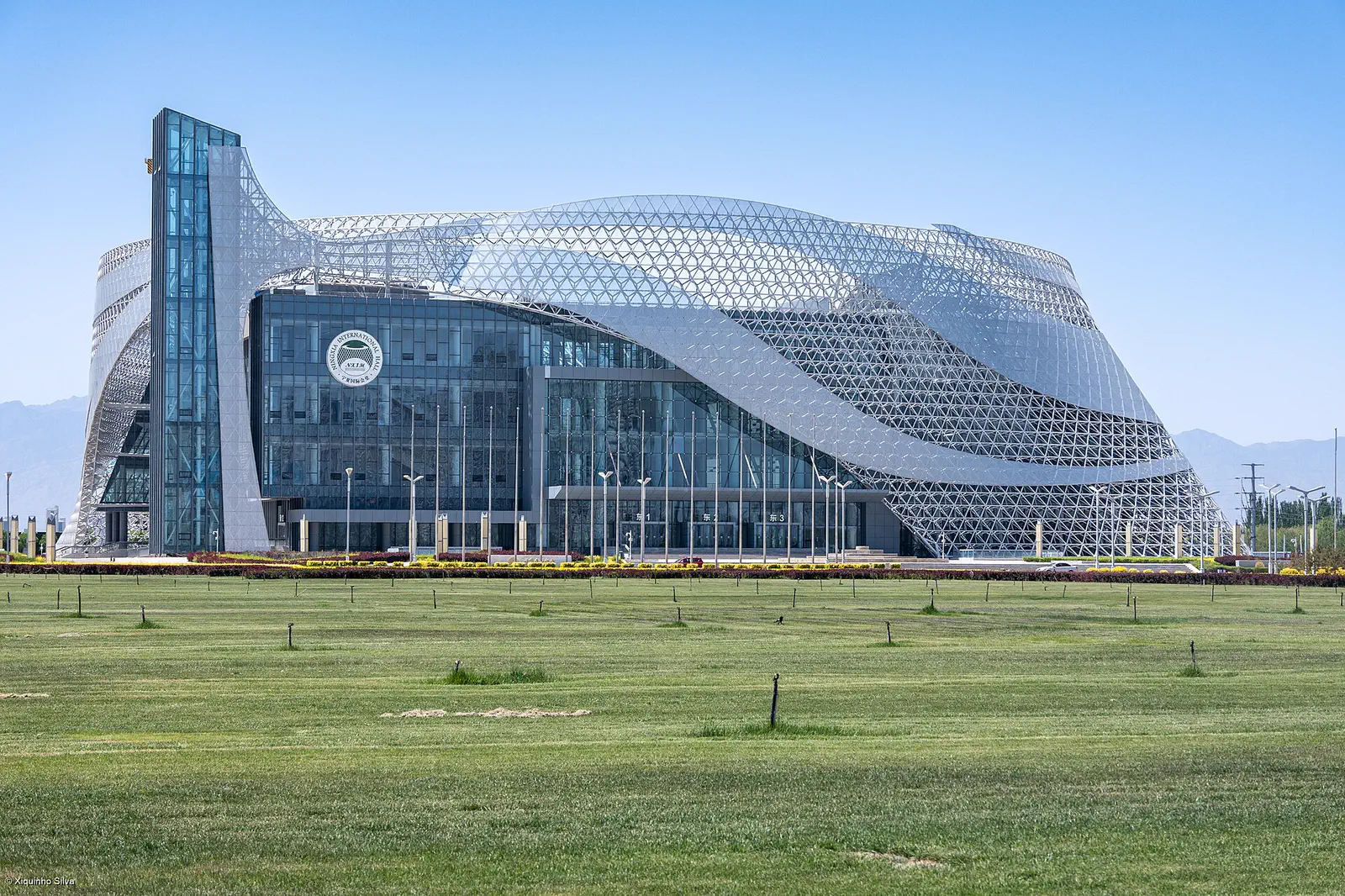
Yinchuan is the capital of Ningxia Hui Autonomous Region, a compact city of around three million on the Loess Plateau at the bend of the Yellow River. Its position — between the Helan Mountains to the west and the Yellow River wetlands to the east, in the middle of an arid basin — gives it a landscape character quite different from the humid Chinese interior.
The defining historical layer is the Western Xia, the Tangut empire that controlled a swathe of northwestern China from 1038 to 1227. Yinchuan was its imperial capital, known as Xingqing Fu. The Mongols under Genghis Khan destroyed it so thoroughly that the empire was almost entirely lost to history until archaeological work in the twentieth century began to recover what had been erased. The Western Xia Imperial Tombs, 25 kilometres west of the city in the desert foothills of the Helan Mountains, are the most visible remains: a series of earthen pyramid mausoleums, nine imperial and more than 250 lesser tombs, strewn across a large site. The shape and scale of the main tombs earned them the informal designation 'the Pyramids of China'. An on-site museum contextualises the dynasty's culture, script, and material evidence.
The Helan Mountains themselves reward exploration beyond the tombs. A valley road leads to a concentration of ancient rock art (cliff petroglyphs), some dating to the Bronze Age and earlier, depicting animals, human figures, and astronomical symbols. The cable car at Gunzhongkou provides mountain views over the desert and the distant Yellow River plain.
Ningxia is historically the heartland of the Hui people, Chinese Muslims whose presence stretches back to Tang dynasty merchants who settled along the Silk Road routes. Hui culture defines Yinchuan's food: hand-pulled noodles, lamb prepared in multiple forms (roasted, stewed, braised), flatbreads from communal tandoor ovens, and the complete absence of pork from the traditional diet. Ningxia is also the primary growing region for wolfberries (goji berries), and the local market stalls selling dried wolfberries in every grade and size are worth a visit if only for scale.
Sand Lake (Shahu), 55 kilometres north of the city, combines desert dunes with a freshwater reed-bed wetland — an unusual juxtaposition that makes more sense once you understand the irrigation history of the Yellow River plain.
What to see
- Western Xia Imperial Tombs
- Helan Mountains rock art
- Sand Lake (Shahu)
- Zhongwei Shapotou Desert (south of the city)
What to eat
- Lamb dishes (Ningxia is famous for sheep)
- Hand-pulled noodles
- Wolfberries (Ningxia is the home of the goji berry)
Getting there
Yinchuan Hedong (INC) airport. HSR: Lanzhou 2h, Xi'an 3h.
Getting around
Bus and taxi. No metro. Tour bus to the Western Xia Tombs.
Where to stay
Central Xingqing district.
We list neighbourhoods, not specific hotels — we don't endorse hotels.
When to go
May–June, September–October.
Budget guide (CNY per day)
| Backpacker | ¥200 |
| Mid-range | ¥450 |
| Comfortable | ¥1000 |
Itineraries visiting Yinchuan
- Gansu and Ningxia — Yinchuan, Lanzhou, Zhangye, Jiayuguan and Dunhuang, 7 days
7d · Seven days across two northwest provinces — the Hui Muslim city of Yinchuan, Yellow River Lanzhou, the Danxia rainbow hills, Jiayuguan Fort and the Mogao Caves at Dunhuang.
- Halal-friendly northwest China in 10 days
10d · Beijing (Niujie Mosque) to Xi'an (Muslim Quarter and Great Mosque) to Yinchuan (Ningxia Hui heartland) to Lanzhou (hand-pulled noodles capital) to Xining (Ta'er Monastery and Hui culture). A route through the Hui Muslim heartland with halal food throughout and mosque visits at each stop.
Food of Northwestern China
- Biangbiang Noodlesbiáng biáng 面
Wide, hand-pulled, belt-shaped Shaanxi noodles. The 'biang' character is the most complex in the Chinese language.
- Big Plate Chicken大盘鸡
A large-portioned Xinjiang braised chicken dish with potatoes, peppers and thick hand-pulled belt noodles.
- Hand-Grasped Lamb手抓羊肉
Large bone-in lamb pieces boiled in spiced water and eaten by hand — a communal dish of Inner Mongolia and the northwest.
- Laghman (Hand-Pulled Noodles with Lamb)拉条子
Uyghur hand-pulled wheat noodles with a lamb-and-vegetable sauce of tomato, pepper and onion.
Yinchuan weather by month
| Month | Jan | Feb | Mar | Apr | May | Jun | Jul | Aug | Sep | Oct | Nov | Dec |
|---|---|---|---|---|---|---|---|---|---|---|---|---|
| High °C | 1 | 6 | 14 | 19 | 25 | 30 | 32 | 30 | 25 | 17 | 8 | 1 |
| Low °C | -11 | -7 | 0 | 6 | 12 | 17 | 19 | 18 | 13 | 5 | -3 | -10 |
| Rain mm | 1 | 4 | 7 | 13 | 16 | 46 | 34 | 50 | 34 | 11 | 7 | 1 |
| Rain days | 0 | 1 | 1 | 4 | 4 | 6 | 5 | 7 | 5 | 4 | 2 | 1 |
2019–2023 average via Open-Meteo ERA5 (ERA5 reanalysis). "Rain days" = days per month with ≥1 mm precipitation.
Frequently asked questions
- When is the best time to visit Yinchuan?
- The best months to visit Yinchuan are May, June, September, and October. May–June, September–October.
- How many days do you need in Yinchuan?
- Plan 2 days for Yinchuan if you want to see the headline sights without rushing — Western Xia Imperial Tombs, Helan Mountains rock art, Sand Lake (Shahu). Add an extra day for day trips from the city or for repeat visits to your favourite neighbourhood.
- How do you get around Yinchuan?
- Bus and taxi. No metro. Tour bus to the Western Xia Tombs.
- What's the daily budget for Yinchuan?
- Budget guide for Yinchuan: backpackers from around ¥200/day, mid-range travellers ¥450/day, comfortable trips from ¥1000/day. These ranges cover accommodation, food, local transport and one paid sight per day, and exclude flights to and from the city.
- Where should you stay in Yinchuan?
- Central Xingqing district.
Spotted something out of date? Submit a correction.
Research
Cross-checked against primary sources
Verified
Address, hours, fees confirmed at the date shown
Updated
Re-verified periodically; corrections welcome