CITY · MACAU SAR
Macau
澳门 · Àomén
Overview
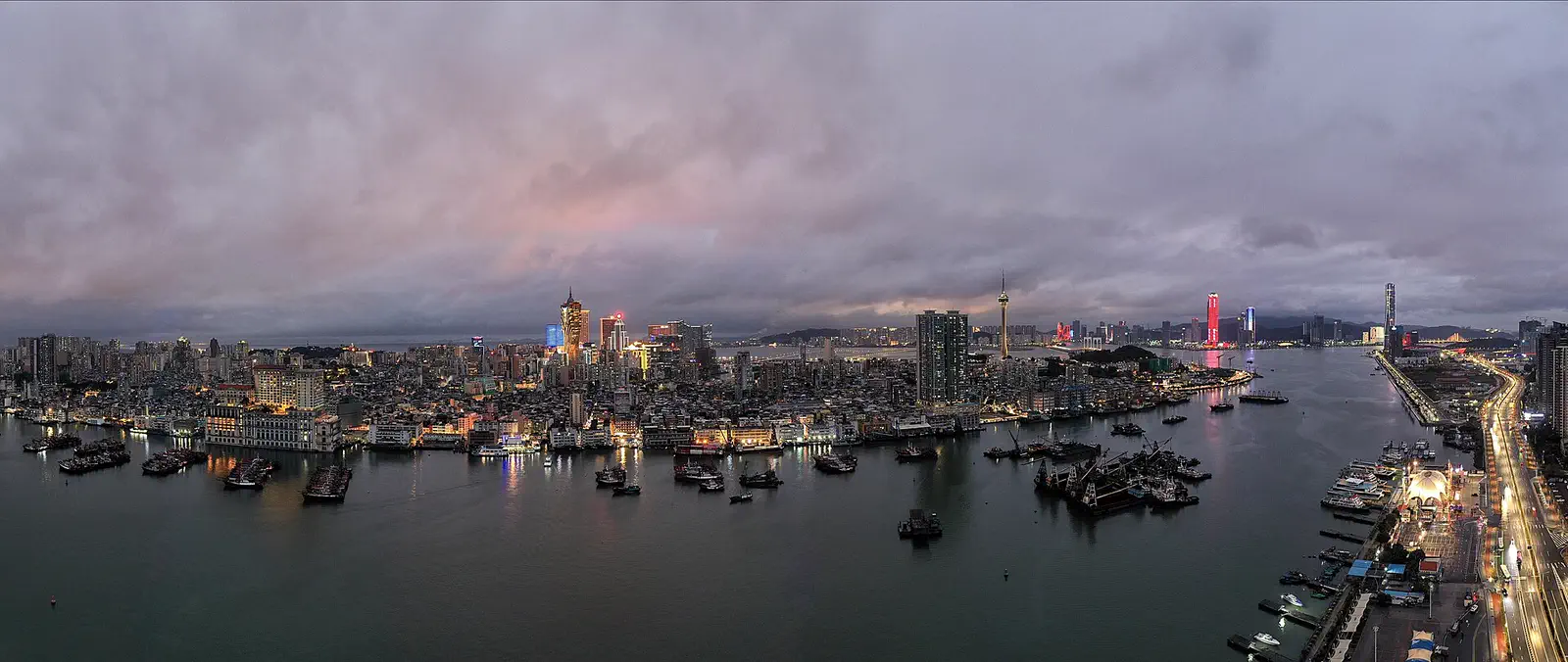
Special Administrative Region on the Pearl River Delta. Former Portuguese colony (1557–1999); the only city in the Sinosphere with a continuous Cantonese-Portuguese fusion food culture. UNESCO-listed historic centre.
Macau was a Portuguese trading post from 1557 and formally a Portuguese colony from 1849 until 1999. It became a Special Administrative Region of the PRC on 20 December 1999, retaining its own currency (Macanese Pataca, MOP — Hong Kong Dollars are accepted at par across the territory), its own immigration system, and its own legal system under the Basic Law. Many nationalities enter visa-free for periods of 30 to 90 days; the mainland China visa requirement does not apply.
The territory consists of the Macau Peninsula connected by bridges to Taipa and the more rural Coloane island; between Taipa and Coloane, massive reclamation created Cotai, which is now the centre of the gaming industry. The total land area is 33 km², making it the most densely populated territory in the world.
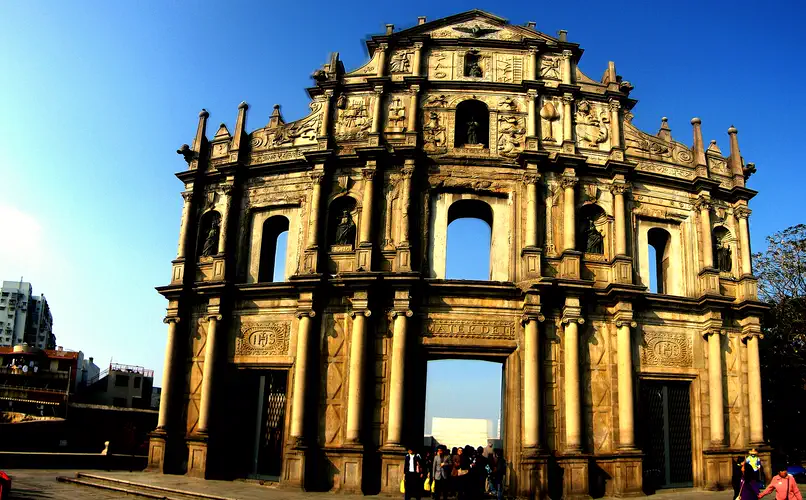
The historic centre on the peninsula (UNESCO-listed as part of a network of 22 heritage buildings and public spaces) preserves a continuous Portuguese urban fabric: Senado Square (Largo do Senado) with its wavy black-and-white stone pavement, the Baroque Ruins of St Paul's (the 17th-century stone facade of a burnt church), the Mount Fortress, and the A-Ma Temple that gave the territory its name. These sit alongside Cantonese temples and streets in a working city rather than a heritage zone.
The Cantonese-Portuguese cuisine that developed across 400+ years of coexistence is genuinely distinct: the egg tart (pastel de nata in a flakier local form), African chicken (galinha à africana — grilled with piri piri and coconut, brought from Portuguese Africa), bacalhau (salt cod) dishes, and pork chop buns constitute a culinary tradition found nowhere else in the world.
Cultural & access notes
Portuguese is co-official with Chinese (Cantonese). English is widely understood in tourist areas. Macanese Patacas (MOP) and Hong Kong Dollars (HKD) circulate in parallel — most places accept HKD at par. Pay in MOP if possible to avoid losing on conversion.
What to see
- Senado Square and the historic centre (UNESCO)
- Ruins of St Paul's
- A-Ma Temple
- Mount Fortress and Macau Museum
- Coloane Village and Hac Sa Beach (sandy black-sand beach)
- Taipa Village (food and Portuguese-era streets)
- Cotai Strip (Venetian, Wynn Palace, Parisian)
- Macau Tower (bungee jump)
What to eat
- Portuguese egg tart (the Macanese version, served warm) — Lord Stow's at Coloane is the original
- African chicken (galinha à africana)
- Portuguese-style baked pork chop bun
- Pork chop bun (zhū pà bāo) at Tai Lei Loi Kei in Taipa
- Almond cookies and serradura
Getting there
Macau (MFM) airport on Taipa. Direct ferries from Hong Kong (Sheung Wan to Outer Harbour) in 60 minutes. The Hong Kong-Zhuhai-Macau Bridge bus crossing. From mainland: cross into Macau at the Gongbei border at Zhuhai.
Getting around
Free casino shuttle buses cover most of Cotai. The single light rail line connects the airport to Cotai. Walking the historic centre on the peninsula. Taxis are easy.
Where to stay
Peninsula (Senado Square area) for the historic centre. Cotai for the casino resorts. Coloane Village for quiet beach-side stays.
We list neighbourhoods, not specific hotels — we don't endorse hotels.
When to go
October–December and March. Summer is humid and prone to typhoons.
Budget guide (CNY per day)
| Backpacker | ¥600 |
| Mid-range | ¥1300 |
| Comfortable | ¥3500 |
Safety notes
Macau is very safe. Casino tourism dominates; gambling is regulated and largely transparent.
Nearby attractions
Macau Tower 澳门旅游塔
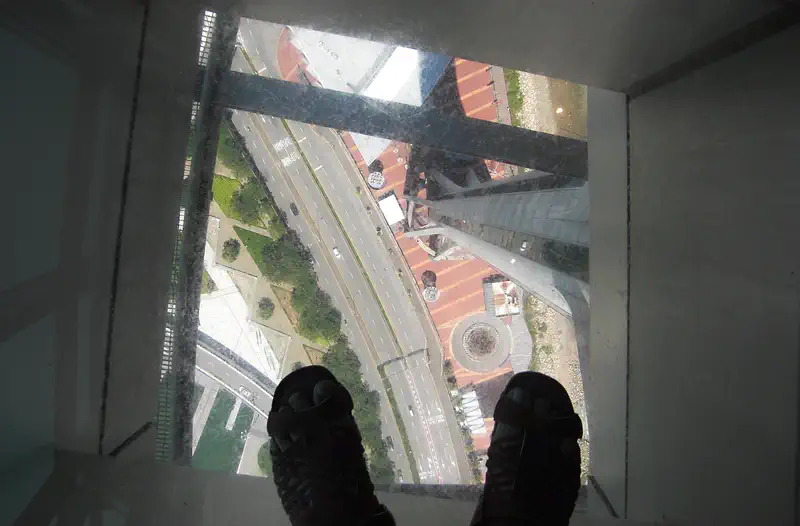
338m sightseeing tower in central Macau. Bungee jump (the world's highest commercial), Skywalk, observation deck.
Ruins of St Paul's 大三巴牌坊
Façade of a 17th-century Jesuit cathedral, destroyed by fire in 1835. The most-photographed image of Macau, at the heart of the UNESCO historic centre.
Senado Square 议事亭前地
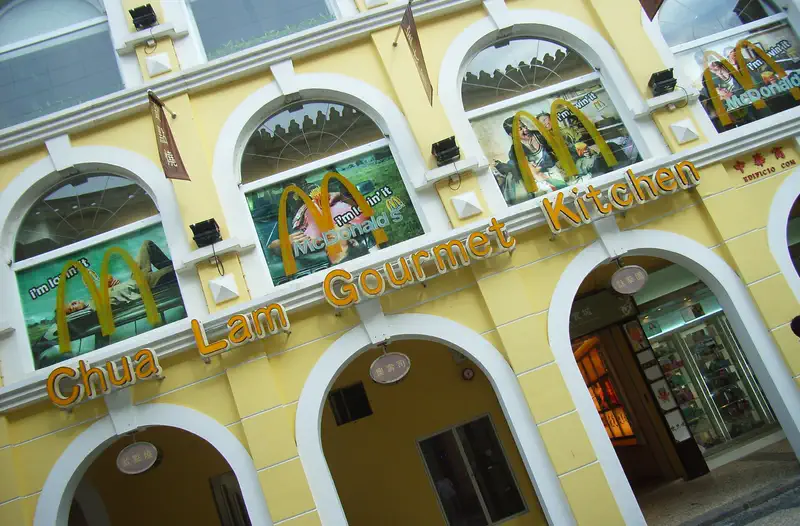
Central pedestrian square paved in Portuguese mosaic stonework, surrounded by colonial-era public buildings. UNESCO-listed.
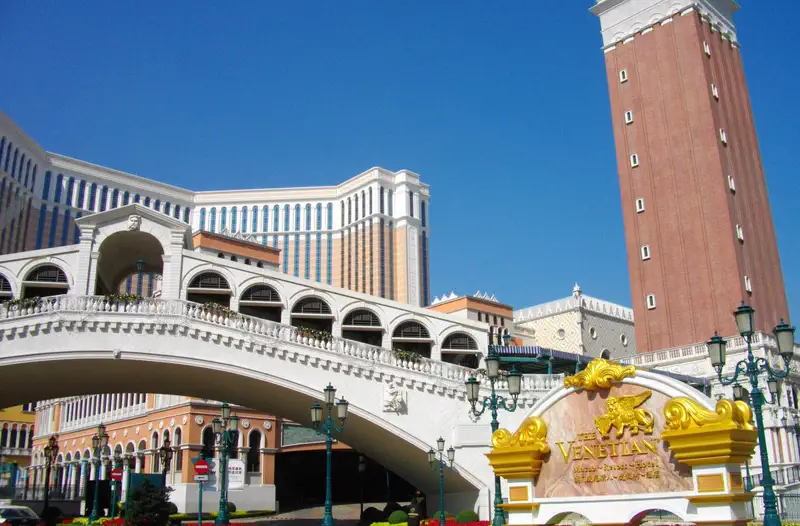
The Venetian Macau 威尼斯人
The world's largest casino by floor area. Mock-Italian streetscape with gondolas on canals; 3,000-room resort hotel.
Day trips within 150 km
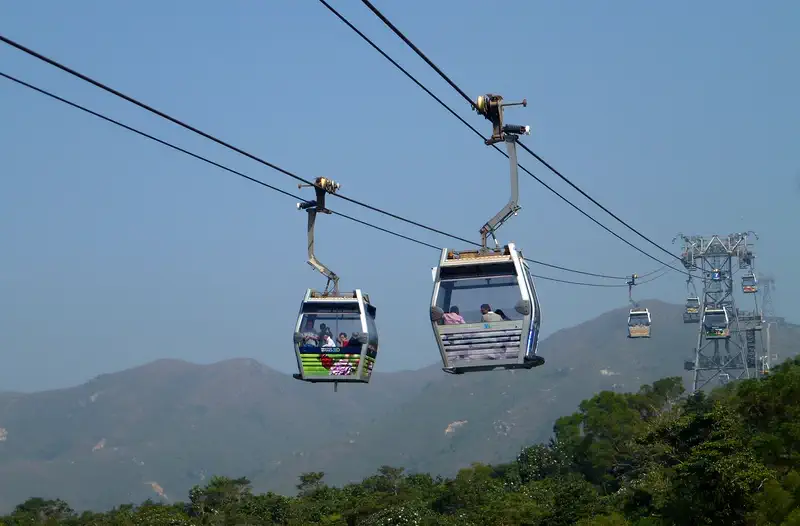
Ngong Ping 360 昂坪360
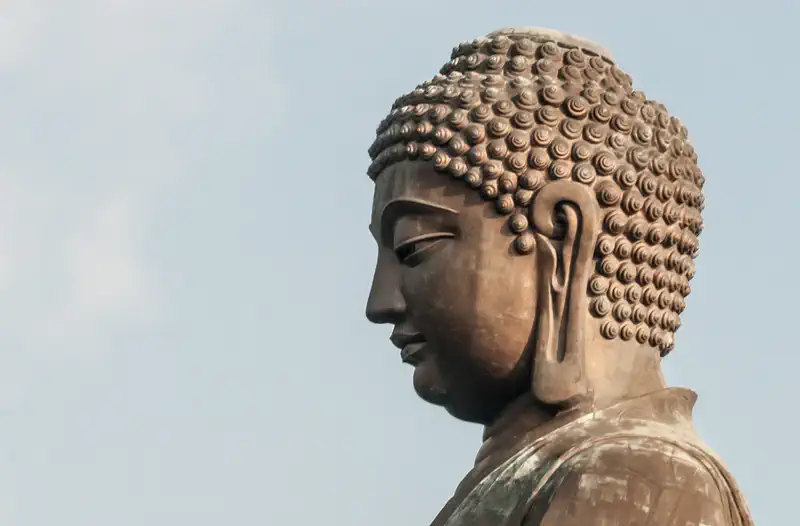
Cable car from Tung Chung to the Big Buddha plateau. 5.7 km, 25-minute ride; crystal-floor option.
≈ 40 km from Macau
More on Macau
Itineraries visiting Macau
Food of Special Administrative Region
Macau weather by month
| Month | Jan | Feb | Mar | Apr | May | Jun | Jul | Aug | Sep | Oct | Nov | Dec |
|---|---|---|---|---|---|---|---|---|---|---|---|---|
| High °C | 20 | 20 | 23 | 25 | 28 | 30 | 31 | 30 | 30 | 27 | 25 | 20 |
| Low °C | 14 | 15 | 19 | 21 | 25 | 27 | 27 | 27 | 26 | 23 | 20 | 14 |
| Rain mm | 17 | 75 | 83 | 108 | 228 | 285 | 246 | 402 | 322 | 236 | 46 | 27 |
| Rain days | 4 | 8 | 14 | 14 | 21 | 25 | 21 | 28 | 23 | 13 | 5 | 3 |
2019–2023 average via Open-Meteo ERA5 (ERA5 reanalysis). "Rain days" = days per month with ≥1 mm precipitation.
Frequently asked questions
- When is the best time to visit Macau?
- The best months to visit Macau are October, November, December, and March. October–December and March. Summer is humid and prone to typhoons.
- How many days do you need in Macau?
- Plan 4 to 5 days for Macau if you want to see the headline sights without rushing — Senado Square and the historic centre (UNESCO), Ruins of St Paul's, A. Add an extra day for day trips from the city or for repeat visits to your favourite neighbourhood.
- Is Macau safe for tourists?
- Macau is very safe. Casino tourism dominates; gambling is regulated and largely transparent.
- How do you get around Macau?
- Free casino shuttle buses cover most of Cotai. The single light rail line connects the airport to Cotai. Walking the historic centre on the peninsula.
- What's the daily budget for Macau?
- Budget guide for Macau: backpackers from around ¥600/day, mid-range travellers ¥1300/day, comfortable trips from ¥3500/day. These ranges cover accommodation, food, local transport and one paid sight per day, and exclude flights to and from the city.
- Where should you stay in Macau?
- Peninsula (Senado Square area) for the historic centre. Cotai for the casino resorts. Coloane Village for quiet beach-side stays.
Spotted something out of date? Submit a correction.
Research
Cross-checked against primary sources
Verified
Address, hours, fees confirmed at the date shown
Updated
Re-verified periodically; corrections welcome