CITY · QINGHAI
Xining
西宁 · Xīníng
Overview
Capital of Qinghai Province at 2,275 m, the highest provincial capital in China. Gateway to Qinghai Lake, Ta'er Monastery (Kumbum), and the Qinghai-Tibet Plateau. A Hui Muslim presence gives the city a distinct culinary and cultural identity unusual for northwest China.
Xining sits in the narrow Huangshui River valley, hemmed by dry mountains on all sides, at an elevation that gives it cool summers and bitter winters. As the capital of Qinghai Province it is the only large city on the Qinghai-Tibet Plateau proper, a function that has made it the logistical gateway for travellers heading onto the plateau toward Golmud, Nagqu, and ultimately Lhasa via the Qinghai-Tibet Railway.
The city's identity is shaped by its Hui Muslim population — a sizable minority whose mosques, halal restaurants, and night markets run along the central Dongguan district. The Dongguan Mosque, one of the largest in northwestern China, is an active religious centre and architecturally interesting in its blending of Chinese and Islamic styles. Alongside Hui residents live Tibetan, Tu, Salar and Han communities, producing a cultural mix that is more layered than the city's modest profile might suggest.
The chief excursion from Xining is Qinghai Lake (Qinghai Hu), 150 km to the west — the largest lake in China at 4,317 km² and brackish, at 3,196 m elevation. The cycling circuit of the lake has become a well-established route for touring cyclists and is managed race terrain in July. Ta'er Monastery (Kumbum Jampa Ling), 25 km south of the city, is one of the six great monasteries of Tibetan Buddhism and an important pilgrimage site; its butter-sculpture gallery is its most distinctive feature.
For geological variety, Qinghai Salt Lake (Chaka Salt Lake) is a reflective saline flat approximately 290 km west that has attracted heavy tourist traffic in recent years. The adjacent Qinghai-Tibet Highway, accessible from Xining, passes through grasslands and passes exceeding 4,500 m.
Xining itself is compact and walkable in the centre. The food scene along the Shuijing Lane night market is genuinely good — hand-pulled noodles, lamb skewers, and yoghurt are the local staples. The altitude requires only mild acclimatisation for most visitors arriving from lower elevations.
Cultural & access notes
The Dongguan Mosque requires modest dress — covered shoulders and legs. Remove shoes before entering the prayer hall. At Ta'er Monastery, walk clockwise around stupas, keep voices low in prayer halls, and do not touch thangkas or sacred objects. The Hui community is observant — alcohol and pork are absent from Hui-run restaurants.
What to see
- Ta'er Monastery (Kumbum) — one of the six great Gelugpa monasteries, butter sculptures, 25 km south
- Qinghai Lake — largest lake in China, cycling circuit, birdwatching
- Dongguan Mosque — one of the northwest's largest, active Hui Muslim centre
- Chaka Salt Lake — reflective saline flat 290 km west
- Beichan Temple — Daoist cliff temples in the mountains north of the city
- Shuijing Lane — central pedestrian street and night market
- Qinghai Provincial Museum — regional history, Tibetan artefacts
- Qinghai-Tibet Railway departure point — for connections to Lhasa (permit required)
What to eat
- Hand-pulled noodles (lamian) — the Hui Muslim staple, available from ¥10
- Lamb kebabs — skewered and charcoal-grilled, Shuijing Lane vendors
- Qinghai yoghurt (lao suannai) — thick set yoghurt served in ceramic pots
- Zanba (roasted barley flour) — Tibetan staple, found in Tibetan-run tea shops
- Niangpi — a cold noodle dish from wheat starch, served with vinegar and chilli
- Local lamb pilaf — Hui-style rice cooked with lamb and raisins
Getting there
Xining Caojiabao Airport (XNN) has flights to Beijing (2.5 hours), Shanghai (3 hours), Chengdu (1.5 hours) and most provincial capitals. By rail: high-speed trains connect Xining to Lanzhou (45 minutes) and Xi'an (3.5 hours). The Qinghai-Tibet Railway to Lhasa departs Xining — a 22-hour journey requiring a Tibet Travel Permit.
Getting around
City buses and taxis cover the main sights. For Qinghai Lake and Ta'er Monastery, join an organised day tour (widely available at guesthouses and travel agents) or hire a private car — public bus connections exist but are slow. Cycling Qinghai Lake requires a dedicated multi-day trip.
Where to stay
Hotels are concentrated near the railway station and on Wusi Avenue. Budget guesthouses serve the backpacker traffic heading to or from Tibet. Mid-range business hotels have adequate English signage. Book ahead in July–August when the cycling season brings heavy domestic traffic.
We list neighbourhoods, not specific hotels — we don't endorse hotels.
When to go
June to September is the main visitor season — the plateau is accessible, Qinghai Lake is at its fullest, and the Kumbum festival calendar is active. July hosts the Qinghai Lake cycling race. Winter (November–March) is cold with temperatures below −10°C and limited plateau access.
Budget guide (CNY per day)
| Backpacker | ¥160 |
| Mid-range | ¥350 |
| Comfortable | ¥700 |
Safety notes
The altitude at 2,275 m is manageable for most visitors arriving by train from Lanzhou; those flying in from sea level may feel mild breathlessness for a day. For the Qinghai-Tibet Railway journey, altitude sickness protocols apply from around Golmud (2,800 m) onwards. Remote areas of Qinghai Province require awareness of weather changes and limited medical facilities.
Nearby attractions
China Visit Guide
Kumbum Monastery (Ta'er Si)
Kumbum Monastery (Ta'er Si) 塔尔寺
Major Tibetan Buddhist monastery 25 km from Xining, on the birthplace of Tsongkhapa, founder of the Gelugpa school.
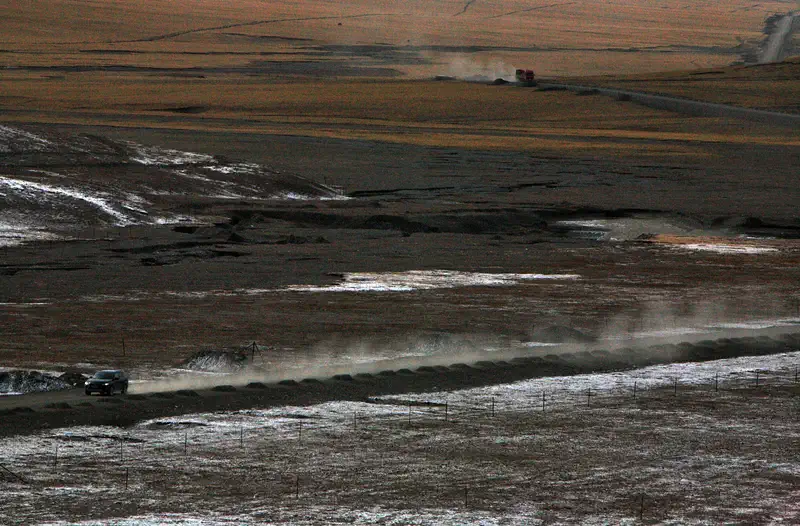
Qinghai Hoh Xil 青海可可西里
UNESCO Natural World Heritage site on the Qinghai-Tibet Plateau — a vast, near-uninhabited upland hosting the largest population of Tibetan antelope (chiru) in China and exceptional high-altitude wilderness.
Food of Northwestern China
- Biangbiang Noodlesbiáng biáng 面
Wide, hand-pulled, belt-shaped Shaanxi noodles. The 'biang' character is the most complex in the Chinese language.
- Big Plate Chicken大盘鸡
A large-portioned Xinjiang braised chicken dish with potatoes, peppers and thick hand-pulled belt noodles.
- Hand-Grasped Lamb手抓羊肉
Large bone-in lamb pieces boiled in spiced water and eaten by hand — a communal dish of Inner Mongolia and the northwest.
- Laghman (Hand-Pulled Noodles with Lamb)拉条子
Uyghur hand-pulled wheat noodles with a lamb-and-vegetable sauce of tomato, pepper and onion.
Xining weather by month
| Month | Jan | Feb | Mar | Apr | May | Jun | Jul | Aug | Sep | Oct | Nov | Dec |
|---|---|---|---|---|---|---|---|---|---|---|---|---|
| High °C | 1 | 4 | 11 | 15 | 19 | 23 | 25 | 24 | 20 | 13 | 8 | 2 |
| Low °C | -12 | -8 | -3 | 1 | 5 | 10 | 13 | 13 | 9 | 2 | -5 | -10 |
| Rain mm | 4 | 6 | 9 | 30 | 56 | 73 | 74 | 95 | 77 | 41 | 6 | 1 |
| Rain days | 1 | 3 | 2 | 7 | 13 | 13 | 11 | 14 | 13 | 9 | 2 | 0 |
2019–2023 average via Open-Meteo ERA5 (ERA5 reanalysis). "Rain days" = days per month with ≥1 mm precipitation.
Frequently asked questions
- When is the best time to visit Xining?
- The best months to visit Xining are June, July, August, and September. June to September is the main visitor season — the plateau is accessible, Qinghai Lake is at its fullest, and the Kumbum festival calendar is active. July hosts the Qinghai Lake cycling race.
- How many days do you need in Xining?
- Plan 4 to 5 days for Xining if you want to see the headline sights without rushing — Ta'er Monastery (Kumbum), Qinghai Lake, Dongguan Mosque. Add an extra day for day trips from the city or for repeat visits to your favourite neighbourhood.
- Is Xining safe for tourists?
- The altitude at 2,275 m is manageable for most visitors arriving by train from Lanzhou; those flying in from sea level may feel mild breathlessness for a day. For the Qinghai-Tibet Railway journey, altitude sickness protocols apply from around Golmud (2,800 m) onwards. Remote areas of Qinghai Province require awareness of weather changes and limited medical facilities.
- How do you get around Xining?
- City buses and taxis cover the main sights. For Qinghai Lake and Ta'er Monastery, join an organised day tour (widely available at guesthouses and travel agents) or hire a private car — public bus connections exist but are slow. Cycling Qinghai Lake requires a dedicated multi-day trip.
- What's the daily budget for Xining?
- Budget guide for Xining: backpackers from around ¥160/day, mid-range travellers ¥350/day, comfortable trips from ¥700/day. These ranges cover accommodation, food, local transport and one paid sight per day, and exclude flights to and from the city.
- Where should you stay in Xining?
- Hotels are concentrated near the railway station and on Wusi Avenue. Budget guesthouses serve the backpacker traffic heading to or from Tibet. Mid-range business hotels have adequate English signage.
Spotted something out of date? Submit a correction.
Research
Cross-checked against primary sources
Verified
Address, hours, fees confirmed at the date shown
Updated
Re-verified periodically; corrections welcome