CITY · SICHUAN
Wolong
卧龙 · Wòlóng
Overview
Small administrative town at the entrance to the Wolong Giant Panda Reserve in western Sichuan, gateway to the China Conservation and Research Centre for the Giant Panda, and a base for high-altitude birding on the Balang Pass approach to the Tibetan plateau.
Wolong lies in the Pitiao River valley in Sichuan's Aba Tibetan and Qiang Autonomous Prefecture, where the Qionglai Mountains rise steeply from the Sichuan Basin to the Tibetan plateau. The town — more accurately a small administrative settlement and park service base — takes its name from the surrounding Wolong National Nature Reserve, one of the most important giant panda habitats in China and a core part of the UNESCO-listed Sichuan Giant Panda Sanctuaries.
The China Conservation and Research Centre for the Giant Panda at Wolong (commonly called the Wolong panda base) operates as both a breeding facility and a public education centre. Unlike the more accessible Chengdu Research Base, Wolong sits within an actual wild habitat — the forested valleys around the centre shelter a wild panda population alongside the captive breeding programme. Cubs born at the facility participate in a re-wilding programme that has seen pandas gradually return to portions of their historic range.
The 2008 Wenchuan earthquake caused catastrophic damage to the Wolong area — the town itself and many reserve facilities were destroyed, and the rebuilding effort occupied the better part of a decade. The reconstructed visitor facilities opened progressively from 2012, and the roads, guesthouses, and panda centre infrastructure are now largely restored, though some sections of the reserve remain closed for ongoing ecological recovery.
For wildlife enthusiasts beyond panda-watchers, Wolong is one of the finest entry points into the Qionglai Mountain bird zone. The road climbing to Balang Pass (4,487 m), 40 km from the town, is productive for Tibetan plateau species: Blood Pheasant, Snow Partridge, Tibetan Snowcock, and the assorted rosefinches and laughingthrushes of the high-altitude forest. The descent from Balang on the western side leads to the Xinduqiao grasslands — a birding circuit that regularly attracts specialist tour groups from Europe and North America.
The town has a handful of guesthouses catering to panda tourists, hiking groups, and birding parties. Chengdu is three hours by road — a manageable transfer though the mountain sections are slow.
Cultural & access notes
The Wolong area includes Qiang minority communities in the lower valley settlements. The Qiang are one of the oldest ethnically distinct groups in China; their traditional stone tower architecture and textile traditions are visible at villages on the approach road from Yingxiu.
What to see
- China Conservation and Research Centre for the Giant Panda — breeding facility and education centre within the reserve
- Wolong National Nature Reserve — wild panda habitat and UNESCO Sichuan Giant Panda Sanctuaries zone
- Balang Pass (4,487 m) — high-altitude pass on the road to Xinduqiao, outstanding bird habitat
- Pitiao River valley — forested river valley with wildflowers in spring (April–May) and foliage in autumn
- Shenshuping Panda Centre — alternative visitor facility within the reserve complex
- Post-earthquake reconstruction memorial — interpretive panels on the 2008 Wenchuan earthquake recovery
- Siguniang Mountain access route — the road through Wolong connects to the Siguniang (Four Girls Mountain) scenic area, 50 km further west
What to eat
- Sichuan hotpot variants — available in the guesthouses and small restaurants in the town settlement
- Wild mountain vegetables (野菜) — foraged greens from the reserve margins, served stir-fried in local homes and guesthouses
- Mapo tofu and Sichuan staples — the local restaurants operate in the Sichuan tradition even at altitude
- Tibetan-influenced dishes — yak butter tea and tsampa available at some guesthouses catering to Tibetan plateau travellers
- Freshwater fish — the Pitiao River supports small-scale fishing; locally caught fish appear at some restaurants
- Packed lunch provisions — for Balang Pass excursions, provisions should be purchased in Wolong or brought from Chengdu
Getting there
The nearest major airport is Chengdu Tianfu International Airport (CTU), approximately 150 km from Wolong — a road journey of 3 hours via the Dujiangyan Expressway and mountain road through Yingxiu. There is no rail connection; Wolong is served exclusively by road. Direct tourist coaches operate from Chengdu Chadianzi Bus Station. Yingxiu, the epicentre of the 2008 earthquake, is passed on the approach road.
Getting around
Wolong itself is walkable — the panda centre, guesthouses, and ranger station are within a small area. Rented vehicles or organised day tours are needed for Balang Pass, Siguniang Mountain, and further exploration of the reserve. Roads above the panda centre may require a permit to access.
Where to stay
Accommodation in Wolong is limited to a small number of mid-range guesthouses and nature-oriented lodges. Capacity is modest; book ahead during the spring and autumn shoulder seasons when both panda visitors and birding tour groups concentrate here. Chengdu can serve as a base for day visits if the mountain road and transfer time are manageable.
We list neighbourhoods, not specific hotels — we don't endorse hotels.
When to go
Spring (April–May) and autumn (September–October) offer the best combination of clear roads, wildflowers or foliage, and manageable temperatures. Summer brings some road closures from landslides, though the panda centre remains operational. Winter reduces access to the upper reserve areas and Balang Pass may be snow-blocked.
Budget guide (CNY per day)
| Backpacker | ¥200 |
| Mid-range | ¥480 |
| Comfortable | ¥1100 |
Safety notes
The Balang Pass road is steep and narrow with sharp bends — experienced mountain drivers only, or use an organised tour vehicle. Altitude effects can be felt at the pass (4,487 m) particularly for those arriving directly from Chengdu at 500 m. Road closures due to landslides or snowfall are possible from October onwards; check conditions before travelling.
Nearby attractions
Day trips within 150 km
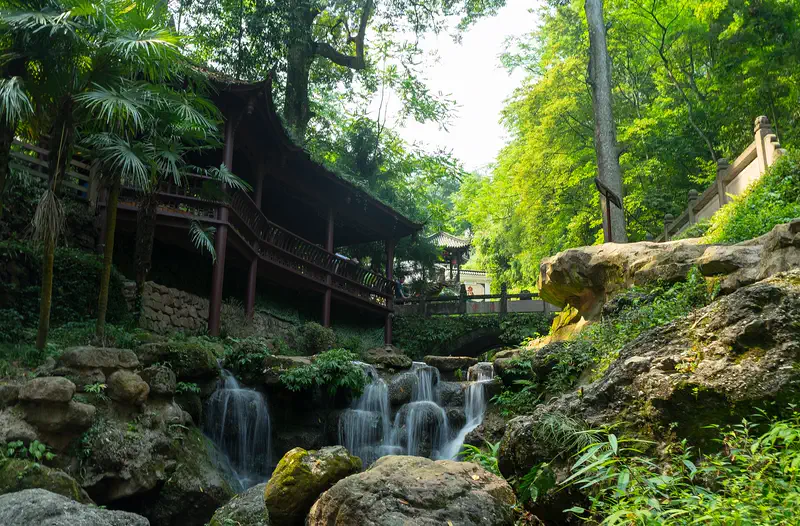
Mount Qingcheng 青城山
Sacred Daoist mountain west of Chengdu, said to be the cradle of Daoism. UNESCO-listed jointly with Dujiangyan.
≈ 40 km from Wolong
Other cities in Sichuan
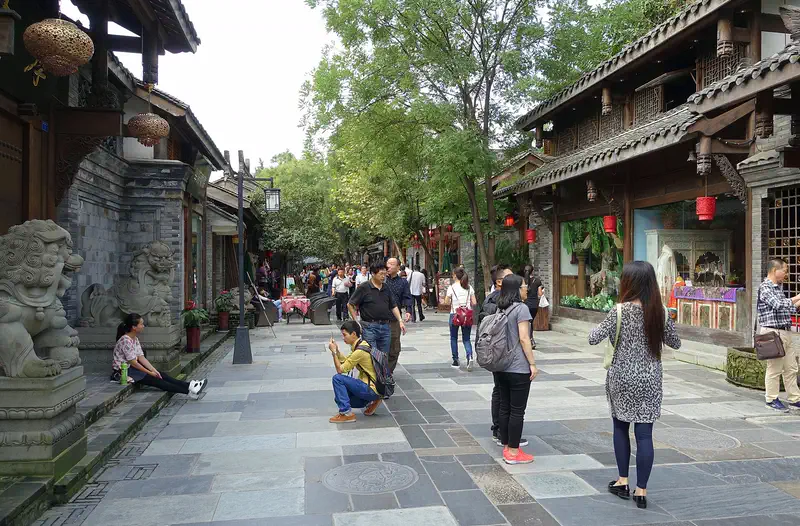
- Chengdu成都
Capital of Sichuan, the heart of Sichuan cooking and the panda capital of China. A relaxed teahouse-and-mahjong city with imperial sights, the Wuhou Shrine and the Giant Panda Breeding Base.
- Danba丹巴
A Tibetan Gyarong county in western Sichuan's Garzê Prefecture, famous for its ancient stone watchtowers, tiered village settlements on valley walls, and apple orchards in bloom.
- Daocheng稻城
A remote county town in southern Garzê Prefecture, Sichuan, serving as the gateway to Yading Nature Reserve — a high-altitude alpine sanctuary with three snow peaks sacred to Tibetan Buddhism.
- Emei Mountain峨眉山
One of China's Four Sacred Buddhist Mountains, a UNESCO World Heritage site in Sichuan with dense cloud forest, monasteries and the famous sea of clouds from its 3,099-metre summit.
- Jiuzhaigou region九寨沟
UNESCO-listed alpine valley in northern Sichuan with multi-coloured travertine pools and waterfalls. Reopened progressively after the 2017 earthquake. Combine with Huanglong.
- Kangding康定
Gateway town on the Sichuan-Tibet Highway, set in a narrow valley at 2,560 m between Han China and the Tibetan plateau. Known for the folk song 'Kangding Love Song' and a mix of Tibetan, Han and Khampa cultures.
- Leshan乐山
A Sichuan city at the confluence of three rivers, home to the Leshan Giant Buddha — the world's tallest premodern stone statue at 71 metres — jointly inscribed as a UNESCO World Heritage Site with Emei Mountain.
- Litang理塘
A remote Khampa Tibetan town at 4,014 metres on the Sichuan-Tibet Highway in Garzê Prefecture, famous for its high-altitude grasslands, annual horse-racing festival and the birthplace of two Dalai Lamas.
Itineraries visiting Wolong
Food of Southwestern China
- Baba Flatbread粑粑
Yunnan's daily flatbread — a thick wheat or rice-flour round cooked on a griddle and eaten plain or stuffed.
- Bang Bang Chicken棒棒鸡
Cold poached chicken shredded by hand, dressed in chilli oil, sesame paste and Sichuan peppercorn.
- Boiled Fish in Chilli Oil水煮鱼
Fish slices submerged in a deep pool of chilli oil and Sichuan peppercorns. Served bubbling.
- Chongqing Hotpot重庆火锅
The original mala hotpot — a simmering cauldron of beef tallow, Pixian doubanjiang and Sichuan peppercorn for communal dipping.
Wolong weather by month
| Month | Jan | Feb | Mar | Apr | May | Jun | Jul | Aug | Sep | Oct | Nov | Dec |
|---|---|---|---|---|---|---|---|---|---|---|---|---|
| High °C | 0 | 1 | 7 | 12 | 15 | 19 | 21 | 21 | 17 | 11 | 7 | 1 |
| Low °C | -6 | -3 | 2 | 5 | 9 | 13 | 15 | 15 | 12 | 7 | 3 | -4 |
| Rain mm | 38 | 59 | 104 | 164 | 205 | 165 | 257 | 452 | 218 | 134 | 68 | 37 |
| Rain days | 10 | 13 | 19 | 24 | 26 | 25 | 28 | 28 | 27 | 23 | 14 | 10 |
2019–2023 average via Open-Meteo ERA5 (ERA5 reanalysis). "Rain days" = days per month with ≥1 mm precipitation.
Frequently asked questions
- When is the best time to visit Wolong?
- The best months to visit Wolong are April, May, September, and October. Spring (April–May) and autumn (September–October) offer the best combination of clear roads, wildflowers or foliage, and manageable temperatures. Summer brings some road closures from landslides, though the panda centre remains operational.
- How many days do you need in Wolong?
- Plan 3 days for Wolong if you want to see the headline sights without rushing — China Conservation and Research Centre for the Giant Panda, Wolong National Nature Reserve, Balang Pass (4,487 m). Add an extra day for day trips from the city or for repeat visits to your favourite neighbourhood.
- Is Wolong safe for tourists?
- The Balang Pass road is steep and narrow with sharp bends — experienced mountain drivers only, or use an organised tour vehicle. Altitude effects can be felt at the pass (4,487 m) particularly for those arriving directly from Chengdu at 500 m. Road closures due to landslides or snowfall are possible from October onwards; check conditions before travelling.
- How do you get around Wolong?
- Wolong itself is walkable — the panda centre, guesthouses, and ranger station are within a small area. Rented vehicles or organised day tours are needed for Balang Pass, Siguniang Mountain, and further exploration of the reserve. Roads above the panda centre may require a permit to access.
- What's the daily budget for Wolong?
- Budget guide for Wolong: backpackers from around ¥200/day, mid-range travellers ¥480/day, comfortable trips from ¥1100/day. These ranges cover accommodation, food, local transport and one paid sight per day, and exclude flights to and from the city.
- Where should you stay in Wolong?
- Accommodation in Wolong is limited to a small number of mid-range guesthouses and nature-oriented lodges. Capacity is modest; book ahead during the spring and autumn shoulder seasons when both panda visitors and birding tour groups concentrate here. Chengdu can serve as a base for day visits if the mountain road and transfer time are manageable.
Spotted something out of date? Submit a correction.
Research
Cross-checked against primary sources
Verified
Address, hours, fees confirmed at the date shown
Updated
Re-verified periodically; corrections welcome