CITY · TIANJIN MUNICIPALITY
Tianjin
天津 · Tiānjīn
Overview
Beijing's port city, on the Bohai Gulf — a former treaty port whose nine European concession districts left the most coherent collection of late-19th and early-20th-century European architecture in mainland China.
Tianjin is 30 minutes from Beijing on the high-speed train and effectively forms one extended metropolitan region with the capital. It was Beijing's port for the Grand Canal, and from 1860 to 1945 it was a treaty port carved up between nine European powers (Britain, France, Germany, Italy, Russia, Austria-Hungary, Belgium, Japan, the United States) plus a Chinese-administered area. Each concession built its own quarter, and the result is the most architecturally diverse old city in mainland China — Italianate piazzas, German breweries, French cathedrals, British villas, all surviving in walkable inner-city districts.
The Five Avenues (Wudadao) area, the former British Concession, contains around 2,000 historic European-style residential buildings. The Italian Style Town along the Hai River is the only Italian-built historic district outside Italy. The 1888 St Joseph's (Xikai) Cathedral and the riverside Catholic basilica anchor the formerly French quarter.
The city has its own distinct food culture — the goubuli baozi (steamed bun) is a Tianjin invention with a 150-year-old institution; jianbing originated here; there is a rich tradition of comic dialogue (xiangsheng) performed in dedicated theatres. Tianjin is also the centre for one of the most loved branches of regional Chinese cooking — sweet, savoury, lots of seafood, simpler than Beijing's imperial style.
For visitors the appeal is the architectural day-or-two trip from Beijing. The Five Avenues and the Italian district can be walked in an afternoon; the Tianjin Eye observation wheel sits on a bridge over the Hai River; the goubuli at the original house at Shandong Road is a tourist standby. Tianjin is rarely a destination in itself but pairs well with Beijing.
Cultural & access notes
Tianjin people are known across China for their humour and their love of xiangsheng (comic dialogue). Several theatres still host nightly performances; even without language you can follow the rhythm and reactions. The city has a distinct Tianjin dialect; standard Mandarin is universal.
What to see
- Five Avenues (Wudadao) — former British concession; rent a bike or take a horse-cart tour
- Italian Style Town (Yidali Fengqing Qu) — the only one outside Italy
- Tianjin Eye — Ferris wheel built into a bridge over the Hai River
- Ancient Culture Street and Tianhou Temple — restored old-Chinese commercial street
- Porcelain House (Cipinwu) — a private mansion covered entirely in ceramic shards
- Drum Tower district — the rebuilt Chinese old town
- Tianjin Binhai Library — viral 'Eye of Binhai' interior; in the new Binhai district
- Liyuan Garden / Shi Family Mansion in the western suburbs
What to eat
- Goubuli baozi — steamed pork buns; the original house is on Shandong Road
- Jianbing — savoury crepe; Tianjin claims it as its invention
- Erduoyan zhagao — fried rice cakes
- Mahua — the twisted fried-dough snack, sweet or savoury
- Tianjin-style seafood; the city's coast brings hairy crab, sea cucumber, prawns
Getting there
Tianjin Binhai (TSN) is a regional airport — most travellers arrive on the high-speed rail from Beijing in 30 minutes (¥56). Tianjin Railway Station is centrally located and walking distance to the Italian district. From Beijing South, ~30 minutes; from Shanghai, 4h 30m.
Getting around
The metro is functional but most tourist sights cluster around the Hai River and the western inner districts and are walkable from each other. Bikes (Meituan, Hello) work well — the Five Avenues was designed for them. Didi and metered taxis are easy.
Where to stay
The Hai River area between the Italian district and the Tianjin Eye is the natural base. Heping district (around the Five Avenues) gives boutique heritage hotels. The Binhai New Area is far east and only relevant if you have business at the port or near the new Library.
We list neighbourhoods, not specific hotels — we don't endorse hotels.
When to go
Late April to early June and mid-September to early November. Summer is hot and humid; winter is cold but dry and often clearer than Beijing. The Five Avenues works in any weather.
Budget guide (CNY per day)
| Backpacker | ¥300 |
| Mid-range | ¥650 |
| Comfortable | ¥1500 |
Safety notes
Generally safe. The city is calmer at night than Beijing. Standard taxi-rank rule at the airport.
Nearby attractions
Day trips within 150 km
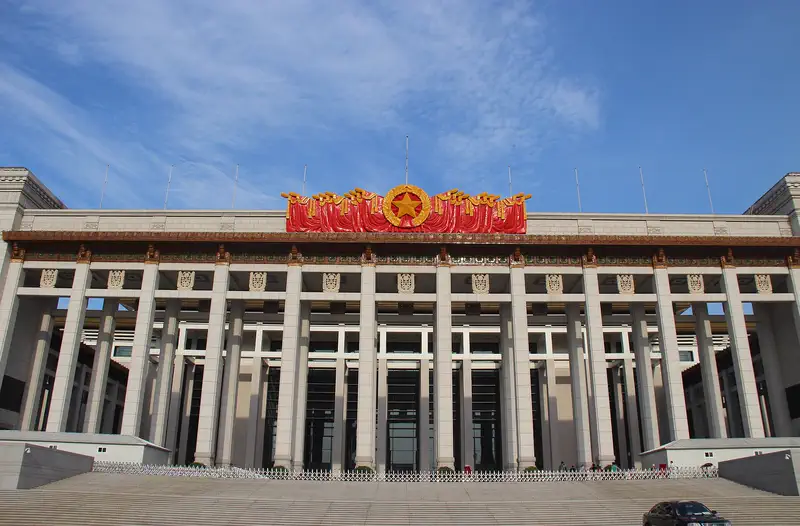
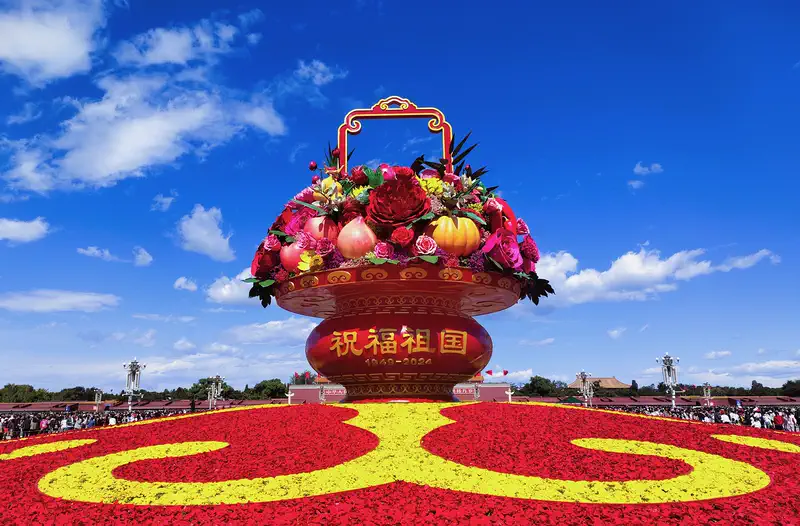
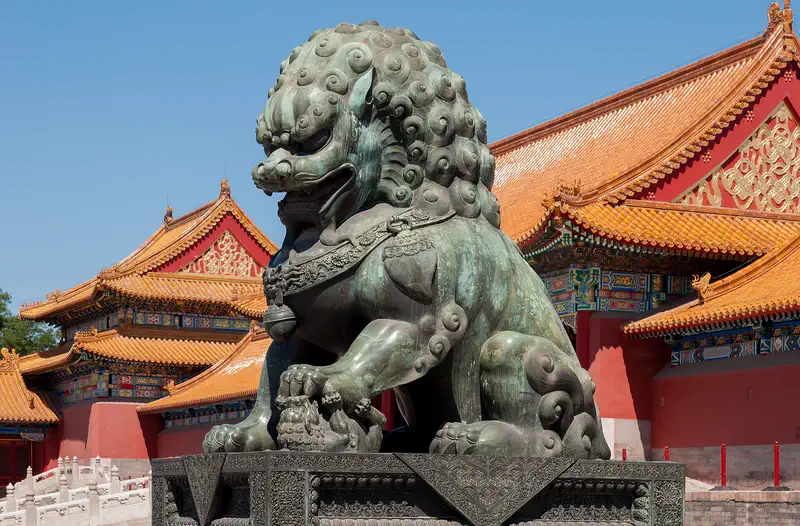
Forbidden City (Palace Museum) 故宫
The largest preserved imperial palace complex in the world, residence of 24 emperors of the Ming and Qing dynasties.
≈ 110 km from Tianjin
More on Tianjin
Itineraries visiting Tianjin
- Beijing–Tianjin long weekend in 3 days
3d · One day on Beijing's sites, a day-trip to Tianjin's Italian quarter and food street, return same evening.
- Train-only China — 14 days using HSR exclusively, no flights
14d · Fourteen days across eastern and central China using only high-speed rail — no domestic flights. A lower-carbon alternative that also provides a closer view of the country at ground level.
Food of Northern China
- Beijing Lamb Hot Pot涮羊肉
Beijing-Mongolian style hot pot — clear broth, thinly-sliced lamb, sesame-paste dipping sauce.
- Boiled Dumplings (Shuijiao)水饺
Wheat-wrapper dumplings filled with pork-and-cabbage, lamb-and-leek, or vegetable, boiled and served with vinegar.
- Cat's Ear Noodles猫耳朵
Small thumbnail-pinched Shanxi pasta, shaped like cat's ears. Stir-fried with vegetables or in soup.
- Goubuli Baozi狗不理包子
Tianjin's signature steamed pork buns. The original house, founded 1858, is still operating.
Tianjin weather by month
| Month | Jan | Feb | Mar | Apr | May | Jun | Jul | Aug | Sep | Oct | Nov | Dec |
|---|---|---|---|---|---|---|---|---|---|---|---|---|
| High °C | 3 | 6 | 15 | 21 | 27 | 31 | 32 | 30 | 27 | 19 | 11 | 3 |
| Low °C | -7 | -4 | 2 | 9 | 15 | 21 | 23 | 22 | 18 | 9 | 2 | -6 |
| Rain mm | 3 | 11 | 13 | 26 | 31 | 61 | 169 | 145 | 46 | 26 | 31 | 4 |
| Rain days | 1 | 2 | 3 | 4 | 5 | 7 | 12 | 12 | 4 | 3 | 3 | 1 |
2019–2023 average via Open-Meteo ERA5 (ERA5 reanalysis). "Rain days" = days per month with ≥1 mm precipitation.
Frequently asked questions
- When is the best time to visit Tianjin?
- The best months to visit Tianjin are April, May, September, and October. Late April to early June and mid-September to early November. Summer is hot and humid; winter is cold but dry and often clearer than Beijing.
- How many days do you need in Tianjin?
- Plan 4 to 5 days for Tianjin if you want to see the headline sights without rushing — Five Avenues (Wudadao), Italian Style Town (Yidali Fengqing Qu), Tianjin Eye. Add an extra day for day trips from the city or for repeat visits to your favourite neighbourhood.
- Is Tianjin safe for tourists?
- Generally safe. The city is calmer at night than Beijing. Standard taxi-rank rule at the airport.
- How do you get around Tianjin?
- The metro is functional but most tourist sights cluster around the Hai River and the western inner districts and are walkable from each other. Bikes (Meituan, Hello) work well — the Five Avenues was designed for them. Didi and metered taxis are easy.
- What's the daily budget for Tianjin?
- Budget guide for Tianjin: backpackers from around ¥300/day, mid-range travellers ¥650/day, comfortable trips from ¥1500/day. These ranges cover accommodation, food, local transport and one paid sight per day, and exclude flights to and from the city.
- Where should you stay in Tianjin?
- The Hai River area between the Italian district and the Tianjin Eye is the natural base. Heping district (around the Five Avenues) gives boutique heritage hotels. The Binhai New Area is far east and only relevant if you have business at the port or near the new Library.
Spotted something out of date? Submit a correction.
Research
Cross-checked against primary sources
Verified
Address, hours, fees confirmed at the date shown
Updated
Re-verified periodically; corrections welcome