CITY · SICHUAN
Litang
理塘 · Lǐtáng
Overview
A remote Khampa Tibetan town at 4,014 metres on the Sichuan-Tibet Highway in Garzê Prefecture, famous for its high-altitude grasslands, annual horse-racing festival and the birthplace of two Dalai Lamas.
Litang is one of the highest towns in the world — its county town centre sits at approximately 4,014 metres above sea level on a broad highland plain in Garzê Tibetan Autonomous Prefecture. It lies on the G318 National Highway, the Sichuan-Tibet Highway, roughly midway between Kangding to the east and Batang to the west. This positioning has made it a waypoint on the overland route to Lhasa for centuries, and the town maintains a strong Tibetan identity despite its political location within Sichuan province.
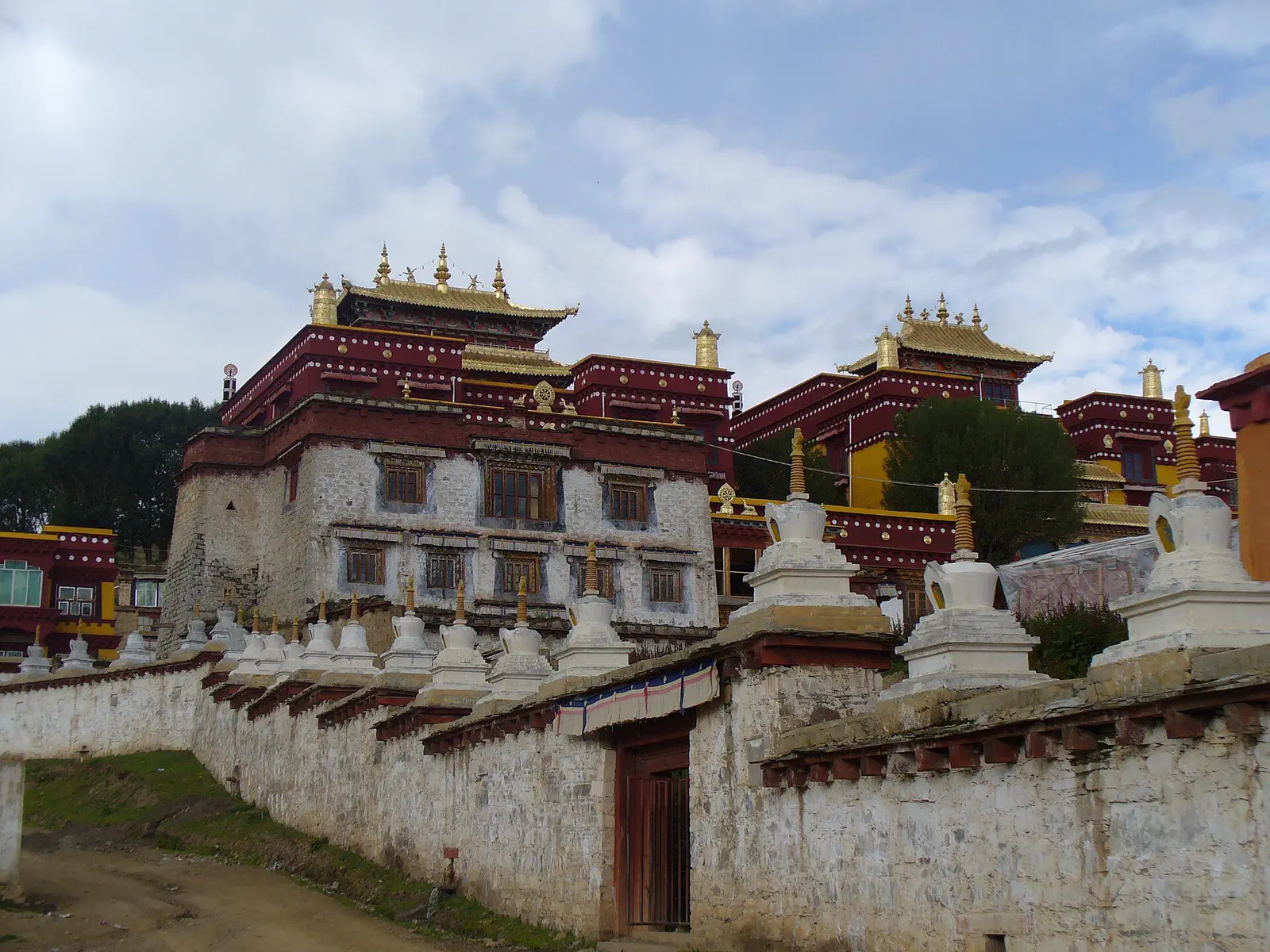
Litang is associated in Tibetan history with the births of the 7th and 10th Dalai Lamas, giving the town a particular spiritual significance within the Tibetan Buddhist world. The Litang Changqing Chunke Monastery — known as the White Temple — is one of the largest Gelugpa monasteries in the Kham region and remains active with a substantial monastic population. The surrounding landscape is open highland grassland at over 4,000 metres, grazed by yak herds, dotted with yak-hair tents, and flanked by snow peaks on the horizon.
The annual Horse Racing Festival (typically held in August) is the town's most celebrated event: Khampa herders in elaborate traditional dress gather from across the prefecture for horse racing, archery, dancing and markets. The festival draws Chinese tourists and an increasing number of international visitors interested in Tibetan culture.
Altitude sickness is a genuine concern at Litang. Most visitors should plan for at least one full rest day before exerting themselves. The town has a simple medical facility.
Cultural & access notes
Litang is a Khampa Tibetan town. Khampa men are traditionally known as skilled horsemen and proud of their cultural distinctiveness. Approach with genuine respect. The monastery follows the Gelugpa (Yellow Hat) school and has a structured monastic routine. Ask before photographing monks or ceremony participants. A Tibet Travel Permit is not required for Garzê Prefecture (which is within Sichuan), but access rules can change.
What to see
- Changqing Chunke Monastery — the White Temple, one of the largest Gelugpa monasteries in Kham
- Litang Horse Racing Festival (August) — the region's signature event with Khampa horsemanship
- Highland grassland plateau — vast open grazing land with yak herds and nomadic camps
- Snow peaks on the western horizon — visible on clear days from the town plain
- Litang old street — the small traditional market area with Tibetan butter tea shops
- G318 Highway landscape — the road west toward Batang is among the most dramatic in China
What to eat
- Yak butter tea (bō chá) — the Tibetan staple, salty and rich with yak butter
- Zanba (tsampa) — roasted barley flour mixed with butter tea into a dough
- Air-dried yak meat — a Khampa preservation method, intensely savoury
- Yak yoghurt — thick and tangy, sold at the morning market
- Sichuan noodles at Han-run restaurants in the town centre
Getting there
Litang is accessible by road only — no rail connection exists. From Kangding, the journey by long-distance bus or shared taxi takes approximately 5–7 hours via the high passes of the G318 (including the 4,298 m Zheduo Pass and the 4,659 m Haizi Mountain Pass). From Chengdu, the journey is 10–14 hours by road. A small airstrip exists but scheduled commercial services are not established.
Getting around
The town centre is walkable in 30 minutes. Hired vehicles and local minibuses serve the surrounding areas and the monastery. For the Horse Racing Festival grounds and outer valley areas, hiring a vehicle is necessary.
Where to stay
Litang has simple guesthouses and small hotels along the main street. Facilities are basic by urban Chinese standards. During the Horse Racing Festival, accommodation books out entirely — arrive with a confirmed booking.
We list neighbourhoods, not specific hotels — we don't endorse hotels.
When to go
June–September is the only practical window: the grasslands are green, the road passes are open, and temperatures are tolerable (daytime 10–18°C, nights cold). The Horse Racing Festival in August is the most visited period. Outside June–September, the G318 passes may be snow-blocked and temperatures severe.
Budget guide (CNY per day)
| Backpacker | ¥150 |
| Mid-range | ¥320 |
| Comfortable | ¥600 |
Safety notes
Altitude sickness is the primary risk — Litang at 4,014 m will affect most visitors arriving quickly from lower elevations. Symptoms include headache, nausea and fatigue. Rest, hydration and acetazolamide (carry from lower altitude) are the standard management. Do not ascend higher until fully acclimatised. The G318 passes between Kangding and Litang are high-altitude mountain roads subject to weather closures, rockfalls and ice.
Nearby attractions
Day trips within 150 km
Other cities in Sichuan
- Chengdu成都
Capital of Sichuan, the heart of Sichuan cooking and the panda capital of China. A relaxed teahouse-and-mahjong city with imperial sights, the Wuhou Shrine and the Giant Panda Breeding Base.
- Danba丹巴
A Tibetan Gyarong county in western Sichuan's Garzê Prefecture, famous for its ancient stone watchtowers, tiered village settlements on valley walls, and apple orchards in bloom.
- Daocheng稻城
A remote county town in southern Garzê Prefecture, Sichuan, serving as the gateway to Yading Nature Reserve — a high-altitude alpine sanctuary with three snow peaks sacred to Tibetan Buddhism.
- Emei Mountain峨眉山
One of China's Four Sacred Buddhist Mountains, a UNESCO World Heritage site in Sichuan with dense cloud forest, monasteries and the famous sea of clouds from its 3,099-metre summit.
- Jiuzhaigou region九寨沟
UNESCO-listed alpine valley in northern Sichuan with multi-coloured travertine pools and waterfalls. Reopened progressively after the 2017 earthquake. Combine with Huanglong.
- Kangding康定
Gateway town on the Sichuan-Tibet Highway, set in a narrow valley at 2,560 m between Han China and the Tibetan plateau. Known for the folk song 'Kangding Love Song' and a mix of Tibetan, Han and Khampa cultures.
- Leshan乐山
A Sichuan city at the confluence of three rivers, home to the Leshan Giant Buddha — the world's tallest premodern stone statue at 71 metres — jointly inscribed as a UNESCO World Heritage Site with Emei Mountain.
- Songpan松潘
Historic walled town in northern Sichuan at 2,850 m, gateway to Huanglong Scenic Area and the Yellow Dragon Valley. Ming-dynasty town walls, a Tibetan and Hui mix, and the nearest substantial settlement to Jiuzhaigou.
Food of Southwestern China
- Baba Flatbread粑粑
Yunnan's daily flatbread — a thick wheat or rice-flour round cooked on a griddle and eaten plain or stuffed.
- Bang Bang Chicken棒棒鸡
Cold poached chicken shredded by hand, dressed in chilli oil, sesame paste and Sichuan peppercorn.
- Boiled Fish in Chilli Oil水煮鱼
Fish slices submerged in a deep pool of chilli oil and Sichuan peppercorns. Served bubbling.
- Chongqing Hotpot重庆火锅
The original mala hotpot — a simmering cauldron of beef tallow, Pixian doubanjiang and Sichuan peppercorn for communal dipping.
Litang weather by month
| Month | Jan | Feb | Mar | Apr | May | Jun | Jul | Aug | Sep | Oct | Nov | Dec |
|---|---|---|---|---|---|---|---|---|---|---|---|---|
| High °C | 1 | 1 | 5 | 8 | 11 | 14 | 15 | 15 | 13 | 10 | 6 | 2 |
| Low °C | -10 | -10 | -7 | -4 | 0 | 4 | 5 | 5 | 3 | -1 | -5 | -8 |
| Rain mm | 9 | 14 | 17 | 55 | 149 | 237 | 234 | 190 | 198 | 80 | 19 | 8 |
| Rain days | 3 | 4 | 6 | 12 | 21 | 26 | 26 | 22 | 23 | 15 | 4 | 3 |
2019–2023 average via Open-Meteo ERA5 (ERA5 reanalysis). "Rain days" = days per month with ≥1 mm precipitation.
Frequently asked questions
- When is the best time to visit Litang?
- The best months to visit Litang are June, July, August, and September. June–September is the only practical window: the grasslands are green, the road passes are open, and temperatures are tolerable (daytime 10–18°C, nights cold). The Horse Racing Festival in August is the most visited period.
- How many days do you need in Litang?
- Plan 3 days for Litang if you want to see the headline sights without rushing — Changqing Chunke Monastery, Litang Horse Racing Festival (August), Highland grassland plateau. Add an extra day for day trips from the city or for repeat visits to your favourite neighbourhood.
- Is Litang safe for tourists?
- Altitude sickness is the primary risk — Litang at 4,014 m will affect most visitors arriving quickly from lower elevations. Symptoms include headache, nausea and fatigue. Rest, hydration and acetazolamide (carry from lower altitude) are the standard management.
- How do you get around Litang?
- The town centre is walkable in 30 minutes. Hired vehicles and local minibuses serve the surrounding areas and the monastery. For the Horse Racing Festival grounds and outer valley areas, hiring a vehicle is necessary.
- What's the daily budget for Litang?
- Budget guide for Litang: backpackers from around ¥150/day, mid-range travellers ¥320/day, comfortable trips from ¥600/day. These ranges cover accommodation, food, local transport and one paid sight per day, and exclude flights to and from the city.
- Where should you stay in Litang?
- Litang has simple guesthouses and small hotels along the main street. Facilities are basic by urban Chinese standards. During the Horse Racing Festival, accommodation books out entirely — arrive with a confirmed booking.
Spotted something out of date? Submit a correction.
Research
Cross-checked against primary sources
Verified
Address, hours, fees confirmed at the date shown
Updated
Re-verified periodically; corrections welcome