CITY · SICHUAN
Leshan
乐山 · Lèshān
Overview
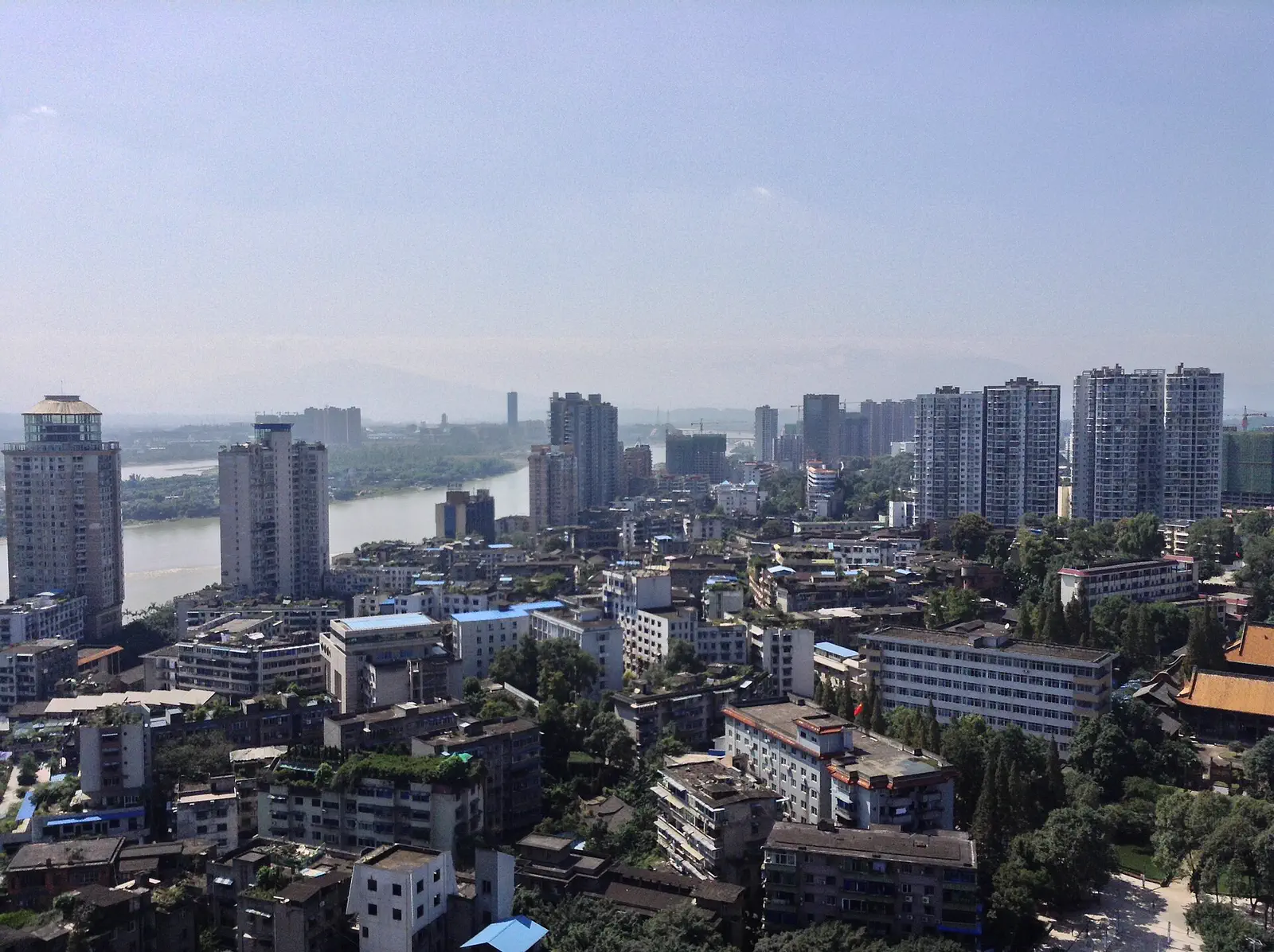
A Sichuan city at the confluence of three rivers, home to the Leshan Giant Buddha — the world's tallest premodern stone statue at 71 metres — jointly inscribed as a UNESCO World Heritage Site with Emei Mountain.
Leshan is a city in southern Sichuan at the point where the Min, Qingyi and Dadu rivers converge before flowing into the Yangtze system. Its fame rests on a single monument that has defined the site for over 1,200 years: the Leshan Giant Buddha (Dafo), carved from the red sandstone cliff face of Lingyun Mountain between 713 and 803 CE during the Tang dynasty. The statue depicts Maitreya — the future Buddha — and at 71 metres from crown to foot was the tallest Buddha statue in the world until the construction of modern monuments. It was inscribed as a UNESCO World Heritage Site together with Emei Mountain in 1996.
The Buddha sits at the river confluence, originally positioned so that its gaze would calm the dangerous currents that wrecked boats. An elaborate internal drainage system of gutters and channels within the statue keeps the stone from deteriorating — an engineering achievement as impressive as the carving itself. The full figure is only visible from the river: the standard viewing approach is a boat trip from Leshan's tourist pier, which reveals the Giant Buddha's scale in relation to the cliffs around it. Those wishing to stand at the Buddha's feet descend a steep narrow stairway cut into the cliff beside the statue.
Beyond the Buddha, Leshan has a navigable old town along the riverfront, accessible food streets with excellent Sichuan cooking, and serves as the main junction point for visitors combining the Giant Buddha with Emei Mountain, 35 km to the west. The two UNESCO sites are almost always visited together.
Cultural & access notes
The Giant Buddha is an active religious site as well as a tourist attraction. The adjacent Lingyun Temple hosts monastic activity. Incense burning at the temple complexes continues year-round. The cliff stairway area has limited space — be patient with the slow-moving queue.
What to see
- Leshan Giant Buddha — the 71-metre Tang-dynasty cliff-carved Maitreya, seen from the river or by descending the cliff stairway
- Lingyun Mountain scenic area — the cliff complex, temples and walking paths around the Buddha
- Boat trip on the river — the only way to see the complete figure in proportion
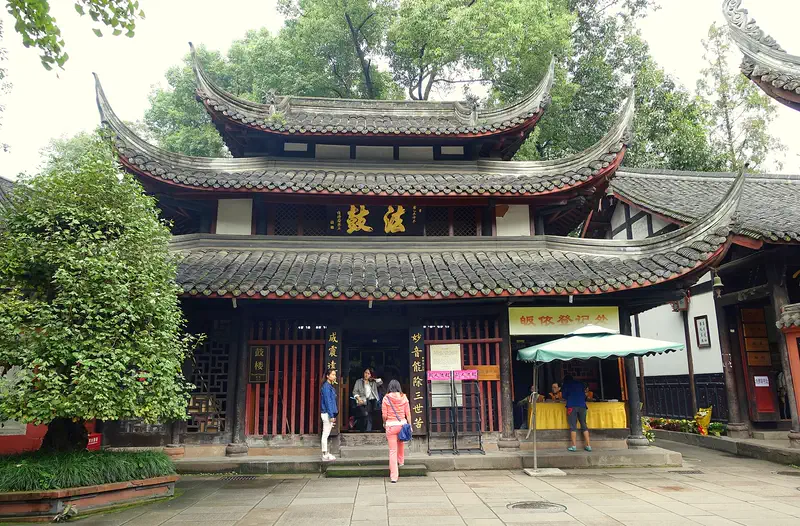
- Wuyou Temple — active Buddhist monastery on the adjacent hill
- Leshan old town riverside area — Qing and Republican-era streetscape with local food stalls
- Emei Mountain — 35 km west, usually combined as a 2–3 day itinerary
What to eat
- Leshan bowl chicken (bo bo ji) — skewered meats and vegetables in a mala broth served in ceramic bowls
- Mapo tofu — the classic Sichuan silken tofu in spiced fermented black bean sauce
- Sichuan mala hotpot — widely available throughout the city
- River fish dishes — fresh catches from the Min River at riverside restaurants
- Jian fen — bean jelly with chilli oil and preserved vegetables, a local breakfast
Getting there
Leshan is on the Chengdu-Leshan high-speed rail line; from Chengdu East station approximately 35 minutes by high-speed, 1 hour by regular train. The Giant Buddha scenic area is about 15 km from Leshan station by taxi or tourist bus. From Emei Shan station, local buses and taxis cover the 35 km in 40–50 minutes. No airport serves Leshan directly; Chengdu's airports (CTU/TFU) are the gateways.
Getting around
Tourist buses run between Leshan railway station, the city centre, and the Giant Buddha scenic area. Taxis are available. The scenic area itself is navigable on foot once inside.
Where to stay
Leshan city has a wide range of hotels at all price points. Staying near the old town gives easy access to both the evening food streets and the early-morning boat trips to the Buddha (before crowds build). Emei City, 35 km west, is the alternative base for those prioritising Emei Mountain.
We list neighbourhoods, not specific hotels — we don't endorse hotels.
When to go
March–May and September–November are pleasant. Summer (June–August) is hot and humid; the Buddha viewing from the river can involve direct sun exposure. The cliff stairway queues are longest on summer weekends and Golden Week.
Budget guide (CNY per day)
| Backpacker | ¥200 |
| Mid-range | ¥420 |
| Comfortable | ¥850 |
Safety notes
The cliff stairway to the Buddha's feet is very narrow and steep — descent can be slow when the queue backs up. In rain the stone becomes slippery. Boat trips on the river are generally safe; life jackets are provided.
Nearby attractions
Day trips within 150 km
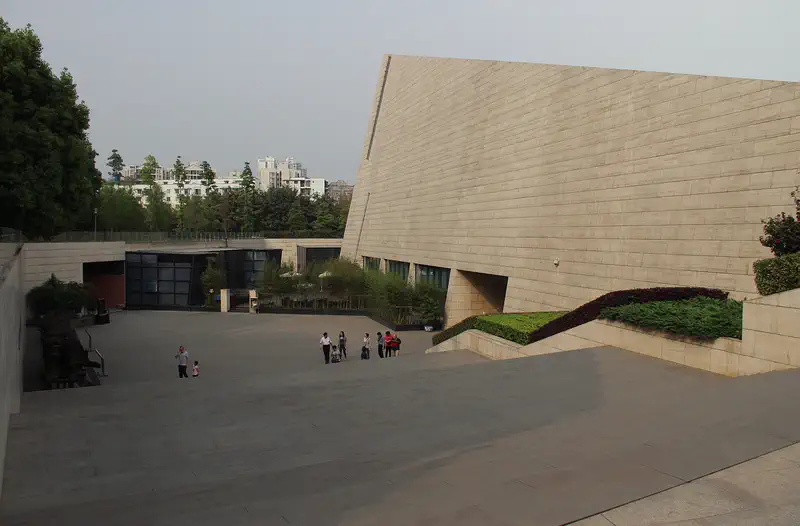
Jinsha Site Museum 金沙遗址博物馆
Bronze Age site museum on a 3,000-year-old ritual centre discovered in Chengdu in 2001. The Sun Bird gold disc is the symbol of Chengdu.
≈ 125 km from Leshan
Other cities in Sichuan
- Chengdu成都
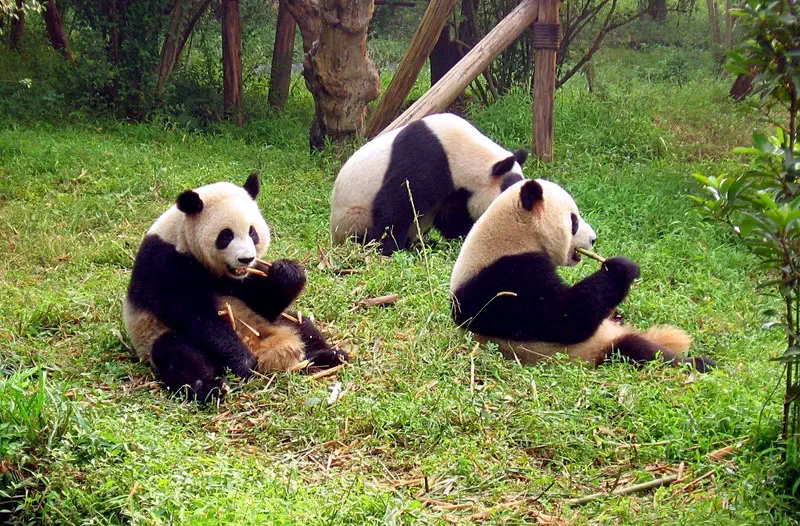
Capital of Sichuan, the heart of Sichuan cooking and the panda capital of China. A relaxed teahouse-and-mahjong city with imperial sights, the Wuhou Shrine and the Giant Panda Breeding Base.
- Danba丹巴
A Tibetan Gyarong county in western Sichuan's Garzê Prefecture, famous for its ancient stone watchtowers, tiered village settlements on valley walls, and apple orchards in bloom.
- Daocheng稻城
A remote county town in southern Garzê Prefecture, Sichuan, serving as the gateway to Yading Nature Reserve — a high-altitude alpine sanctuary with three snow peaks sacred to Tibetan Buddhism.
- Emei Mountain峨眉山
One of China's Four Sacred Buddhist Mountains, a UNESCO World Heritage site in Sichuan with dense cloud forest, monasteries and the famous sea of clouds from its 3,099-metre summit.
- Jiuzhaigou region九寨沟
UNESCO-listed alpine valley in northern Sichuan with multi-coloured travertine pools and waterfalls. Reopened progressively after the 2017 earthquake. Combine with Huanglong.
- Kangding康定
Gateway town on the Sichuan-Tibet Highway, set in a narrow valley at 2,560 m between Han China and the Tibetan plateau. Known for the folk song 'Kangding Love Song' and a mix of Tibetan, Han and Khampa cultures.
- Litang理塘
A remote Khampa Tibetan town at 4,014 metres on the Sichuan-Tibet Highway in Garzê Prefecture, famous for its high-altitude grasslands, annual horse-racing festival and the birthplace of two Dalai Lamas.
- Songpan松潘
Historic walled town in northern Sichuan at 2,850 m, gateway to Huanglong Scenic Area and the Yellow Dragon Valley. Ming-dynasty town walls, a Tibetan and Hui mix, and the nearest substantial settlement to Jiuzhaigou.
Itineraries visiting Leshan
- Four Buddhist Mountains Circuit, 10 days
10d · China's four sacred Buddhist mountains in sequence: Wutai (Shanxi), Jiuhua (Anhui), Emei (Sichuan), and Putuo (Zhejiang) — each dedicated to a different bodhisattva.
- Buddhist pilgrimage — Putuoshan, Wutaishan, Emei and Jiuhua, 10 days
10d · Ten days visiting the Four Sacred Buddhist Mountains of China — Putuo (Guanyin), Wutai (Manjushri), Emei (Samantabhadra) and Jiuhua (Ksitigarbha) — each with its own character and monastic tradition.
Food of Southwestern China
- Baba Flatbread粑粑
Yunnan's daily flatbread — a thick wheat or rice-flour round cooked on a griddle and eaten plain or stuffed.
- Bang Bang Chicken棒棒鸡
Cold poached chicken shredded by hand, dressed in chilli oil, sesame paste and Sichuan peppercorn.
- Boiled Fish in Chilli Oil水煮鱼
Fish slices submerged in a deep pool of chilli oil and Sichuan peppercorns. Served bubbling.
- Chongqing Hotpot重庆火锅
The original mala hotpot — a simmering cauldron of beef tallow, Pixian doubanjiang and Sichuan peppercorn for communal dipping.
Leshan weather by month
| Month | Jan | Feb | Mar | Apr | May | Jun | Jul | Aug | Sep | Oct | Nov | Dec |
|---|---|---|---|---|---|---|---|---|---|---|---|---|
| High °C | 11 | 14 | 20 | 24 | 27 | 30 | 31 | 31 | 27 | 22 | 17 | 12 |
| Low °C | 4 | 7 | 11 | 14 | 18 | 22 | 23 | 24 | 20 | 16 | 11 | 6 |
| Rain mm | 25 | 41 | 67 | 114 | 115 | 108 | 231 | 353 | 174 | 79 | 47 | 29 |
| Rain days | 8 | 11 | 12 | 16 | 16 | 14 | 17 | 20 | 18 | 18 | 10 | 8 |
2019–2023 average via Open-Meteo ERA5 (ERA5 reanalysis). "Rain days" = days per month with ≥1 mm precipitation.
Frequently asked questions
- When is the best time to visit Leshan?
- The best months to visit Leshan are March, April, May, September, October, and November. March–May and September–November are pleasant. Summer (June–August) is hot and humid; the Buddha viewing from the river can involve direct sun exposure.
- How many days do you need in Leshan?
- Plan 3 days for Leshan if you want to see the headline sights without rushing — Leshan Giant Buddha, Lingyun Mountain scenic area, Boat trip on the river. Add an extra day for day trips from the city or for repeat visits to your favourite neighbourhood.
- Is Leshan safe for tourists?
- The cliff stairway to the Buddha's feet is very narrow and steep — descent can be slow when the queue backs up. In rain the stone becomes slippery. Boat trips on the river are generally safe; life jackets are provided.
- How do you get around Leshan?
- Tourist buses run between Leshan railway station, the city centre, and the Giant Buddha scenic area. Taxis are available. The scenic area itself is navigable on foot once inside.
- What's the daily budget for Leshan?
- Budget guide for Leshan: backpackers from around ¥200/day, mid-range travellers ¥420/day, comfortable trips from ¥850/day. These ranges cover accommodation, food, local transport and one paid sight per day, and exclude flights to and from the city.
- Where should you stay in Leshan?
- Leshan city has a wide range of hotels at all price points. Staying near the old town gives easy access to both the evening food streets and the early-morning boat trips to the Buddha (before crowds build). Emei City, 35 km west, is the alternative base for those prioritising Emei Mountain.
Spotted something out of date? Submit a correction.
Research
Cross-checked against primary sources
Verified
Address, hours, fees confirmed at the date shown
Updated
Re-verified periodically; corrections welcome