CITY · SICHUAN
Emei Mountain
峨眉山 · Éméi Shān
Overview
One of China's Four Sacred Buddhist Mountains, a UNESCO World Heritage site in Sichuan with dense cloud forest, monasteries and the famous sea of clouds from its 3,099-metre summit.
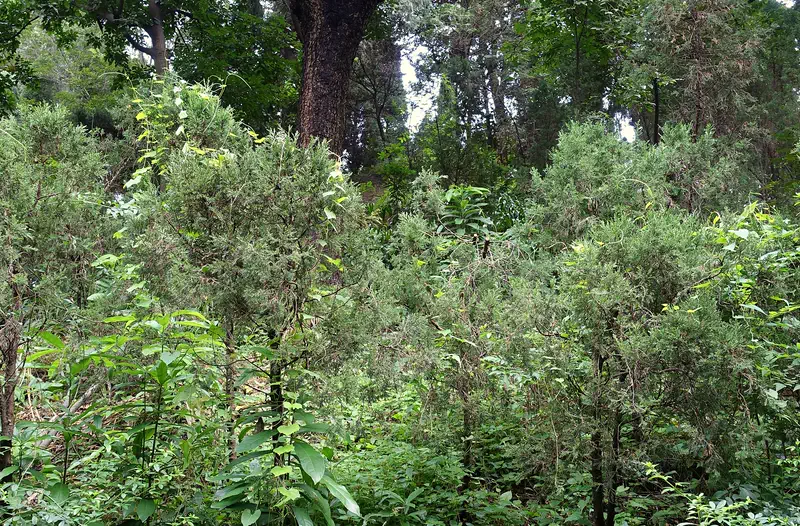
Emei Mountain — Emei Shan — is one of China's Four Sacred Buddhist Mountains, associated with Samantabhadra (Puxian Pusa), and was jointly inscribed as a UNESCO World Heritage Site with the Leshan Giant Buddha in 1996. The mountain rises from subtropical forested foothills near the Chengdu Plain to a summit of 3,099 metres at Jinding (Golden Summit), passing through five distinct vegetation zones: subtropical, warm temperate, cool temperate, subalpine and alpine. The cloud forests at mid-altitude are particularly atmospheric, often shrouded in mist and home to Tibetan macaque monkeys that have become accustomed to tourists along certain trail sections.
The Golden Summit is the culminating destination for most visitors — a cluster of temple buildings and a large gilded statue of Puxian on an elephant, now with a modern steel-and-glass observation platform added. On clear days, which are rare given the mountain's permanently cloud-prone climate, the panorama extends to Gongga Mountain (7,556 m) on the western horizon. The so-called Buddha's Halo — a circular rainbow with a dark shadow at the centre visible when looking down from the summit into a cloud layer — is an optical phenomenon specific to this elevation and celebrated in classical Chinese literature.
The mountain base town is Emei City (also called Emei Shan City), a mid-sized Sichuan city with all services. The main entrance to the scenic area is at Baoguo Temple, a large active monastery about 6 km from Emei City. Chengdu is 130 km north and is the major hub for most international visitors; Leshan, famous for its Giant Buddha, is 35 km east and the two sites are commonly combined.
Cultural & access notes
The mountain is an active Buddhist site with monastic communities at multiple levels. Temple ceremonies follow daily schedules. Photography inside main shrine halls is typically discouraged during worship. The mountain's Buddhist identity is integrated with the natural landscape — the monkeys themselves have a semi-sacred status in local lore.
What to see
- Golden Summit (Jinding, 3,099 m) — summit complex with the Puxian statue and sea-of-clouds views
- Wannian Temple — major monastery at mid-altitude with an 800-year-old bronze Puxian statue
- Baoguo Temple — large entrance monastery at the base, with an active monastic community
- Qingyin Pavilion — scenic mid-mountain rest point on the classic trail
- Tibetan macaques — troops of monkeys on the trail below the summit (keep food concealed)
- Sea of clouds from the summit — the main visual draw on clear days
- Buddha's Halo — the circular optical phenomenon visible at the summit in certain conditions
What to eat
- Emei mountain tofu — firm, locally made bean curd in mountain broth
- Bamboo shoots — stir-fried or in soup, a Sichuan foothills staple
- Sichuan mala hotpot — widely available in Emei City
- Dan dan noodles — sesame-paste and minced-pork Sichuan noodles
- Buddhist vegetarian dishes — at monastery-linked restaurants throughout the mountain
Getting there
Emei Shan railway station receives trains from Chengdu (about 1.5 hours by regular rail, or 35 minutes by high-speed to Leshan then a short bus connection). The nearest airports are Chengdu Tianfu International Airport (TFU) and Chengdu Shuangliu (CTU), both approximately 2 hours from Emei Shan. Leshan is 35 km by road.
Getting around
Cable cars serve the upper mountain (from Leidong Ping to near Jinding, and from Wannian to the mid-mountain area). A bus network runs within the scenic area. The full ascent trail from Baoguo Temple to the summit takes 2 days on foot — most visitors use bus plus cable car.
Where to stay
Emei City has the widest range of accommodation. Mid-mountain guesthouses and temple-affiliated rooms are available at Wannian and Qingyin Pavilion zones for those doing multi-day ascents. Summit-area accommodation is limited and expensive.
We list neighbourhoods, not specific hotels — we don't endorse hotels.
When to go
April–May and September–October offer the clearest summit conditions, though the mountain is frequently cloudy year-round. Summer (June–August) is warm below and cool at the summit. Winter can bring ice and snow above 2,000 m — the summit temple is accessible but the trail to the cable car may be icy.
Budget guide (CNY per day)
| Backpacker | ¥250 |
| Mid-range | ¥500 |
| Comfortable | ¥1000 |
Safety notes
The Tibetan macaques near the summit zone are bold and will grab food, bags and sunglasses. Do not feed them, keep food out of sight, and hold sunglasses firmly. The summit is significantly colder than the base — a warm layer is essential year-round. The summit platform can be icy in winter and in wet weather.
Nearby attractions
Day trips within 150 km
China Visit Guide
Leshan Giant Buddha
Leshan Giant Buddha 乐山大佛
The 71m Tang-dynasty Maitreya Buddha carved into a sandstone cliff at the confluence of three rivers. UNESCO-listed.
≈ 40 km from Emei Mountain
Wuhou Shrine 武侯祠
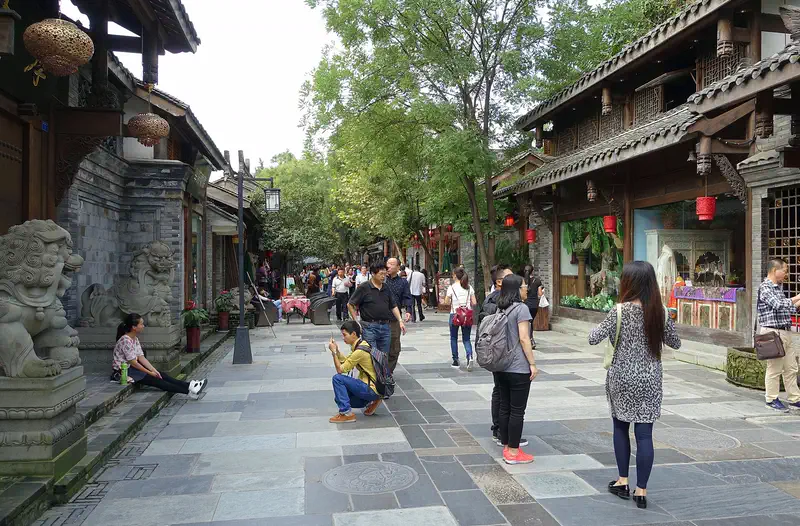
Memorial temple to Three Kingdoms-era statesman Zhuge Liang and the Liu Bei tomb. The historical anchor for the Three Kingdoms-themed Jinli Street next door.
≈ 145 km from Emei Mountain
Other cities in Sichuan
- Chengdu成都
Capital of Sichuan, the heart of Sichuan cooking and the panda capital of China. A relaxed teahouse-and-mahjong city with imperial sights, the Wuhou Shrine and the Giant Panda Breeding Base.
- Danba丹巴
A Tibetan Gyarong county in western Sichuan's Garzê Prefecture, famous for its ancient stone watchtowers, tiered village settlements on valley walls, and apple orchards in bloom.
- Daocheng稻城
A remote county town in southern Garzê Prefecture, Sichuan, serving as the gateway to Yading Nature Reserve — a high-altitude alpine sanctuary with three snow peaks sacred to Tibetan Buddhism.
- Jiuzhaigou region九寨沟
UNESCO-listed alpine valley in northern Sichuan with multi-coloured travertine pools and waterfalls. Reopened progressively after the 2017 earthquake. Combine with Huanglong.
- Kangding康定
Gateway town on the Sichuan-Tibet Highway, set in a narrow valley at 2,560 m between Han China and the Tibetan plateau. Known for the folk song 'Kangding Love Song' and a mix of Tibetan, Han and Khampa cultures.
- Leshan乐山
A Sichuan city at the confluence of three rivers, home to the Leshan Giant Buddha — the world's tallest premodern stone statue at 71 metres — jointly inscribed as a UNESCO World Heritage Site with Emei Mountain.
- Litang理塘
A remote Khampa Tibetan town at 4,014 metres on the Sichuan-Tibet Highway in Garzê Prefecture, famous for its high-altitude grasslands, annual horse-racing festival and the birthplace of two Dalai Lamas.
- Songpan松潘
Historic walled town in northern Sichuan at 2,850 m, gateway to Huanglong Scenic Area and the Yellow Dragon Valley. Ming-dynasty town walls, a Tibetan and Hui mix, and the nearest substantial settlement to Jiuzhaigou.
Itineraries visiting Emei Mountain
- Four Buddhist Mountains Circuit, 10 days
10d · China's four sacred Buddhist mountains in sequence: Wutai (Shanxi), Jiuhua (Anhui), Emei (Sichuan), and Putuo (Zhejiang) — each dedicated to a different bodhisattva.
- Buddhist pilgrimage — Putuoshan, Wutaishan, Emei and Jiuhua, 10 days
10d · Ten days visiting the Four Sacred Buddhist Mountains of China — Putuo (Guanyin), Wutai (Manjushri), Emei (Samantabhadra) and Jiuhua (Ksitigarbha) — each with its own character and monastic tradition.
Food of Southwestern China
- Baba Flatbread粑粑
Yunnan's daily flatbread — a thick wheat or rice-flour round cooked on a griddle and eaten plain or stuffed.
- Bang Bang Chicken棒棒鸡
Cold poached chicken shredded by hand, dressed in chilli oil, sesame paste and Sichuan peppercorn.
- Boiled Fish in Chilli Oil水煮鱼
Fish slices submerged in a deep pool of chilli oil and Sichuan peppercorns. Served bubbling.
- Chongqing Hotpot重庆火锅
The original mala hotpot — a simmering cauldron of beef tallow, Pixian doubanjiang and Sichuan peppercorn for communal dipping.
Emei Mountain weather by month
| Month | Jan | Feb | Mar | Apr | May | Jun | Jul | Aug | Sep | Oct | Nov | Dec |
|---|---|---|---|---|---|---|---|---|---|---|---|---|
| High °C | -6 | -3 | 2 | 6 | 9 | 13 | 15 | 15 | 11 | 5 | 2 | -5 |
| Low °C | -10 | -8 | -3 | 0 | 4 | 8 | 10 | 10 | 6 | 2 | -3 | -9 |
| Rain mm | 52 | 70 | 149 | 216 | 263 | 224 | 320 | 473 | 274 | 204 | 105 | 56 |
| Rain days | 16 | 19 | 26 | 26 | 27 | 26 | 27 | 28 | 27 | 30 | 23 | 18 |
2019–2023 average via Open-Meteo ERA5 (ERA5 reanalysis). "Rain days" = days per month with ≥1 mm precipitation.
Frequently asked questions
- When is the best time to visit Emei Mountain?
- The best months to visit Emei Mountain are April, May, September, and October. April–May and September–October offer the clearest summit conditions, though the mountain is frequently cloudy year-round. Summer (June–August) is warm below and cool at the summit.
- How many days do you need in Emei Mountain?
- Plan 3 days for Emei Mountain if you want to see the headline sights without rushing — Golden Summit (Jinding, 3,099 m), Wannian Temple, Baoguo Temple. Add an extra day for day trips from the city or for repeat visits to your favourite neighbourhood.
- Is Emei Mountain safe for tourists?
- The Tibetan macaques near the summit zone are bold and will grab food, bags and sunglasses. Do not feed them, keep food out of sight, and hold sunglasses firmly. The summit is significantly colder than the base — a warm layer is essential year-round.
- How do you get around Emei Mountain?
- Cable cars serve the upper mountain (from Leidong Ping to near Jinding, and from Wannian to the mid-mountain area). A bus network runs within the scenic area. The full ascent trail from Baoguo Temple to the summit takes 2 days on foot — most visitors use bus plus cable car.
- What's the daily budget for Emei Mountain?
- Budget guide for Emei Mountain: backpackers from around ¥250/day, mid-range travellers ¥500/day, comfortable trips from ¥1000/day. These ranges cover accommodation, food, local transport and one paid sight per day, and exclude flights to and from the city.
- Where should you stay in Emei Mountain?
- Emei City has the widest range of accommodation. Mid-mountain guesthouses and temple-affiliated rooms are available at Wannian and Qingyin Pavilion zones for those doing multi-day ascents. Summit-area accommodation is limited and expensive.
Spotted something out of date? Submit a correction.
Research
Cross-checked against primary sources
Verified
Address, hours, fees confirmed at the date shown
Updated
Re-verified periodically; corrections welcome