CITY · SHANDONG
Zoucheng
邹城 · Zōuchéng
Overview
The birthplace of Mencius (Mengzi), second sage of the Confucian tradition, with significant temple and ancestral sites that complement the nearby Confucius sites of Qufu.
Zoucheng is a county-level city in southern Shandong, approximately 25 km south of Qufu on the same rail line. Its primary claim to significance for cultural tourism is as the birthplace of Mencius (Mengzi, c. 372–289 BCE) — the philosopher whose systematic development of Confucian thought earned him the title 'Second Sage' in Chinese tradition. The Mencius Temple (Mengmiao), the Mencius Family Mansion (Mengfu), and the Mencius Cemetery (Menglin) form a trio of heritage sites that parallel Qufu's Confucius Temple-Mansion-Cemetery complex and are managed under the same UNESCO World Heritage inscription.
The Mencius Temple in the centre of Zoucheng is a large imperial complex, rebuilt in its current form primarily during the Ming and Qing dynasties and funded by the imperial court as a counterpart to the Confucius Temple in Qufu. The complex includes ceremonial gates, a large ancient ginkgo tree said to have been planted by Mencius himself, and the main ceremonial hall. The Mencius Family Mansion is the residential compound of the Meng clan, direct descendants of Mencius who maintained the family succession into the 20th century. The Mencius Cemetery, 1 km north of the city, is a large wooded burial ground.
Zoucheng is commonly visited as a day trip or half-day extension from Qufu. Jining is the regional transport hub about 35 km west. The two Sage birthplace sites — Qufu and Zoucheng — are standardly combined on a Confucian pilgrimage itinerary.
Cultural & access notes
Zoucheng is less visited than Qufu and retains a more authentic local character. The Meng clan maintains the ancestral sites. The Confucian tradition treats Mencius as the definitive interpreter of Confucius — his emphasis on the innate goodness of human nature and the importance of virtuous government were foundational to the entire subsequent Confucian tradition.
What to see
- Mencius Temple (Mengmiao) — the imperial ceremonial complex in the city centre
- Mencius Family Mansion (Mengfu) — the ancestral residence of the Meng clan
- Mencius Cemetery (Menglin) — the forested burial ground, 1 km north of the city
- Birthplace of Mencius site — a smaller memorial marker in the old town area
- Ancient ginkgo trees in the temple complex — claimed to predate the Song-dynasty rebuilding
What to eat
- Shandong braised pork (hong shao rou) — the staple slow-cook dish of the region
- Steamed buns with leek and pork filling (jiaozi and baozi variants)
- Shandong-style roasted chicken
- Jizi fish — fresh freshwater fish from the Shandong plain rivers
- Congee with preserved vegetables — a common breakfast across the Qufu-Zoucheng area
Getting there
Zoucheng is served by railway from Jining and Qufu. From Qufu East high-speed station, a short taxi or bus ride covers the 25 km to Zoucheng. From Jinan (TNA) by rail approximately 1.5 hours to Jining then a connection. The nearest airport is Jinan Yaoqiang (TNA) or Jining Qufu Airport.
Getting around
Zoucheng city is compact. Taxis cover the Mencius Temple and Mansion. A taxi or walk covers the distance to the Mencius Cemetery.
Where to stay
Most visitors stay in Qufu (25 km north) and visit Zoucheng as a day trip. Zoucheng has standard budget and mid-range Chinese hotels for those choosing to stay.
We list neighbourhoods, not specific hotels — we don't endorse hotels.
When to go
April–May and September–October are best. September 12 by the lunar calendar (the traditional date of Mencius's birth) sees a small commemorative ceremony at the temple. The sites are quieter than Qufu year-round.
Budget guide (CNY per day)
| Backpacker | ¥150 |
| Mid-range | ¥320 |
| Comfortable | ¥650 |
Safety notes
No specific safety concerns. Standard precautions for heritage site visits apply.
Nearby attractions
Day trips within 150 km
Other cities in Shandong
- Jinan济南
Capital of Shandong, 'City of Springs' — 72 named natural springs run through the old town, with Baotu Spring as the centrepiece.
- Mount Tai (Taishan)泰山
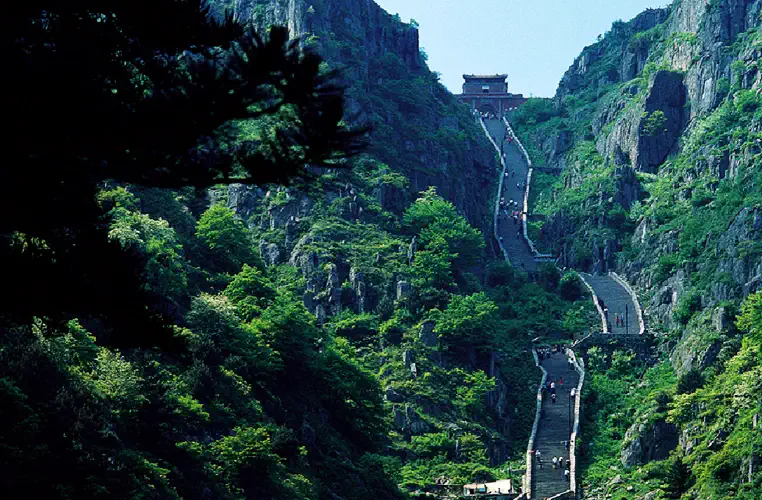
The foremost of China's Five Sacred Mountains, a UNESCO World Heritage site revered by Confucians, Daoists and emperors alike, rising from the Shandong plain near the city of Tai'an.
- Qingdao青岛
German colonial-era port on the Shandong coast — red roofs, beer that came over with the Germans in 1903, and the cleanest beaches on the eastern coast.
- Qufu曲阜
Confucius's hometown in southwestern Shandong. The Confucius Temple, Confucius Family Mansion, and Confucius Forest — collectively UNESCO-listed.
- Tai'an泰安
City at the foot of Mount Tai (Taishan) — the most sacred of China's Five Sacred Mountains and a UNESCO World Heritage site. Dai Temple in the city centre is the ceremonial gateway; the mountain summit sunrise draws pilgrims and hikers in every season.
- Weifang潍坊
Shandong city known internationally as the Kite Capital of the World. The Weifang International Kite Festival in April is the largest kite event on earth; the city also preserves Yangliuqing woodblock print tradition and Qing-dynasty Yangjiabu folk art village.
- Weihai威海
Cleanest air in eastern China by AQI — a small coastal Shandong city with substantial Korean tourism, the Liu Gong Island naval-history park, and the country's most-photographed coastal cycling route.
- Yantai烟台
Coastal Shandong port and wine region. The Changyu Wine Culture Museum documents the 1892 founding of China's first modern winery; nearby Penglai is the legendary 'Eight Immortals' coast.
Itineraries visiting Zoucheng
Food of Eastern China
- Beggar's Chicken叫花鸡
A whole chicken stuffed with aromatics, wrapped in lotus leaves and clay, then slow-baked until the meat steams in its own juices.
- Drunken Chicken醉鸡
Chicken steamed and marinated in Shaoxing rice wine, served chilled. A Shanghai banquet starter.
- Eight-Treasure Rice八宝饭
A steamed dome of glutinous rice layered with red bean paste and decorated with eight types of preserved fruits and nuts.
- Hairy Crab大闸蟹
Yangcheng Lake mitten crab — the autumn delicacy of the Yangtze Delta. Eaten steamed with vinegar dip.
Zoucheng weather by month
| Month | Jan | Feb | Mar | Apr | May | Jun | Jul | Aug | Sep | Oct | Nov | Dec |
|---|---|---|---|---|---|---|---|---|---|---|---|---|
| High °C | 6 | 10 | 17 | 21 | 27 | 32 | 31 | 30 | 28 | 21 | 15 | 7 |
| Low °C | -3 | 0 | 6 | 10 | 16 | 22 | 24 | 23 | 19 | 11 | 5 | -3 |
| Rain mm | 17 | 23 | 17 | 39 | 42 | 95 | 207 | 185 | 78 | 40 | 37 | 10 |
| Rain days | 3 | 3 | 4 | 6 | 5 | 8 | 14 | 12 | 5 | 5 | 5 | 3 |
2019–2023 average via Open-Meteo ERA5 (ERA5 reanalysis). "Rain days" = days per month with ≥1 mm precipitation.
Frequently asked questions
- When is the best time to visit Zoucheng?
- The best months to visit Zoucheng are April, May, September, and October. April–May and September–October are best. September 12 by the lunar calendar (the traditional date of Mencius's birth) sees a small commemorative ceremony at the temple.
- How many days do you need in Zoucheng?
- Plan 3 days for Zoucheng if you want to see the headline sights without rushing — Mencius Temple (Mengmiao), Mencius Family Mansion (Mengfu), Mencius Cemetery (Menglin). Add an extra day for day trips from the city or for repeat visits to your favourite neighbourhood.
- Is Zoucheng safe for tourists?
- No specific safety concerns. Standard precautions for heritage site visits apply.
- How do you get around Zoucheng?
- Zoucheng city is compact. Taxis cover the Mencius Temple and Mansion. A taxi or walk covers the distance to the Mencius Cemetery.
- What's the daily budget for Zoucheng?
- Budget guide for Zoucheng: backpackers from around ¥150/day, mid-range travellers ¥320/day, comfortable trips from ¥650/day. These ranges cover accommodation, food, local transport and one paid sight per day, and exclude flights to and from the city.
- Where should you stay in Zoucheng?
- Most visitors stay in Qufu (25 km north) and visit Zoucheng as a day trip. Zoucheng has standard budget and mid-range Chinese hotels for those choosing to stay.
Spotted something out of date? Submit a correction.
Research
Cross-checked against primary sources
Verified
Address, hours, fees confirmed at the date shown
Updated
Re-verified periodically; corrections welcome