CITY · INNER MONGOLIA
Baotou
包头 · Bāotóu
Overview
Inner Mongolia's largest city and China's rare earth capital, sitting on the Yellow River bend below the Yin Mountains. Home to Wudang Lamasery, one of China's five great Tibetan Buddhist monasteries, and a working-class industrial character that tourist itineraries rarely encounter.
Baotou is not on most travellers' shortlists, which is part of its appeal for those who make the detour. The city grew into a major industrial centre in the Maoist era, with steel mills and rare earth processing plants that still underpin its economy — Inner Mongolia's deposits of rare earth elements account for a substantial share of global supply, and Baotou is the processing hub. The result is a city with a gritty working character, wide Soviet-influenced boulevards, and no particular effort to perform for tourists.
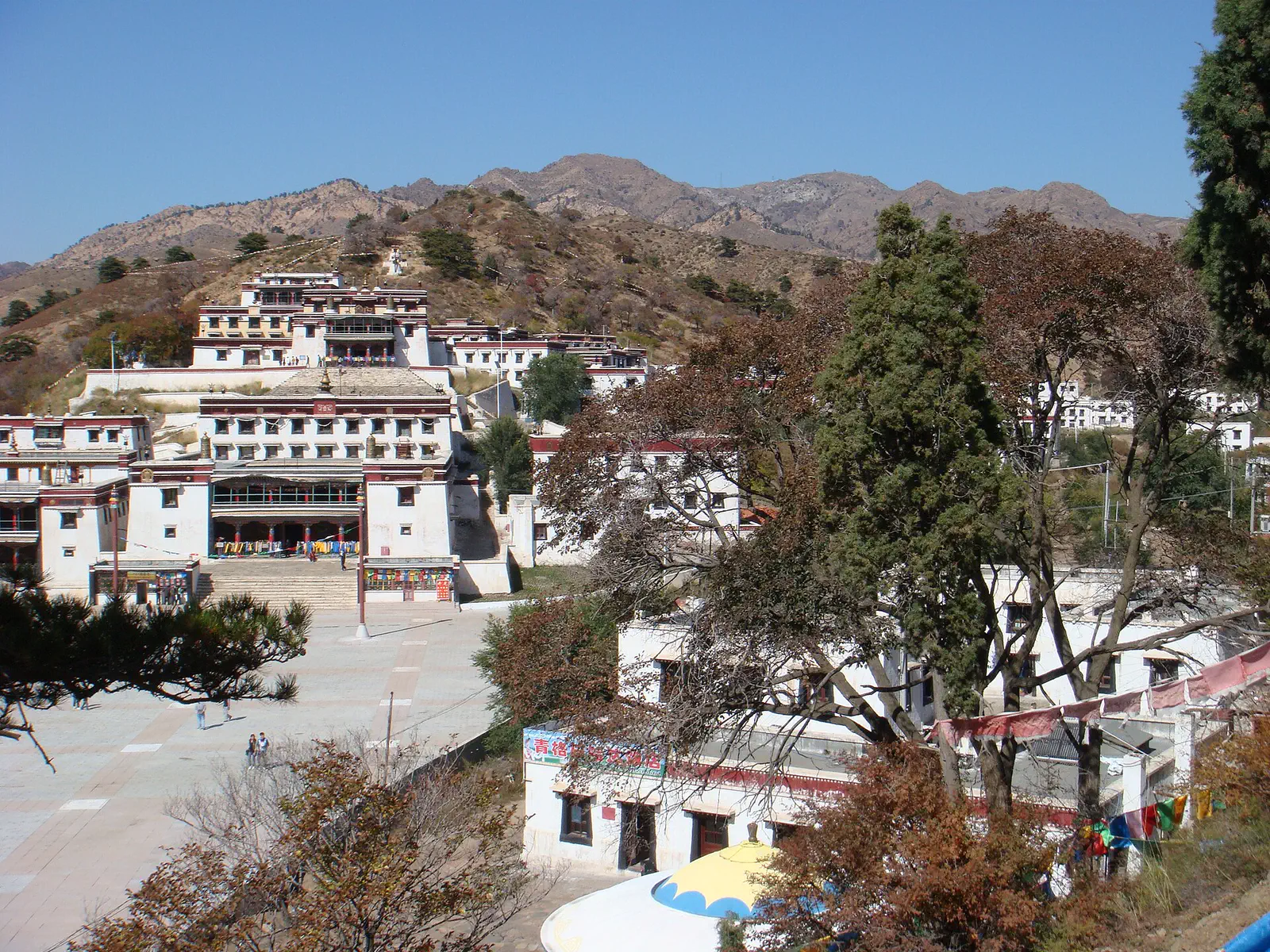
The principal cultural draw is Wudang Lamasery (Guangjue Temple), 70 km east of the city centre. Founded in 1749 during the Qing dynasty, it is one of the five great Tibetan Buddhist monasteries in Inner Mongolia and remains an active monastic community. The main prayer hall, butter-lamp rooms, and the annual Cham dance festival (typically in summer) are genuine religious events rather than tourist performances. The surrounding hills and the approach road through semi-arid steppe have a bleakly scenic quality.
The Yellow River bends sharply near Baotou, and the southern riverbanks around Nanhai Wetland Park provide birdwatching — a surprise given the industrial surroundings. Meilidai village retains Mongolian traditional architecture and is a short drive from the city.
Baotou is most logically visited as part of a circuit combining Hohhot (the regional capital, 2.5 hours east by high-speed rail) and possibly the grasslands around Hulunbuir or Xilin Gol. It works better as a one-night stop than a multi-day base unless Wudang Lamasery is a genuine interest.
Cultural & access notes
Wudang Lamasery is an active religious site. Walk clockwise around all stupas, remove shoes before entering prayer halls, and avoid pointing cameras at monks during religious ceremonies. Ask permission before photographing rituals. The Mongolian cultural elements in the city are genuine — Mongolian is still spoken at home by a minority of residents, and traditional dress appears at local festivals.
What to see
- Wudang Lamasery (Guangjue Temple) — Qing-dynasty Tibetan Buddhist monastery, 70 km east
- Nanhai Wetland Park — Yellow River backwaters, birdwatching
- Baotou Museum — regional and industrial history
- Meilidai Village — Mongolian traditional architecture
- Dinosaur Park (Helingeer area) — fossil-bearing strata near the city
- Steel factory museum tour — by appointment with Baotou Steel Group
What to eat
- Hand-roasted leg of lamb (kao quanyang) — Inner Mongolian staple, better at restaurants in the Mongolian-style dining district
- Mongolian hotpot (shabu-shabu variant) — lamb and mutton, sesame-based dipping sauce
- Mongolian milk tea — salted, with toasted barley and butter
- Nai dofu (milk curd) — pressed and dried, served as a snack
- Hand-grasped meat (shouba rou) — boiled lamb, eaten with fingers in the traditional manner
- Baotou-style beef noodles — regional variant of the northern noodle tradition
Getting there
Baotou Erliban Airport (BAV) has direct flights to Beijing (1.5 hours), Shanghai (3 hours), and Chengdu (2.5 hours). By rail: high-speed trains link Baotou to Hohhot (40 minutes) and Beijing (3 hours). Long-distance buses serve smaller Inner Mongolian towns.
Getting around
City buses reach the main attractions slowly. Taxis are plentiful and cheap by eastern China standards. Wudang Lamasery requires a hired car or tour — it is not practical by public bus. Private car hire for Baotou city and surroundings costs approximately ¥300–500 per day.
Where to stay
Business hotels in the Qingshan district (near the railway station) and the central Donghe area. The Mongolian-themed guesthouses near Nanhai are a useful alternative for those visiting the wetland. Limited English at reception outside major chains.
We list neighbourhoods, not specific hotels — we don't endorse hotels.
When to go
May–June and September–October give the best weather — dry, mild, clear. Summer (July–August) is warm but manageable given the elevation. The Wudang Lamasery Cham dance festival occurs in summer (dates vary by Tibetan calendar). Winters are severe, with temperatures regularly dropping below −20°C.
Budget guide (CNY per day)
| Backpacker | ¥150 |
| Mid-range | ¥320 |
| Comfortable | ¥650 |
Safety notes
Baotou is a safe, ordinary Chinese city. Industrial areas near the rare earth processing zones are not visitor destinations. Air quality is periodically affected by the surrounding industrial activity and dust from the Gobi — a common issue across Inner Mongolia in spring.
Other cities in Inner Mongolia
- Erenhot二连浩特
China's primary land border crossing with Mongolia, on the southern edge of the Gobi Desert. Internationally known for its Cretaceous dinosaur fossil sites, Erenhot is a small frontier city that doubles as a gateway to Ulaanbaatar and a palaeontology landmark.
- Hohhot呼和浩特
Capital of Inner Mongolia. Mongolian and Han cultures intertwined; Tibetan Buddhist monasteries, the Inner Mongolia Museum, and the Xilamuren grasslands within driving distance.
- Hulunbuir呼伦贝尔
Prefecture-level city in northeastern Inner Mongolia encompassing the Hulunbuir Grasslands — one of the largest and least-degraded steppe grasslands remaining in the world. Summer yurt tourism, Evenki and Daur minority culture, and the taiga forests of the Greater Khingan Range.
- Manzhouli满洲里
China's largest land border crossing with Russia, on the edge of the Hulunbuir grasslands in Inner Mongolia. Famous for matryoshka dolls, Cyrillic shopfronts, Russian goods markets, and the Trans-Siberian Railway gateway. A genuine cultural frontier town.
- Xilinhot锡林浩特
The capital of the Xilingol League in Inner Mongolia, gateway to one of China's largest remaining open grassland ecosystems and a centre of Mongolian herder culture.
Food of Northern China
- Beijing Lamb Hot Pot涮羊肉
Beijing-Mongolian style hot pot — clear broth, thinly-sliced lamb, sesame-paste dipping sauce.
- Boiled Dumplings (Shuijiao)水饺
Wheat-wrapper dumplings filled with pork-and-cabbage, lamb-and-leek, or vegetable, boiled and served with vinegar.
- Cat's Ear Noodles猫耳朵
Small thumbnail-pinched Shanxi pasta, shaped like cat's ears. Stir-fried with vegetables or in soup.
- Goubuli Baozi狗不理包子
Tianjin's signature steamed pork buns. The original house, founded 1858, is still operating.
Baotou weather by month
| Month | Jan | Feb | Mar | Apr | May | Jun | Jul | Aug | Sep | Oct | Nov | Dec |
|---|---|---|---|---|---|---|---|---|---|---|---|---|
| High °C | -3 | 2 | 11 | 17 | 23 | 29 | 30 | 27 | 23 | 14 | 5 | -5 |
| Low °C | -13 | -9 | -2 | 3 | 10 | 16 | 18 | 16 | 12 | 3 | -4 | -14 |
| Rain mm | 3 | 3 | 8 | 19 | 17 | 41 | 43 | 65 | 28 | 11 | 12 | 4 |
| Rain days | 1 | 1 | 2 | 4 | 4 | 6 | 7 | 8 | 5 | 3 | 3 | 1 |
2019–2023 average via Open-Meteo ERA5 (ERA5 reanalysis). "Rain days" = days per month with ≥1 mm precipitation.
Frequently asked questions
- When is the best time to visit Baotou?
- The best months to visit Baotou are May, June, September, and October. May–June and September–October give the best weather — dry, mild, clear. Summer (July–August) is warm but manageable given the elevation.
- How many days do you need in Baotou?
- Plan 3 days for Baotou if you want to see the headline sights without rushing — Wudang Lamasery (Guangjue Temple), Nanhai Wetland Park, Baotou Museum. Add an extra day for day trips from the city or for repeat visits to your favourite neighbourhood.
- Is Baotou safe for tourists?
- Baotou is a safe, ordinary Chinese city. Industrial areas near the rare earth processing zones are not visitor destinations. Air quality is periodically affected by the surrounding industrial activity and dust from the Gobi — a common issue across Inner Mongolia in spring.
- How do you get around Baotou?
- City buses reach the main attractions slowly. Taxis are plentiful and cheap by eastern China standards. Wudang Lamasery requires a hired car or tour — it is not practical by public bus.
- What's the daily budget for Baotou?
- Budget guide for Baotou: backpackers from around ¥150/day, mid-range travellers ¥320/day, comfortable trips from ¥650/day. These ranges cover accommodation, food, local transport and one paid sight per day, and exclude flights to and from the city.
- Where should you stay in Baotou?
- Business hotels in the Qingshan district (near the railway station) and the central Donghe area. The Mongolian-themed guesthouses near Nanhai are a useful alternative for those visiting the wetland. Limited English at reception outside major chains.
Spotted something out of date? Submit a correction.
Research
Cross-checked against primary sources
Verified
Address, hours, fees confirmed at the date shown
Updated
Re-verified periodically; corrections welcome