CITY · JIANGXI
Jingdezhen
景德镇 · Jǐngdézhèn
Overview
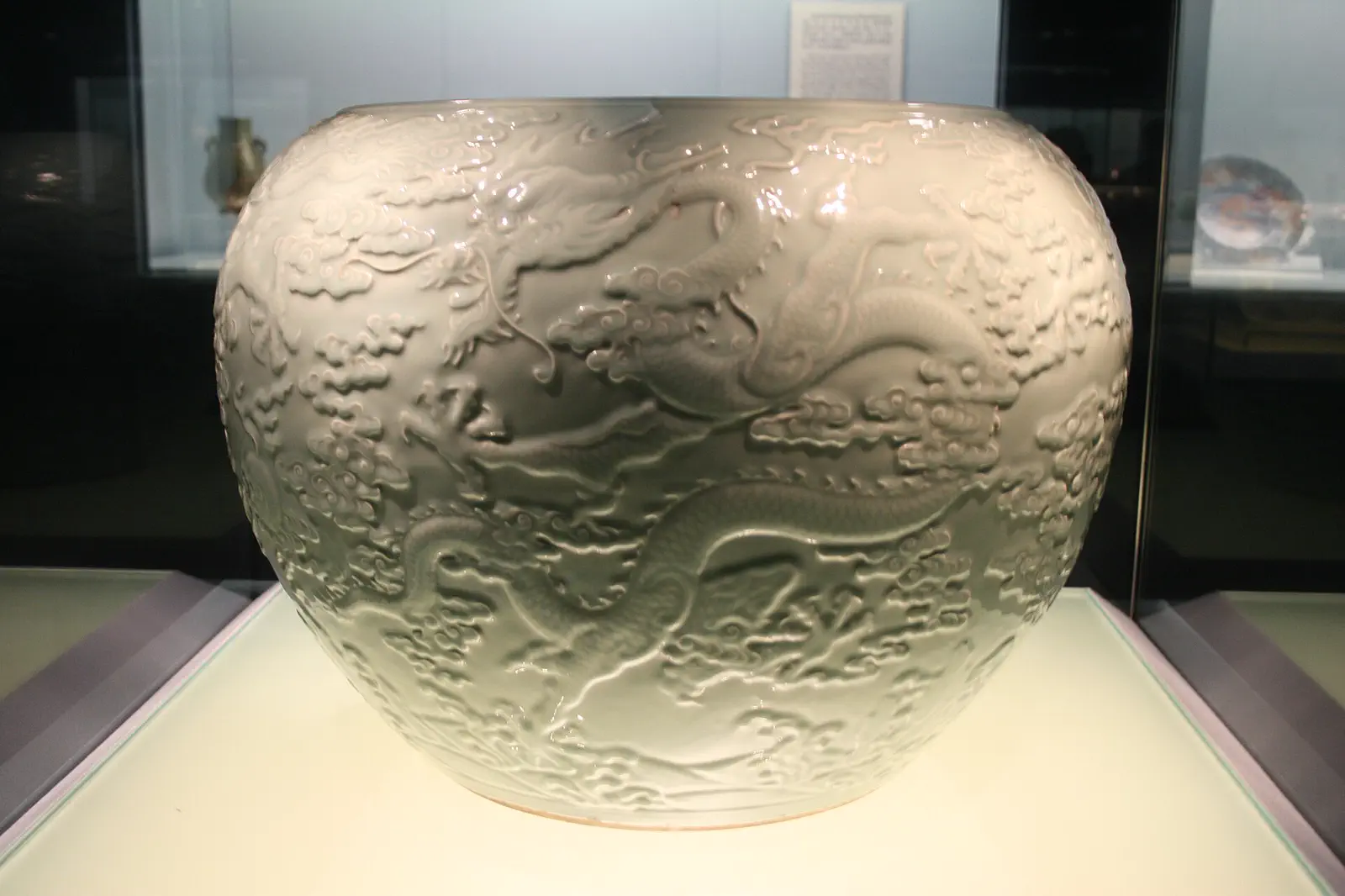
China's porcelain capital for a thousand years — blue and white porcelain, celadon, famille rose and contemporary ceramic art. The Ceramic Museum, the Imperial Kiln ruins and hundreds of working studios make Jingdezhen the only city in China organised almost entirely around a single craft.
Jingdezhen has been the leading centre of Chinese porcelain production for at least a thousand years. The city's position in the mountains of northeast Jiangxi, with access to high-quality kaolin clay deposits, pine forests for kiln fuel and river transport for finished goods, gave it a natural advantage that the Song dynasty emperors formalised when they established the first imperial kilns here. By the Ming dynasty, Jingdezhen was producing essentially all of the imperial court's porcelain and a significant proportion of China's export ceramics — the blue-and-white porcelain that shaped European chinoiserie, the famille rose wares that filled VOC trading ships, and the celadon pieces traded across Southeast Asia all came through Jingdezhen.
The city's entire identity — social, economic, cultural and architectural — has been formed by ceramic production. The streets of the old kiln district (the Jingdezhen Ceramic Street area and Sanbao Village nearby) retain the character of a working craft town rather than a heritage museum, with active studios, glaze suppliers, kiln equipment merchants and gallery spaces occupying the same blocks. A substantial international ceramic artist community has grown since the 2000s, attracted by the unparalleled concentration of craft knowledge, specialist suppliers and kiln access.
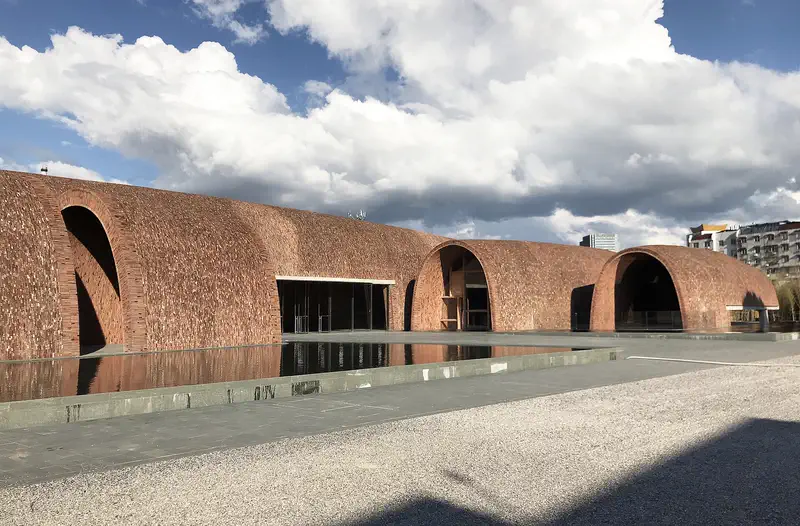
The Jingdezhen Imperial Kiln site (Yuqi Chang) in the old city centre is an archaeological excavation of the Ming and Qing imperial kiln complex — fragments of imperial wares are embedded in the soil and the excavation is presented as a working site alongside a museum. The Jingdezhen Ceramic Museum (ChinaJoy) covers production history from the Tang through the 20th century. The Taobao Ceramic Market concentrates wholesale and retail commercial ceramics, where trade in production-quality porcelain operates at large scale.
Sanbao International Ceramic Village, 8 km from the centre, is where the studio artist community is most concentrated — a valley of converted old kiln buildings and rice paddies occupied by independent ceramic artists from China and abroad.
What to see
- Imperial Kiln Site (Yuqi Chang) — Ming and Qing kiln archaeological excavation in the city centre
- Jingdezhen Ceramic Museum — thousand-year production history
- Sanbao International Ceramic Village — studio artists in converted kiln buildings, 8 km from centre
- Ceramic Street (Zhongshan Lu) — galleries, workshops and kiln equipment shops
- Taobao Ceramic Market — wholesale and retail commercial porcelain market
- Ancient Kiln Folk Scenic Area — demonstration of traditional kiln firing methods
- Porcelain factory studio visits — watch throwing, glazing and kiln loading
- Antique porcelain fragment market — old sherds from Jingdezhen's production history
What to eat
- Cold noodles (liáng bàn miàn) — a Jingdezhen working-class staple served at roadside stalls
- Steamed rice cake with pork (miàn tuán)
- Mala crawfish — common at night market stalls in summer
- Jiangxi-style stewed pork with dried chilli
- River fish from the Chang River — steamed whole or braised with ginger and soy
- Kiln worker breakfast: soybean milk and youtiao (fried dough stick) from street vendors
Getting there
Jingdezhen Luojia Airport (JDZ) has flights from Beijing, Shanghai and Guangzhou. By high-speed rail: Jingdezhen North station is on the Shanghai-Kunming HSR line — from Shanghai approximately 3.5 hours; from Nanchang approximately 1.5 hours; from Hangzhou approximately 2 hours.
Getting around
Taxis and city buses within Jingdezhen. No metro. The old kiln district and Ceramic Street are walkable. Taxis or hired bicycles to Sanbao Village (8 km). A city bus runs to the Ancient Kiln scenic area.
Where to stay
Guesthouses and boutique hotels in the old city near the ceramic district. Several ceramic-themed guesthouses are popular with the studio artist community. Sanbao Village has accommodation within the artist village itself.
We list neighbourhoods, not specific hotels — we don't endorse hotels.
When to go
March–April and October–November are optimal. The ceramic festivals in autumn (October) attract artists and collectors. Summer is hot and humid. The kilns operate year-round and there is no closed season.
Budget guide (CNY per day)
| Backpacker | ¥240 |
| Mid-range | ¥500 |
| Comfortable | ¥1200 |
Nearby attractions
Day trips within 150 km
China Visit Guide
Wuyuan ancient villages
Wuyuan ancient villages 婺源
Cluster of restored Hui-style villages in northeastern Jiangxi. Famous for the late-March rapeseed-flower bloom.
≈ 65 km from Jingdezhen
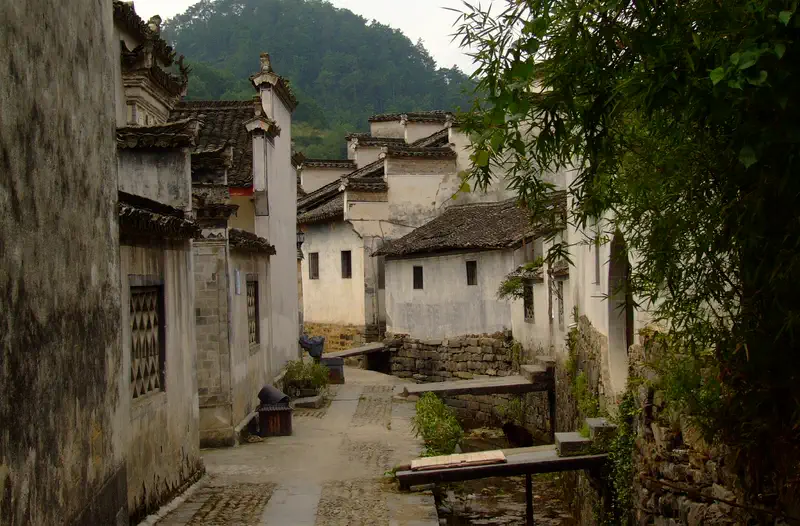
Xidi Ancient Village 西递
UNESCO-listed Hu-clan village (founded 1047), the canonical 'Anhui-style' merchant village with archway lanes, white-walled grey-tile houses and carved-stone doors.
≈ 100 km from Jingdezhen
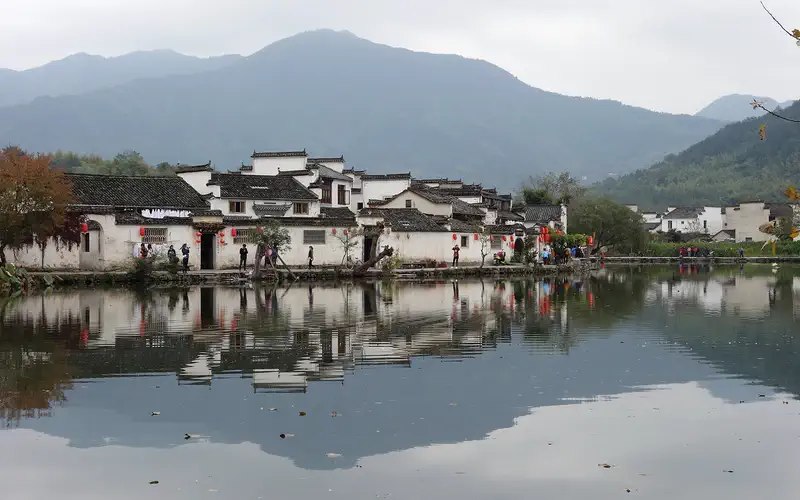
Hongcun Ancient Village 宏村
UNESCO-listed Ming-Qing village 60 km southeast of Mt Huangshan. The half-moon pond (Yuezhao) at the centre framed Crouching Tiger, Hidden Dragon's bridge scene.
≈ 110 km from Jingdezhen
Other cities in Jiangxi
- Jiujiang九江
Yangtze River port city in northern Jiangxi, long a gateway to Lushan mountain resort and a transit hub between the river and the interior; home to Gantang Lake and the well-preserved Donglin Temple complex on the Lushan approach.
- Lushan庐山
UNESCO World Heritage mountain in Jiangxi above Poyang Lake, celebrated in Chinese landscape painting and poetry for two thousand years. The Republic-era hill resort of Guling at the summit has British, American and German villas; waterfalls and granite scenery cover the mountain.
- Nanchang南昌
Capital of Jiangxi, on the Gan River. Tengwang Pavilion (one of the Three Great Towers of the South), Jingdezhen porcelain town within reach, and Mt Lu's Buddhist heritage.
- Wuyuan婺源
Rural county in northeast Jiangxi described as the most beautiful village in China — a debatable claim, but the concentration of Huizhou-style whitewashed villages in a landscape of rapeseed flowers, covered bridges and terraced fields is genuinely distinctive.
Itineraries visiting Jingdezhen
Food of Eastern China
- Beggar's Chicken叫花鸡
A whole chicken stuffed with aromatics, wrapped in lotus leaves and clay, then slow-baked until the meat steams in its own juices.
- Drunken Chicken醉鸡
Chicken steamed and marinated in Shaoxing rice wine, served chilled. A Shanghai banquet starter.
- Eight-Treasure Rice八宝饭
A steamed dome of glutinous rice layered with red bean paste and decorated with eight types of preserved fruits and nuts.
- Hairy Crab大闸蟹
Yangcheng Lake mitten crab — the autumn delicacy of the Yangtze Delta. Eaten steamed with vinegar dip.
Jingdezhen weather by month
| Month | Jan | Feb | Mar | Apr | May | Jun | Jul | Aug | Sep | Oct | Nov | Dec |
|---|---|---|---|---|---|---|---|---|---|---|---|---|
| High °C | 11 | 13 | 18 | 22 | 27 | 29 | 32 | 34 | 31 | 25 | 20 | 13 |
| Low °C | 3 | 5 | 10 | 13 | 18 | 23 | 25 | 26 | 22 | 16 | 10 | 4 |
| Rain mm | 98 | 123 | 208 | 192 | 282 | 446 | 360 | 129 | 73 | 30 | 69 | 30 |
| Rain days | 11 | 15 | 15 | 14 | 16 | 21 | 17 | 10 | 7 | 5 | 8 | 6 |
2019–2023 average via Open-Meteo ERA5 (ERA5 reanalysis). "Rain days" = days per month with ≥1 mm precipitation.
Frequently asked questions
- When is the best time to visit Jingdezhen?
- The best months to visit Jingdezhen are March, April, October, and November. March–April and October–November are optimal. The ceramic festivals in autumn (October) attract artists and collectors.
- How many days do you need in Jingdezhen?
- Plan 4 to 5 days for Jingdezhen if you want to see the headline sights without rushing — Imperial Kiln Site (Yuqi Chang), Jingdezhen Ceramic Museum, Sanbao International Ceramic Village. Add an extra day for day trips from the city or for repeat visits to your favourite neighbourhood.
- How do you get around Jingdezhen?
- Taxis and city buses within Jingdezhen. No metro. The old kiln district and Ceramic Street are walkable.
- What's the daily budget for Jingdezhen?
- Budget guide for Jingdezhen: backpackers from around ¥240/day, mid-range travellers ¥500/day, comfortable trips from ¥1200/day. These ranges cover accommodation, food, local transport and one paid sight per day, and exclude flights to and from the city.
- Where should you stay in Jingdezhen?
- Guesthouses and boutique hotels in the old city near the ceramic district. Several ceramic-themed guesthouses are popular with the studio artist community. Sanbao Village has accommodation within the artist village itself.
Spotted something out of date? Submit a correction.
Research
Cross-checked against primary sources
Verified
Address, hours, fees confirmed at the date shown
Updated
Re-verified periodically; corrections welcome