CITY · JIANGXI
Wuyuan
婺源 · Wùyuán
Overview
Rural county in northeast Jiangxi described as the most beautiful village in China — a debatable claim, but the concentration of Huizhou-style whitewashed villages in a landscape of rapeseed flowers, covered bridges and terraced fields is genuinely distinctive.
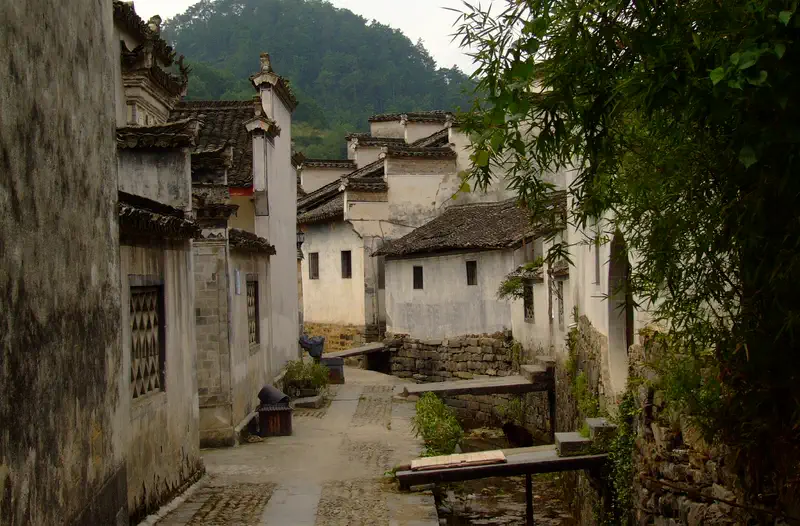
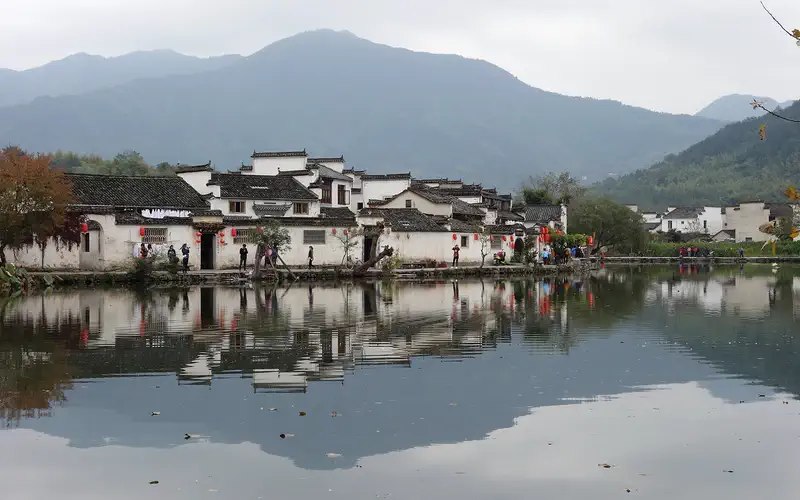
Wuyuan County in northeast Jiangxi sits at the boundary of the Huizhou cultural region — it was historically part of Anhui Province's Huizhou Prefecture until administrative changes in 1934. As a result, the villages here preserve the same whitewashed, horse-head-gable Huizhou domestic architecture found in the UNESCO villages of Hongcun and Xidi in Anhui, but in a landscape that is greener and more river-valley in character, and largely without the UNESCO entrance fees and crowd management of the Anhui sites.
The county's fame in contemporary China rests primarily on its spring landscape: in late February to early April, the valleys and village fields fill with yellow rapeseed in bloom, creating the high-contrast composition of yellow fields, white buildings and grey mountains that has become one of the most reproduced images of rural Jiangnan. The Yangjia village viewpoints overlooking the Jiangwan and Likeng valleys at the peak of the rapeseed bloom are extremely crowded during this period and accommodation books out months in advance. Outside this window, Wuyuan is noticeably quieter.
The villages most visited — Jiangwan, Likeng, Sixi, Yan village and Qinghua — each have slightly different characters and their various covered bridges, ancestral halls and street patterns reward a slow walking approach. Qinghua's ancient covered bridge (Caihong Bridge) is one of the largest surviving wooden covered bridges in China. The Wuyuan area also has a strong tea-growing tradition, with Wuyuan green tea (one of the 'Famous Teas of China') produced in the surrounding mountains.
The tea oil trees (Camellia oleifera) planted on hillsides throughout the county produce a second flower season in late October to early November — less well known than the spring rapeseed but producing hillsides of white flowers in cooler, less crowded conditions.
What to see
- Yangjia village viewpoints — rapeseed valley panoramas in spring
- Jiangwan village — the most developed tourist village, ancestral hall and street market
- Likeng village — quieter than Jiangwan, Ming-Qing architecture along a stream
- Qinghua Caihong Covered Bridge — large wooden covered bridge across the Qinghua River
- Sixi Yansi village — Huizhou streetscape with millstone decoration
- Wuyuan tea plantations — green tea production in the mountain areas, spring harvest
- Tea oil tree blossom — white hillside flowers, late October to early November
What to eat
- Wuyuan green tea — local mountain-grown green tea, lighter than Longjing
- Pickled chilli stuffed with preserved pork — a Wuyuan breakfast staple
- Cold pork with sesame sauce at village guesthouses
- River fish from the Wuyuan waterways — steamed or stewed with ginger
- Fermented tofu and dried vegetables — standard Jiangxi village cooking
- Freshly pressed tea-seed oil used in local cooking — a regional signature flavour
Getting there
No airport or rail station in Wuyuan county. Nearest rail connection is Wuyuan Railway Station (on the Jingdezhen-Wuyuan line) — from Jingdezhen approximately 1 hour; from Nanchang approximately 3 hours. From Huangshan (Tunxi): buses run via the mountain roads to Wuyuan, approximately 2–3 hours. Some visitors approach from Hangzhou via road.
Getting around
Local bus services connect the county town to the main villages. Hired vehicles or organised tours are the most practical way to visit multiple villages in a day. Bicycles can be hired in the county town for shorter circuits.
Where to stay
Guesthouses (mínsu) within the villages — converted Huizhou courtyard homes. County town hotels for a base. Peak rapeseed season: book 1–2 months in advance, prices are high. Outside spring, guesthouses have good availability.
We list neighbourhoods, not specific hotels — we don't endorse hotels.
When to go
Late February–early April for rapeseed bloom (exact peak varies by year and elevation). October for tea-oil blossom and autumn colours, very few visitors. May–September: the landscape is green but the flowers are gone; summer is hot and humid. Winter is the quietest period.
Budget guide (CNY per day)
| Backpacker | ¥200 |
| Mid-range | ¥430 |
| Comfortable | ¥1000 |
Nearby attractions
Day trips within 150 km
Other cities in Jiangxi
- Jingdezhen景德镇
China's porcelain capital for a thousand years — blue and white porcelain, celadon, famille rose and contemporary ceramic art. The Ceramic Museum, the Imperial Kiln ruins and hundreds of working studios make Jingdezhen the only city in China organised almost entirely around a single craft.
- Jiujiang九江
Yangtze River port city in northern Jiangxi, long a gateway to Lushan mountain resort and a transit hub between the river and the interior; home to Gantang Lake and the well-preserved Donglin Temple complex on the Lushan approach.
- Lushan庐山
UNESCO World Heritage mountain in Jiangxi above Poyang Lake, celebrated in Chinese landscape painting and poetry for two thousand years. The Republic-era hill resort of Guling at the summit has British, American and German villas; waterfalls and granite scenery cover the mountain.
- Nanchang南昌
Capital of Jiangxi, on the Gan River. Tengwang Pavilion (one of the Three Great Towers of the South), Jingdezhen porcelain town within reach, and Mt Lu's Buddhist heritage.
Itineraries visiting Wuyuan
Food of Eastern China
- Beggar's Chicken叫花鸡
A whole chicken stuffed with aromatics, wrapped in lotus leaves and clay, then slow-baked until the meat steams in its own juices.
- Drunken Chicken醉鸡
Chicken steamed and marinated in Shaoxing rice wine, served chilled. A Shanghai banquet starter.
- Eight-Treasure Rice八宝饭
A steamed dome of glutinous rice layered with red bean paste and decorated with eight types of preserved fruits and nuts.
- Hairy Crab大闸蟹
Yangcheng Lake mitten crab — the autumn delicacy of the Yangtze Delta. Eaten steamed with vinegar dip.
Wuyuan weather by month
| Month | Jan | Feb | Mar | Apr | May | Jun | Jul | Aug | Sep | Oct | Nov | Dec |
|---|---|---|---|---|---|---|---|---|---|---|---|---|
| High °C | 12 | 13 | 19 | 23 | 27 | 29 | 32 | 34 | 31 | 25 | 20 | 13 |
| Low °C | 4 | 6 | 10 | 14 | 18 | 22 | 25 | 26 | 22 | 16 | 11 | 4 |
| Rain mm | 97 | 128 | 214 | 195 | 291 | 514 | 323 | 140 | 73 | 31 | 66 | 41 |
| Rain days | 12 | 15 | 17 | 14 | 17 | 20 | 17 | 14 | 8 | 6 | 9 | 8 |
2019–2023 average via Open-Meteo ERA5 (ERA5 reanalysis). "Rain days" = days per month with ≥1 mm precipitation.
Frequently asked questions
- When is the best time to visit Wuyuan?
- The best months to visit Wuyuan are March, April, October, and November. Late February–early April for rapeseed bloom (exact peak varies by year and elevation). October for tea-oil blossom and autumn colours, very few visitors.
- How many days do you need in Wuyuan?
- Plan 3 days for Wuyuan if you want to see the headline sights without rushing — Yangjia village viewpoints, Jiangwan village, Likeng village. Add an extra day for day trips from the city or for repeat visits to your favourite neighbourhood.
- How do you get around Wuyuan?
- Local bus services connect the county town to the main villages. Hired vehicles or organised tours are the most practical way to visit multiple villages in a day. Bicycles can be hired in the county town for shorter circuits.
- What's the daily budget for Wuyuan?
- Budget guide for Wuyuan: backpackers from around ¥200/day, mid-range travellers ¥430/day, comfortable trips from ¥1000/day. These ranges cover accommodation, food, local transport and one paid sight per day, and exclude flights to and from the city.
- Where should you stay in Wuyuan?
- Guesthouses (mínsu) within the villages — converted Huizhou courtyard homes. County town hotels for a base. Peak rapeseed season: book 1–2 months in advance, prices are high.
Spotted something out of date? Submit a correction.
Research
Cross-checked against primary sources
Verified
Address, hours, fees confirmed at the date shown
Updated
Re-verified periodically; corrections welcome