CITY · HUBEI
Wudangshan
武当山 · Wǔdāng Shān
Overview
Sacred Daoist mountain complex in northwest Hubei, a UNESCO World Heritage site. Ming-dynasty temple palaces cling to peaks and cliff faces across a 312-square-kilometre complex — the centre of Wudang martial arts, which gave Tai Chi its legendary origin.
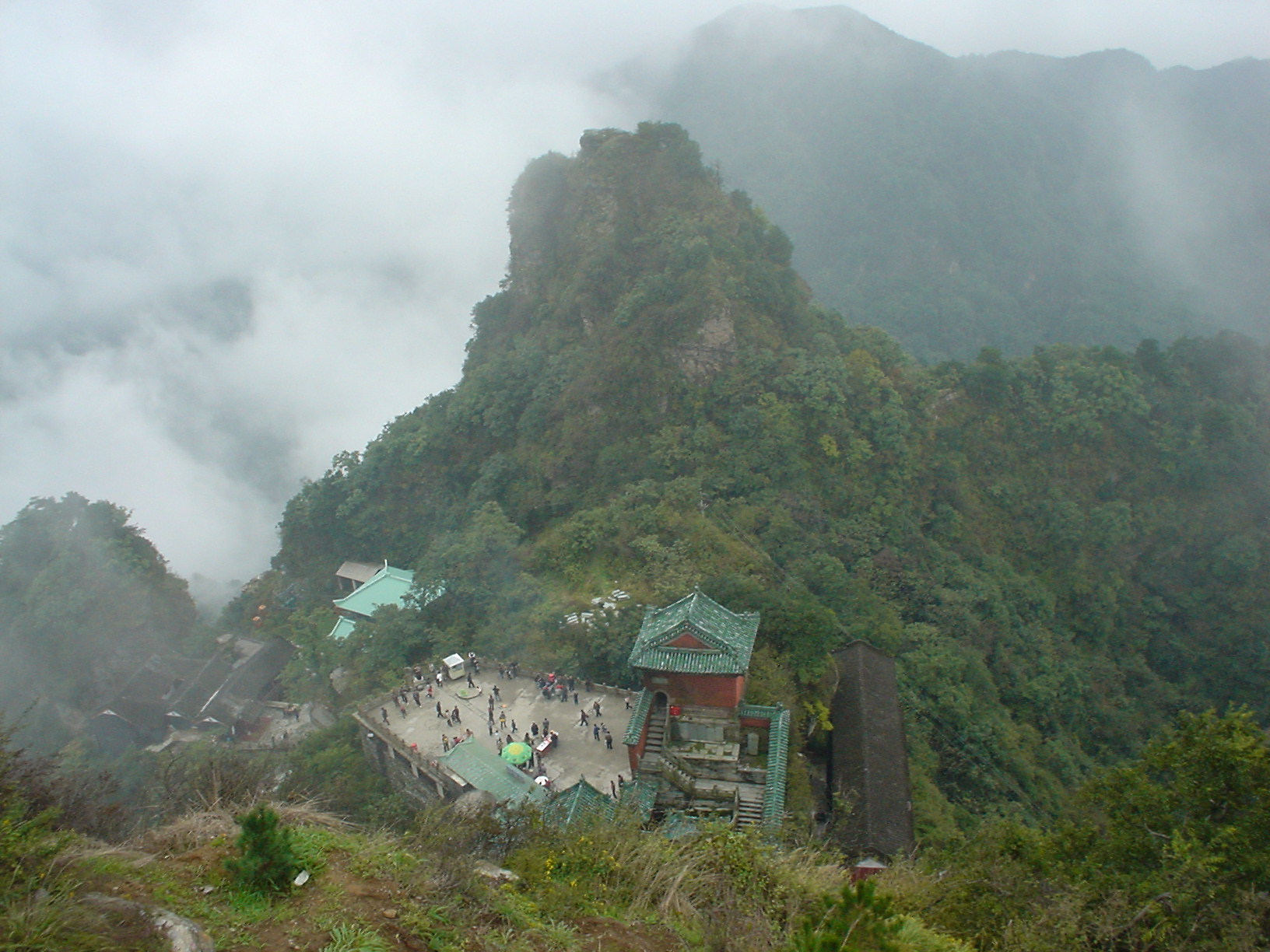
Wudang Mountain (Wudangshan) in Danjiangkou, northwest Hubei, is the most architecturally significant Daoist site in China. The mountain complex encompasses 72 peaks spread across 312 square kilometres, with the Tianzhu Peak at 1,612 m the highest. From the early Ming dynasty onwards, the emperors — particularly the Yongle Emperor who funded a massive construction programme from 1412 CE — elevated Wudang as the spiritual home of Zhen Wu (the True Warrior God), and the resulting complex of palaces, temples and monasteries built into the cliff faces and summit areas became one of the most extensive religious building projects in Chinese history.
The major structures — the Golden Hall (Jinding) on the summit, the Purple Cloud Palace (Zixiao Gong), the Nanyan Cliff Palace and the Prince's Slope (Taizi Slope) — are well-preserved examples of Ming imperial religious architecture, unusual in that they were built and fitted to the mountain's natural topography rather than imposed on levelled ground. UNESCO listed the site as a World Heritage property in 1994 for its outstanding architectural achievement.
Wudang is also the site most associated in popular culture with the origin of internal martial arts — Tai Chi and Wudang-style martial arts are both attributed, in tradition rather than verifiable history, to the 14th-century Daoist monk Zhang Sanfeng. The martial arts schools and training on the mountain are genuine and active; several schools accept short-term students.
The mountain is managed through a combination of cable cars, stone stairway paths and shuttle buses, making it accessible to visitors who do not wish to climb the full path on foot. The full foot ascent from the base to the summit takes a serious day. The complex becomes extremely busy during national holidays and the Daoist festival periods.
Cultural & access notes
Wudangshan is an active Daoist religious site, not only a heritage attraction. Ceremonies and rituals are genuine religious practice. Dress modestly, avoid disrupting ceremonies, and treat the temples as living religious spaces rather than museum exhibits. Offerings and incense burning are a normal part of worship.
What to see
- Golden Hall (Jinding) on Tianzhu Peak — Ming gilded hall at 1,612 m
- Purple Cloud Palace (Zixiao Gong) — the most intact Ming temple complex on the mountain
- Nanyan Cliff Palace — temple built into a sheer cliff face, 9th-century original
- Prince's Slope (Taizi Slope) — long stone stairway with Yuxu Palace ruins
- Wudang martial arts schools — observe or join training sessions
- Daoist ritual ceremonies — especially at dawn
- Full mountain circuit hike — 2 days to cover the major sites on foot
- Cable car to the summit area
What to eat
- Wudang Daoist vegetarian cuisine — served at temple restaurants using local mountain produce
- Mountain mushrooms braised with tofu — a Daoist temple staple
- Fresh mountain tofu — made from local spring water
- Danjiangkou city fish and river prawn dishes — the reservoir below the mountain is a major fishing area
- Wild herb soups — prepared by mountain guesthouses from foraged ingredients
- Zhangfei beef — a preserved beef product traditional to the northwest Hubei area
Getting there
Wudangshan Railway Station has direct high-speed rail connections to Wuhan (approximately 2.5 hours) and to Xi'an (approximately 2 hours) [VERIFY: current schedule and fares — May 2026]. The station is at the base of the mountain in the town of Wudangshan. No commercial airport; nearest is Shiyan (WDS) or fly into Wuhan (3 hours total).
Getting around
Cable cars run to the main summit area. Shuttle buses run between the entrance gate and major temple complexes within the scenic area. Stone paths connect the key temples for those walking. The base town is small and walkable.
Where to stay
Guesthouses and mid-range hotels in Wudangshan town at the base. Several hotels and pilgrim guesthouses are within the scenic area itself — staying overnight on the mountain gives access to early morning rituals and sunrise. Book well ahead during Golden Week.
We list neighbourhoods, not specific hotels — we don't endorse hotels.
When to go
March–May and September–October are the most comfortable and least crowded. October can be excellent — autumn colours on the mountain and mild temperatures. Summer (June–August) is hot and the mountain is very busy. The Daoist festivals and the Wudang Cultural Festival draw large crowds.
Budget guide (CNY per day)
| Backpacker | ¥220 |
| Mid-range | ¥480 |
| Comfortable | ¥1100 |
Safety notes
The stone stairways can be very slippery when wet — use caution after rain and in early spring. Altitude at the summit (1,612 m) is not problematic but the hike from the base is strenuous. Cable cars have wind-speed restrictions and may close in adverse weather.
Other cities in Hubei
- Shennongjia神农架
A national park and UNESCO World Biosphere Reserve in western Hubei containing one of China's most intact temperate forest ecosystems, named for the mythical Emperor Shennong who gathered medicinal herbs on its peaks.
- Wudang Mountains武当山
A UNESCO-listed mountain complex of Daoist temples and palaces in Hubei, regarded as the birthplace of Taijiquan and a living centre of Daoist martial arts practice.
- Wuhan武汉
China's central transport hub at the meeting of the Yangtze and Han rivers. Yellow Crane Tower, East Lake, the spicy noodle breakfast (re gan mian), and the country's largest university belt.
- Yichang宜昌
Yangtze River city at the eastern end of the Three Gorges. The Three Gorges Dam (the world's largest hydroelectric station) is 40 km upstream; most Yangtze cruises terminate or originate here.
Itineraries visiting Wudangshan
Food of Central China
- Chairman Mao's Red-Braised Pork毛氏红烧肉
Hunan-style slow-braised pork belly in soy, Shaoxing wine and chilli — the dish Mao Zedong reportedly ate weekly in Zhongnanhai.
- Doupi (Wuhan Tofu Skin)豆皮
Wuhan breakfast: layered pan-fried tofu skin and rice cake with mushroom, ham and bamboo shoots inside.
- Fish Head with Chopped Chilli剁椒鱼头
A whole silver carp head blanketed with fermented chopped red chilli and steamed until the flesh is silky and fiery.
- Hunan Chilli Fried Pork小炒肉
Thin-sliced pork belly wok-fried with fresh long green chillies and fermented black beans — Hunan's most-ordered everyday dish.
Frequently asked questions
- When is the best time to visit Wudangshan?
- The best months to visit Wudangshan are March, April, May, September, and October. March–May and September–October are the most comfortable and least crowded. October can be excellent — autumn colours on the mountain and mild temperatures.
- How many days do you need in Wudangshan?
- Plan 4 to 5 days for Wudangshan if you want to see the headline sights without rushing — Golden Hall (Jinding) on Tianzhu Peak, Purple Cloud Palace (Zixiao Gong), Nanyan Cliff Palace. Add an extra day for day trips from the city or for repeat visits to your favourite neighbourhood.
- Is Wudangshan safe for tourists?
- The stone stairways can be very slippery when wet — use caution after rain and in early spring. Altitude at the summit (1,612 m) is not problematic but the hike from the base is strenuous. Cable cars have wind-speed restrictions and may close in adverse weather.
- How do you get around Wudangshan?
- Cable cars run to the main summit area. Shuttle buses run between the entrance gate and major temple complexes within the scenic area. Stone paths connect the key temples for those walking.
- What's the daily budget for Wudangshan?
- Budget guide for Wudangshan: backpackers from around ¥220/day, mid-range travellers ¥480/day, comfortable trips from ¥1100/day. These ranges cover accommodation, food, local transport and one paid sight per day, and exclude flights to and from the city.
- Where should you stay in Wudangshan?
- Guesthouses and mid-range hotels in Wudangshan town at the base. Several hotels and pilgrim guesthouses are within the scenic area itself — staying overnight on the mountain gives access to early morning rituals and sunrise. Book well ahead during Golden Week.
Spotted something out of date? Submit a correction.
Research
Cross-checked against primary sources
Verified
Address, hours, fees confirmed at the date shown
Updated
Re-verified periodically; corrections welcome