CITY · JIANGXI
Lushan
庐山 · Lú Shān
Overview
UNESCO World Heritage mountain in Jiangxi above Poyang Lake, celebrated in Chinese landscape painting and poetry for two thousand years. The Republic-era hill resort of Guling at the summit has British, American and German villas; waterfalls and granite scenery cover the mountain.
Lushan (Mount Lu) is a granite mountain that rises abruptly from the southern shore of Poyang Lake — China's largest freshwater lake — in northern Jiangxi. The mountain reaches 1,474 m at its highest point and has been the subject of Chinese landscape poetry and painting since at least the Eastern Jin dynasty (317–420 CE), when Tao Yuanming and Xie Lingyun celebrated it in verse. Su Dongpo wrote his famous couplet about not being able to see the mountain's true face from within it — a poem that became a Chinese philosophical idiom. Li Bai described the Xianglu Peak waterfalls. The mountain has been a subject of Chinese artistic contemplation for longer than almost any other landscape feature in the country.
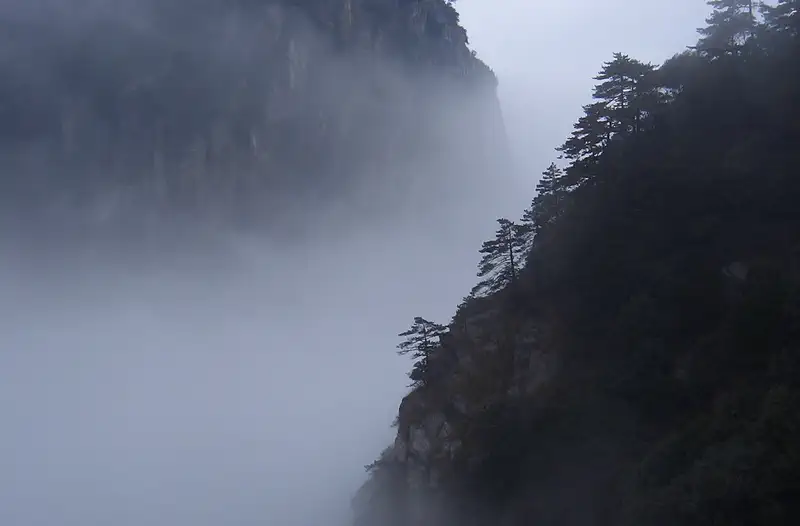
UNESCO listed Lushan as a World Heritage Cultural Landscape in 1996, recognising both its natural scenery and its role in Chinese literary and philosophical history. On the mountain's summit plateau, the British and Western missionaries and diplomats who summered here from the 1890s built a hill station — Guling (牯岭) — with stone villas, a YMCA hall, churches, and the infrastructure of an Edwardian colonial resort. More than 600 stone villas in British, American, German and other styles survive on the plateau, giving Guling a striking visual character. The hillside setting produces frequent cloud and mist, replicating in actuality the ink-wash landscape that the mountain inspired in two thousand years of painting.
The Lushan Conference Hall (formerly the summer residence area used by Chiang Kai-shek and later Mao Zedong) was the site of several significant Communist Party meetings, including the 1959 Lushan Conference at which Peng Dehuai challenged Mao's Great Leap Forward policies. The political history adds a 20th-century layer to the mountain's deep artistic history.
Poyang Lake below the mountain is China's largest freshwater lake and one of the most significant wintering sites for migratory birds in East Asia — Siberian cranes and a range of other species winter here from November to February.
Cultural & access notes
The foreign villas of Guling are unusual in the Chinese landscape context — they represent a colonial summer resort of a kind that survived intact more here than almost anywhere else in China. Some are now museums, some are hotels, and some are still family-owned. The political history of the Conference Hall is presented from a particular perspective; the Peng Dehuai connection is the most complex.
What to see
- Guling hill station — 600+ stone colonial villas on the summit plateau
- Three Cascade Waterfall (Sandie Quan) — the most celebrated waterfall on the mountain
- Xianglu Peak and Incense Burner Peak — the peaks Li Bai wrote about
- Lushan Museum and Meilu Villa — Chiang Kai-shek's summer residence
- Lushan Conference Hall — site of the 1959 and 1970 Communist Party meetings
- Hanpo Mouth (Hanpokou) — overlook above Poyang Lake for sunrise
- Dragon Pool Waterfall (Longtan) — scenic gorge with pools
- Poyang Lake Nature Reserve — Siberian crane wintering site, November–February
What to eat
- Lushan cloud and mist tea (Lushan Yunwu Cha) — one of China's classic green teas, grown in the mountain's misty conditions
- Poyang Lake fish — crucian carp and mandarin fish from the lake below
- Mushroom and bamboo shoot stir-fry — a mountain staple available at most Guling restaurants
- Jiangxi-style rice noodles with pork and pickled chilli
- Mountain spring water — sold at the summit and genuinely notable
- Stone fish (shí yú) from Lushan's mountain streams
Getting there
No airport or rail station on the mountain. Nearest cities are Jiujiang (40 km north, with rail and river connections) and Nanchang (130 km southeast). From Jiujiang: buses run to the mountain base and cable car, approximately 1 hour. From Nanchang: buses to Lushan, approximately 2–3 hours. High-speed rail connects Jiujiang to Nanchang and to the national network.
Getting around
A bus-and-cable-car system connects the mountain base to Guling on the summit plateau. Within Guling, walking is the main mode — the villa district is compact. Minibuses run to the main scenic areas within the mountain park.
Where to stay
Hotels and guesthouses in Guling on the summit plateau — staying up here gives access to the mountain atmosphere and avoids the daily crowds. Mid-range hotels at the mountain base. Advance booking in summer and Golden Week is necessary.
We list neighbourhoods, not specific hotels — we don't endorse hotels.
When to go
April–May for spring mist and wildflowers. September–October for clearer skies and autumn colours. November–February for Poyang Lake crane season (combine with a lake visit). Summer (July–August) is the most crowded period — the summit is cooler than Jiujiang or Nanchang, which makes it popular as a summer retreat, as it was a century ago.
Budget guide (CNY per day)
| Backpacker | ¥250 |
| Mid-range | ¥530 |
| Comfortable | ¥1300 |
Safety notes
The mountain paths can be slippery in mist and after rain — this is a frequently misty environment. Cable car operation depends on weather conditions. Entry to the mountain scenic area requires a ticket.
Nearby attractions
Day trips within 150 km
Other cities in Jiangxi
- Jingdezhen景德镇
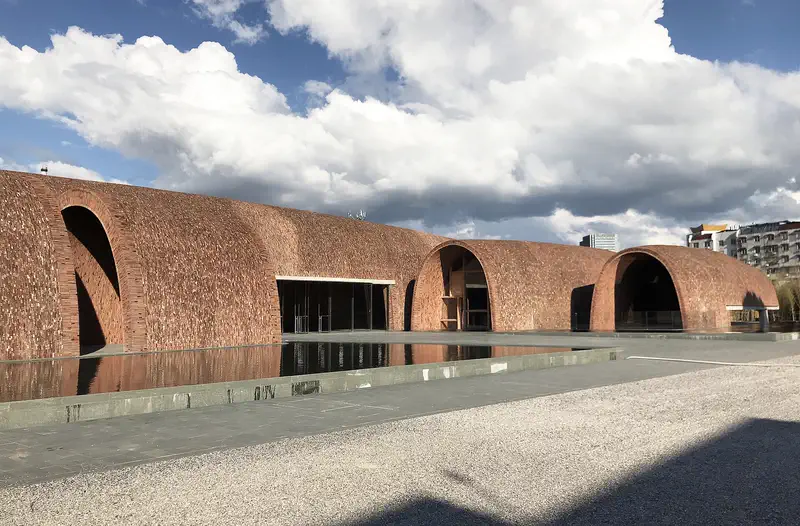
China's porcelain capital for a thousand years — blue and white porcelain, celadon, famille rose and contemporary ceramic art. The Ceramic Museum, the Imperial Kiln ruins and hundreds of working studios make Jingdezhen the only city in China organised almost entirely around a single craft.
- Jiujiang九江
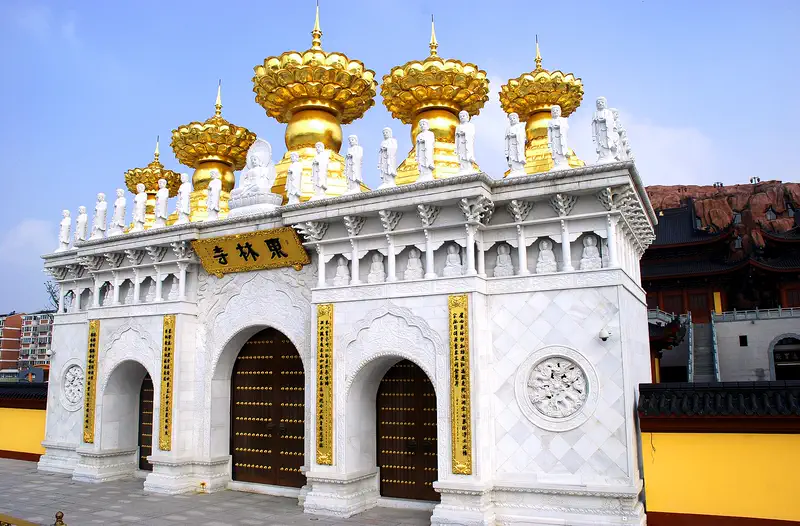
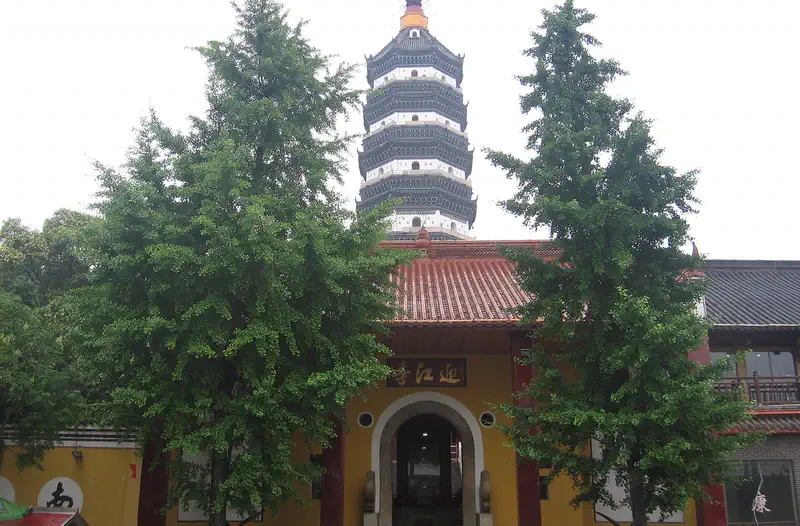
Yangtze River port city in northern Jiangxi, long a gateway to Lushan mountain resort and a transit hub between the river and the interior; home to Gantang Lake and the well-preserved Donglin Temple complex on the Lushan approach.
- Nanchang南昌
Capital of Jiangxi, on the Gan River. Tengwang Pavilion (one of the Three Great Towers of the South), Jingdezhen porcelain town within reach, and Mt Lu's Buddhist heritage.
- Wuyuan婺源
Rural county in northeast Jiangxi described as the most beautiful village in China — a debatable claim, but the concentration of Huizhou-style whitewashed villages in a landscape of rapeseed flowers, covered bridges and terraced fields is genuinely distinctive.
Itineraries visiting Lushan
Food of Eastern China
- Beggar's Chicken叫花鸡
A whole chicken stuffed with aromatics, wrapped in lotus leaves and clay, then slow-baked until the meat steams in its own juices.
- Drunken Chicken醉鸡
Chicken steamed and marinated in Shaoxing rice wine, served chilled. A Shanghai banquet starter.
- Eight-Treasure Rice八宝饭
A steamed dome of glutinous rice layered with red bean paste and decorated with eight types of preserved fruits and nuts.
- Hairy Crab大闸蟹
Yangcheng Lake mitten crab — the autumn delicacy of the Yangtze Delta. Eaten steamed with vinegar dip.
Lushan weather by month
| Month | Jan | Feb | Mar | Apr | May | Jun | Jul | Aug | Sep | Oct | Nov | Dec |
|---|---|---|---|---|---|---|---|---|---|---|---|---|
| High °C | 3 | 5 | 11 | 15 | 19 | 23 | 25 | 26 | 22 | 16 | 12 | 4 |
| Low °C | -4 | -2 | 4 | 8 | 13 | 17 | 19 | 20 | 15 | 9 | 4 | -3 |
| Rain mm | 76 | 102 | 148 | 149 | 167 | 254 | 234 | 123 | 72 | 38 | 56 | 29 |
| Rain days | 11 | 14 | 15 | 15 | 17 | 20 | 21 | 14 | 9 | 7 | 8 | 6 |
2019–2023 average via Open-Meteo ERA5 (ERA5 reanalysis). "Rain days" = days per month with ≥1 mm precipitation.
Frequently asked questions
- When is the best time to visit Lushan?
- The best months to visit Lushan are April, May, September, and October. April–May for spring mist and wildflowers. September–October for clearer skies and autumn colours.
- How many days do you need in Lushan?
- Plan 4 to 5 days for Lushan if you want to see the headline sights without rushing — Guling hill station, Three Cascade Waterfall (Sandie Quan), Xianglu Peak and Incense Burner Peak. Add an extra day for day trips from the city or for repeat visits to your favourite neighbourhood.
- Is Lushan safe for tourists?
- The mountain paths can be slippery in mist and after rain — this is a frequently misty environment. Cable car operation depends on weather conditions. Entry to the mountain scenic area requires a ticket.
- How do you get around Lushan?
- A bus-and-cable-car system connects the mountain base to Guling on the summit plateau. Within Guling, walking is the main mode — the villa district is compact. Minibuses run to the main scenic areas within the mountain park.
- What's the daily budget for Lushan?
- Budget guide for Lushan: backpackers from around ¥250/day, mid-range travellers ¥530/day, comfortable trips from ¥1300/day. These ranges cover accommodation, food, local transport and one paid sight per day, and exclude flights to and from the city.
- Where should you stay in Lushan?
- Hotels and guesthouses in Guling on the summit plateau — staying up here gives access to the mountain atmosphere and avoids the daily crowds. Mid-range hotels at the mountain base. Advance booking in summer and Golden Week is necessary.
Spotted something out of date? Submit a correction.
Research
Cross-checked against primary sources
Verified
Address, hours, fees confirmed at the date shown
Updated
Re-verified periodically; corrections welcome