CITY · JIANGXI
Jiujiang
九江 · Jiǔjiāng
Overview
Yangtze River port city in northern Jiangxi, long a gateway to Lushan mountain resort and a transit hub between the river and the interior; home to Gantang Lake and the well-preserved Donglin Temple complex on the Lushan approach.
Jiujiang stands where the Yangtze River meets Poyang Lake — China's largest freshwater lake — at a junction that made it one of the most commercially significant river ports in the Yangtze valley for centuries. During the Treaty Port era (opened 1861), it attracted British, American, and Japanese commercial concessions, remnants of which survive in the riverside architecture near the old customs house. The city was a staging post for the Yangtze trade in teas from Jiangxi, porcelain from Jingdezhen, and rice from the lake plains.
For most contemporary visitors, Jiujiang functions as the gateway to Lushan — the mountain retreat where Republican-era politicians, foreign missionaries, and later Communist Party leaders maintained summer residences. Lushan's Guling village, about 30 km south-east by road, sits at 1,100 metres and operates as a self-contained hill station with cooler summers, walking trails, waterfalls, and a collection of villas that are now heritage sites and guesthouses. The 1959 Lushan Conference — where Mao Zedong purged Marshal Peng Dehuai for criticising the Great Leap Forward — took place in the former Kuomintang conference hall, which is open to visitors.
Gantang Lake in the centre of Jiujiang city provides an unexpected grace note: a broad urban lake crossed by a historic causeway, lined with willows, and framed by the distant Lushan profile on clear days. The lake and its surrounding parks are a favourite morning gathering point for local residents.
Donglin Temple (East Forest Temple), 25 km west of the city at the foot of Lushan, is one of the most historically significant Buddhist sites in China. Founded in 386 CE by the monk Huiyuan, it is considered the origin temple of Pure Land Buddhism, one of the most widely practised Buddhist traditions in East Asia. The complex has been rebuilt repeatedly and the current structures are largely Qing-dynasty reconstructions, but the site retains its spiritual importance.
Jiujiang also serves as a hub for the Porcelain Trail circuit, connecting Jingdezhen to the south with the mountain resorts and the Yangtze river connections to the north. The railway and expressway links to Nanchang, Jingdezhen, and the Yangtze ferry routes make Jiujiang a natural break point on longer itineraries through Jiangxi province.
What to see
- Lushan Scenic Area — mountain resort with historic villas, walking trails, and waterfalls
- Lushan Conference Site (1959) — former Kuomintang hall where Mao Zedong held the fateful 1959 plenum
- Donglin Temple (East Forest Temple) — founding site of Pure Land Buddhism, 386 CE
- Gantang Lake — urban lake with causeway, willows, and views towards Lushan
- Jiujiang Old Customs House — treaty-port era riverside building
- Yangtze River waterfront — viewpoint over China's longest river from the embankment park
- Poyang Lake — China's largest freshwater lake, important winter habitat for Siberian cranes
- Nanlutou Lighthouse — 19th-century navigational structure at the river confluence
What to eat
- Poyang Lake fish — freshwater fish, crab, and shrimp from the lake; river restaurants near the waterfront
- Jiujiang dried fish (九江茶饼) — pressed and dried freshwater fish, a local preserved-food tradition
- Jiangxi-style rice noodles (炒粉) — stir-fried rice noodles with chilli and pork, the everyday breakfast
- Lushan cloud-and-mist tea (庐山云雾茶) — a green tea with a long history of cultivation on the mountain slopes
- Braised lotus root — Poyang Lake lotus is considered among the finest in Jiangxi
- Nanchang mix rice noodles (available widely) — the provincial capital's signature dish
Getting there
Jiujiang Lushan Airport (JIU) is 30 km from the city centre, with flights to Beijing, Shanghai, Guangzhou, and Chengdu. High-speed rail connects Jiujiang to Nanchang in about 40 minutes and to Wuhan in about 1.5 hours on the Hefei–Nanchang–Wuhan route. Bus services connect to Jingdezhen (2 hours), Wuyuan (3 hours), and Nanchang (1.5 hours). Lushan is accessible by road from Jiujiang in approximately 45 minutes.
Getting around
City buses and taxis serve the central area and Gantang Lake. Lushan and Donglin Temple require a taxi or private vehicle from the city. Within Lushan, electric shuttle buses and cable cars connect the main viewpoints.
Where to stay
Mid-range chain hotels concentrate near the railway station and Gantang Lake. Lushan's Guling village has its own accommodation ranging from former missionary boarding houses to government-run resort hotels. Book Lushan accommodation well ahead for summer (June–August) when demand is high.
We list neighbourhoods, not specific hotels — we don't endorse hotels.
When to go
Autumn (September–November) is the clearest season, with comfortable temperatures and views to Lushan. Spring (April–May) brings rhododendrons on the upper mountain. Summer is hot in the city but Lushan's altitude keeps it cooler. Winter sees Poyang Lake at its best for crane watching but accommodation on the mountain can be cold.
Budget guide (CNY per day)
| Backpacker | ¥200 |
| Mid-range | ¥450 |
| Comfortable | ¥1000 |
Nearby attractions
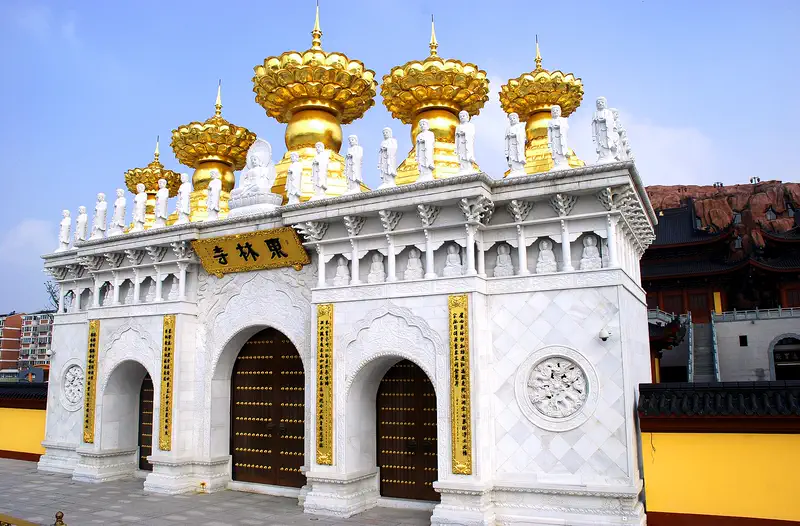
Donglin Temple (East Forest Monastery) 东林寺
One of the most important Buddhist monasteries in Chinese history, founded in 386 CE at the foot of Mount Lu and considered the birthplace of Pure Land Buddhism in China.
China Visit Guide
Jiujiang Yantang Mansion (Jiangzhou Historic Quarter)
Jiujiang Yantang Mansion (Jiangzhou Historic Quarter) 浔阳楼
A restored waterfront pavilion in Jiujiang commemorating the Water Margin hero Song Jiang, sitting at the junction of the Yangtze River and Poyang Lake and associated with some of Tang Dynasty poet Bai Juyi's most celebrated verse.
China Visit Guide
Xunyang Tower Historic Waterfront
Xunyang Tower Historic Waterfront 浔阳古渡
The historic Yangtze ferry crossing area of Xunyang in Jiujiang, where classical poets, merchants, and officials departed and arrived for over a millennium, now a cultural heritage waterfront with restored Ming-Qing streetscape.
Other cities in Jiangxi
- Jingdezhen景德镇
China's porcelain capital for a thousand years — blue and white porcelain, celadon, famille rose and contemporary ceramic art. The Ceramic Museum, the Imperial Kiln ruins and hundreds of working studios make Jingdezhen the only city in China organised almost entirely around a single craft.
- Lushan庐山
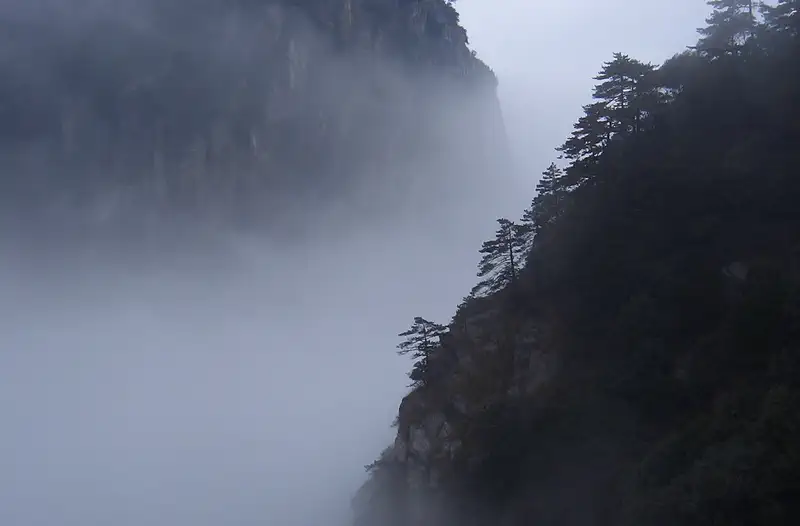
UNESCO World Heritage mountain in Jiangxi above Poyang Lake, celebrated in Chinese landscape painting and poetry for two thousand years. The Republic-era hill resort of Guling at the summit has British, American and German villas; waterfalls and granite scenery cover the mountain.
- Nanchang南昌
Capital of Jiangxi, on the Gan River. Tengwang Pavilion (one of the Three Great Towers of the South), Jingdezhen porcelain town within reach, and Mt Lu's Buddhist heritage.
- Wuyuan婺源
Rural county in northeast Jiangxi described as the most beautiful village in China — a debatable claim, but the concentration of Huizhou-style whitewashed villages in a landscape of rapeseed flowers, covered bridges and terraced fields is genuinely distinctive.
Food of Central China
- Chairman Mao's Red-Braised Pork毛氏红烧肉
Hunan-style slow-braised pork belly in soy, Shaoxing wine and chilli — the dish Mao Zedong reportedly ate weekly in Zhongnanhai.
- Doupi (Wuhan Tofu Skin)豆皮
Wuhan breakfast: layered pan-fried tofu skin and rice cake with mushroom, ham and bamboo shoots inside.
- Fish Head with Chopped Chilli剁椒鱼头
A whole silver carp head blanketed with fermented chopped red chilli and steamed until the flesh is silky and fiery.
- Hunan Chilli Fried Pork小炒肉
Thin-sliced pork belly wok-fried with fresh long green chillies and fermented black beans — Hunan's most-ordered everyday dish.
Jiujiang weather by month
| Month | Jan | Feb | Mar | Apr | May | Jun | Jul | Aug | Sep | Oct | Nov | Dec |
|---|---|---|---|---|---|---|---|---|---|---|---|---|
| High °C | 9 | 11 | 17 | 21 | 26 | 29 | 32 | 32 | 28 | 22 | 18 | 10 |
| Low °C | 3 | 4 | 10 | 14 | 19 | 23 | 26 | 26 | 22 | 16 | 11 | 4 |
| Rain mm | 82 | 101 | 145 | 137 | 155 | 217 | 213 | 126 | 71 | 37 | 63 | 26 |
| Rain days | 11 | 14 | 14 | 13 | 16 | 18 | 17 | 13 | 8 | 7 | 8 | 6 |
2019–2023 average via Open-Meteo ERA5 (ERA5 reanalysis). "Rain days" = days per month with ≥1 mm precipitation.
Frequently asked questions
- When is the best time to visit Jiujiang?
- The best months to visit Jiujiang are April, May, September, October, and November. Autumn (September–November) is the clearest season, with comfortable temperatures and views to Lushan. Spring (April–May) brings rhododendrons on the upper mountain.
- How many days do you need in Jiujiang?
- Plan 4 to 5 days for Jiujiang if you want to see the headline sights without rushing — Lushan Scenic Area, Lushan Conference Site (1959), Donglin Temple (East Forest Temple). Add an extra day for day trips from the city or for repeat visits to your favourite neighbourhood.
- How do you get around Jiujiang?
- City buses and taxis serve the central area and Gantang Lake. Lushan and Donglin Temple require a taxi or private vehicle from the city. Within Lushan, electric shuttle buses and cable cars connect the main viewpoints.
- What's the daily budget for Jiujiang?
- Budget guide for Jiujiang: backpackers from around ¥200/day, mid-range travellers ¥450/day, comfortable trips from ¥1000/day. These ranges cover accommodation, food, local transport and one paid sight per day, and exclude flights to and from the city.
- Where should you stay in Jiujiang?
- Mid-range chain hotels concentrate near the railway station and Gantang Lake. Lushan's Guling village has its own accommodation ranging from former missionary boarding houses to government-run resort hotels. Book Lushan accommodation well ahead for summer (June–August) when demand is high.
Spotted something out of date? Submit a correction.
Research
Cross-checked against primary sources
Verified
Address, hours, fees confirmed at the date shown
Updated
Re-verified periodically; corrections welcome