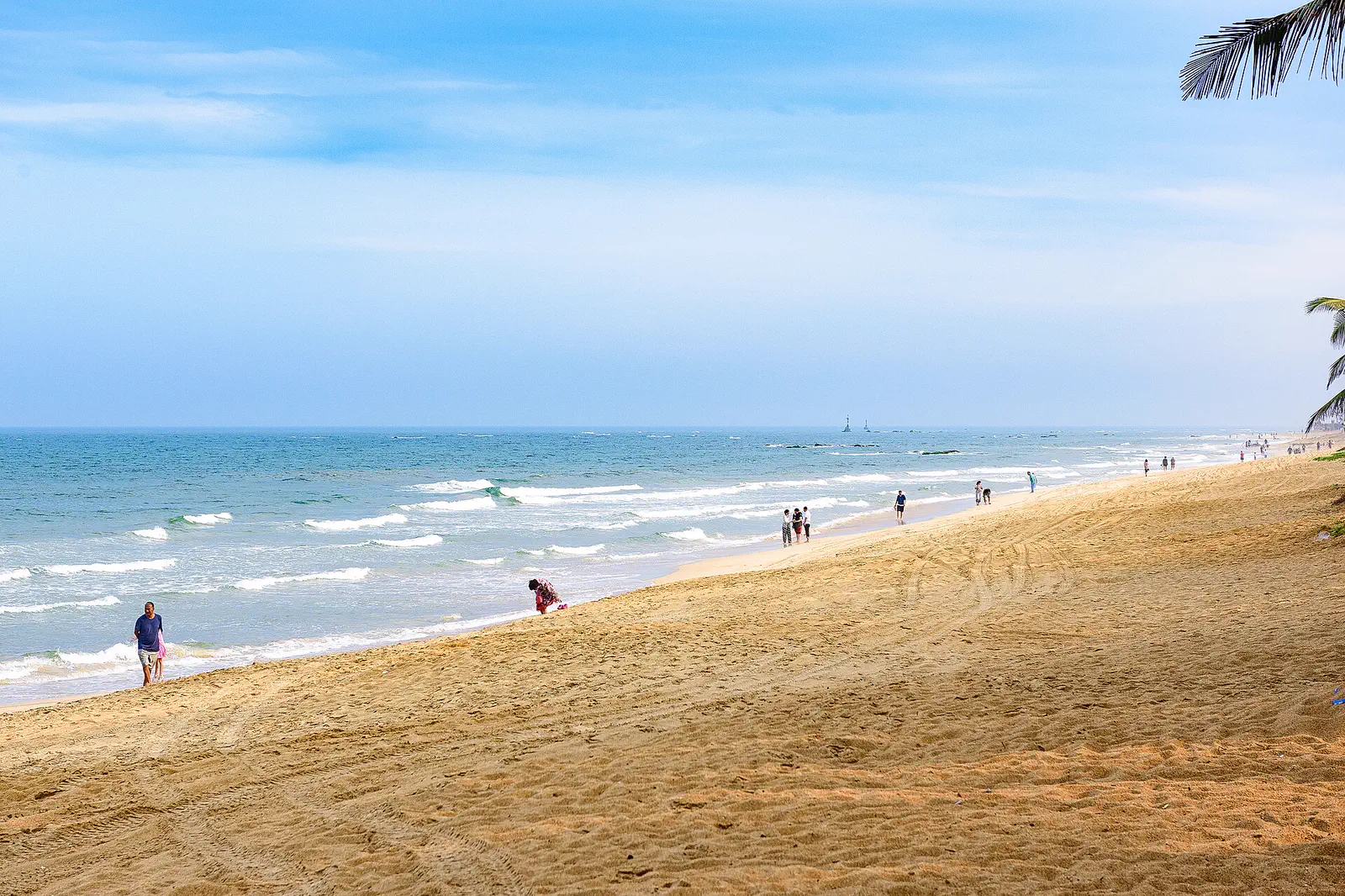
CITY · HAINAN
Boao
博鳌 · Bó'áo
Overview
Small coastal town on Hainan's east coast, internationally recognised as the home of the Boao Forum for Asia. A river estuary, offshore islands, good cycling roads and resort hotels make it a quieter alternative to Sanya.
Boao is a small coastal settlement in Qionghai City on Hainan's east coast, positioned at the mouth of the Wanquan, Jiuqu and Longgun rivers where they flow into the South China Sea. The town has been transformed since 2001 when it was designated the permanent site of the Boao Forum for Asia — an annual multilateral conference modelled loosely on Davos — and a resort and conference infrastructure was subsequently built to support it. Outside the forum week (usually March), Boao operates primarily as a beach and nature resort.
The physical setting is attractive: three rivers meet near a narrow barrier island (Yudai Beach) that separates the river estuary from the open sea. The estuary shoreline and the protected inner waters have a character different from the developed resort strips around Sanya — less built up, more mangrove-fringed and with genuine fishing village remnants. Nanluo Island, accessible by short boat crossing, is the original settlement of the Boao area and retains traditional Hainanese courtyard houses alongside the growth of small guesthouses.
The Boao Leyou Scenic Zone encompasses the barrier island beach, the estuary and cycling routes along the water. Cycling is a practical and pleasant way to navigate between the main town, the conference hotels, Nanluo Island and the beach, as the flat terrain and river scenery are suited to it. The conference zone itself — a cluster of large hotels and convention centres in a landscaped setting — is open to general visitors outside forum week.
Boao lacks the beach infrastructure of Sanya but has a more relaxed pace and significantly lower prices at most times of year. It is an easy day trip from Qionghai city (20 km) and accessible from Haikou by high-speed rail.
What to see
- Yudai Beach (Jade Belt Beach) — narrow barrier island between the estuary and the sea
- Nanluo Island — traditional Hainanese village with courtyard houses, short boat crossing
- River estuary boat trips from the main pier
- Boao Forum conference zone — open to visitors outside forum week
- Cycling routes along the Wanquan River estuary
- Beigangdao wetland — mangrove estuary scenery on the north bank
- Sea Outlook Platform — elevated viewpoint over the river mouth and sea
What to eat
- Wenchang chicken — the celebrated Hainanese breed, served poached with dipping sauces (see also Wenchang)
- River eel from the Wanquan estuary — steamed or stir-fried
- Hainan-style seafood — grilled fish and shellfish at riverside restaurants
- Coconut rice — glutinous rice steamed in coconut and wrapped in banana leaf
- Fresh coconut water — Hainan's ubiquitous refreshment
- Cassava cakes and tropical fruit from market stalls in Qionghai town
Getting there
No commercial airport at Boao. Nearest airport is Haikou Meilan International (HAK), approximately 120 km north. By high-speed rail: Boao station is on the Hainan Eastern Ring line — from Haikou approximately 50 minutes; from Sanya approximately 70 minutes. Taxis from Qionghai city (20 km) to Boao are also practical.
Getting around
Bicycles for hire in the resort area are the recommended way to explore. Taxis handle longer transfers. The Boao resort zone is compact enough to navigate on foot between the main attractions.
Where to stay
Large resort hotels in the Boao Leyou Zone (including international brands). Smaller guesthouses on Nanluo Island and along the riverfront. Prices are significantly lower than Sanya's comparable resorts.
We list neighbourhoods, not specific hotels — we don't endorse hotels.
When to go
November–April is the dry season and most comfortable. May–October is the typhoon season with heavy rain and periodic tropical storms. The Boao Forum (usually March) raises hotel prices and reduces availability for that week.
Budget guide (CNY per day)
| Backpacker | ¥240 |
| Mid-range | ¥500 |
| Comfortable | ¥1300 |
Nearby attractions
Day trips within 150 km
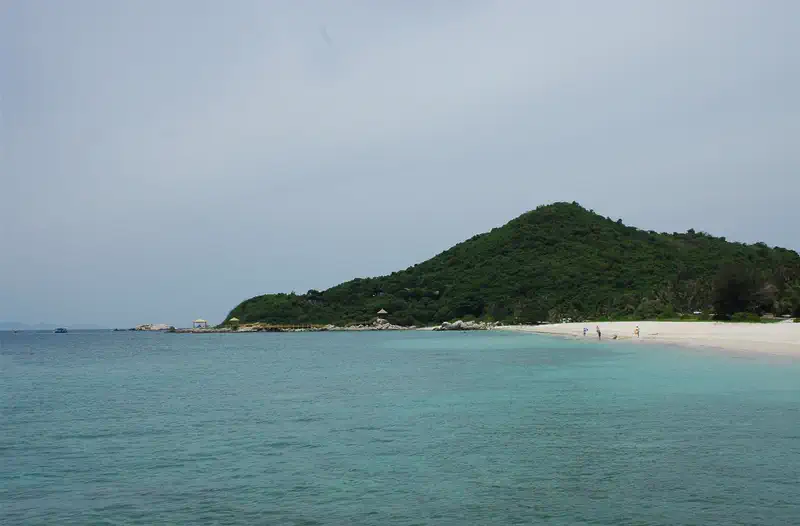
Other cities in Hainan
- Haikou海口
Capital of Hainan, the tropical island province. Calm coastal city with a colonial-era arcade district and a launchpad to the beach destinations of Sanya, Boao and Xinglong.
- Sanya三亚
China's premier domestic beach destination, on Hainan's southern coast. Yalong Bay, Dadonghai, and a year-round tropical climate. Russia-Chinese resort-tourism culture.
- Wenchang文昌
Northeast Hainan city famous for two things: the Wenchang chicken breed and the Wenchang Space Launch Centre. Also notable for coconut groves, the Tonggu Ridge beach area and the Qinglan Ancient Port.
Food of Southern China
- Beef Chow Fun干炒牛河
Flat rice noodles dry-fried with silky marinated beef, beansprouts and spring onion over a fierce wok flame.
- Bubble Tea珍珠奶茶
Taiwanese milk tea served with chewy tapioca pearls (boba) through a wide straw. The foundational format — oolong or black tea shaken with milk and ice — has spawned hundreds of variations across China's enormous tea-chain industry.
- Buddha Jumps Over the Wall佛跳墙
Fujian's banquet centrepiece — a slow-simmered soup of dried abalone, sea cucumber, scallop, ham and 20+ other ingredients.
- Cantonese Roast Goose烧鹅
Whole goose roasted to crisp-skinned tenderness. The most prized of the Cantonese siu mei roasted meats.
Boao weather by month
| Month | Jan | Feb | Mar | Apr | May | Jun | Jul | Aug | Sep | Oct | Nov | Dec |
|---|---|---|---|---|---|---|---|---|---|---|---|---|
| High °C | 22 | 24 | 27 | 28 | 31 | 32 | 32 | 32 | 30 | 28 | 26 | 23 |
| Low °C | 18 | 19 | 22 | 24 | 26 | 27 | 27 | 26 | 25 | 24 | 22 | 18 |
| Rain mm | 59 | 52 | 61 | 73 | 141 | 120 | 160 | 221 | 233 | 410 | 103 | 86 |
| Rain days | 15 | 12 | 13 | 12 | 16 | 15 | 15 | 24 | 22 | 22 | 15 | 12 |
2019–2023 average via Open-Meteo ERA5 (ERA5 reanalysis). "Rain days" = days per month with ≥1 mm precipitation.
Frequently asked questions
- When is the best time to visit Boao?
- The best months to visit Boao are November, December, January, February, March, and April. November–April is the dry season and most comfortable. May–October is the typhoon season with heavy rain and periodic tropical storms.
- How many days do you need in Boao?
- Plan 3 days for Boao if you want to see the headline sights without rushing — Yudai Beach (Jade Belt Beach), Nanluo Island, River estuary boat trips from the main pier. Add an extra day for day trips from the city or for repeat visits to your favourite neighbourhood.
- How do you get around Boao?
- Bicycles for hire in the resort area are the recommended way to explore. Taxis handle longer transfers. The Boao resort zone is compact enough to navigate on foot between the main attractions.
- What's the daily budget for Boao?
- Budget guide for Boao: backpackers from around ¥240/day, mid-range travellers ¥500/day, comfortable trips from ¥1300/day. These ranges cover accommodation, food, local transport and one paid sight per day, and exclude flights to and from the city.
- Where should you stay in Boao?
- Large resort hotels in the Boao Leyou Zone (including international brands). Smaller guesthouses on Nanluo Island and along the riverfront. Prices are significantly lower than Sanya's comparable resorts.
Spotted something out of date? Submit a correction.
Research
Cross-checked against primary sources
Verified
Address, hours, fees confirmed at the date shown
Updated
Re-verified periodically; corrections welcome