Natural site · QINGHAI · UNESCO
Qinghai Hoh Xil
青海可可西里 · Qīnghǎi Kěkěxīlǐ
About
UNESCO Natural World Heritage site on the Qinghai-Tibet Plateau — a vast, near-uninhabited upland hosting the largest population of Tibetan antelope (chiru) in China and exceptional high-altitude wilderness.
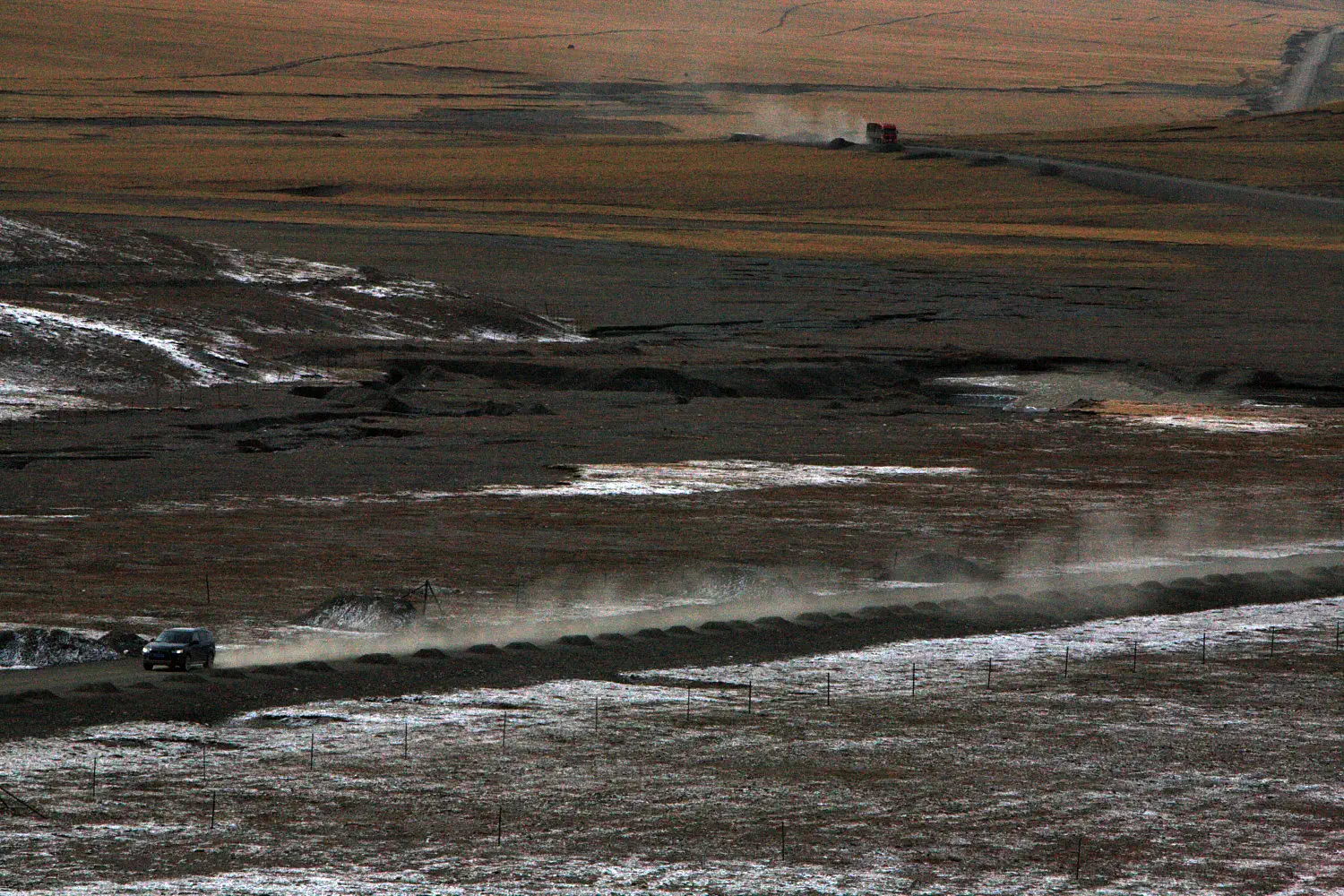
Hoh Xil (Kekexili) was inscribed on the UNESCO World Heritage List in 2017 as one of the largest and highest-altitude natural heritage properties in the world. The site covers 4.5 million hectares of the northern Qinghai-Tibet Plateau, lying at an average elevation above 4,600 m, with peaks reaching over 6,860 m. The name means 'beautiful girl' in Mongolian, a poetic reference to the vast open grasslands and wetlands that characterise much of the landscape.
The protected area was established largely to address the near-extinction of the Tibetan antelope (chiru), which had been hunted to the brink of collapse for its extraordinarily fine underfur (shahtoosh). By the early 1990s the population had fallen below 10,000 animals. Anti-poaching efforts led by the Hoh Xil Nature Reserve Administration — whose work inspired the 2004 film 'Kekexili: Mountain Patrol' — helped the population recover to around 70,000 animals by the time of UNESCO inscription. Hoh Xil serves as the primary calving ground for Tibetan antelope, which migrate hundreds of kilometres each year to give birth here.
Other notable wildlife includes Tibetan wild ass (kiang), Tibetan gazelle, snow leopard, brown bear and over 230 bird species including black-necked crane. The landscape is dominated by alpine steppe, glacier lakes and braided river systems fed by permanent ice fields.
Public access is deliberately restricted to protect wildlife migration routes. The Qinghai-Tibet Highway (G109) and the Qinghai-Tibet Railway cross the eastern edge of the protected area, and travellers on the Lhasa train can observe Hoh Xil's open grasslands from the windows. Designated wildlife observation stops along the highway allow visitors to spot chiru and kiang herds. Independent off-road access into the core area requires permits.
How to get there
Take the Qinghai-Tibet Railway from Xining to Lhasa; the train passes through the Hoh Xil section between Wudaoliang and Tuotuohe stations (approximately 14–17 hours from Xining). Alternatively, drive the Qinghai-Tibet Highway from Golmud. Domestic flights connect Xining and Yushu.
When to visit
June–July for Tibetan antelope calving migration. September–October for clear skies and the return migration. Winter is extremely cold and harsh.
Accessibility
The high altitude (above 4,500 m) poses significant risks for visitors without acclimatisation. Allow several days at 3,000 m before visiting. Medical oxygen is available on the train.
UNESCO inscription
“Qinghai Hoh Xil, located in the northeastern extremity of the Qinghai-Tibetan Plateau, is the largest and highest plateau in the world. This extensive area of alpine mountains and steppe systems is situated more than 4,500 m above sea level, where sub-zero average temperatures prevail all year-round. The site’s geographical and climatic conditions have nurtured a unique biodiversity. More than one third of the plant species, and all the herbivorous mammals are endemic to the plateau. The property secures the complete migratory route of the Tibetan antelope, one of the endangered large mammals that are endemic to the plateau.”
Other attractions in Xining
Other natural sites in China
- Badain Jaran Desert — Lakes and Dunes巴丹吉林沙漠—沙山湖泊群
UNESCO · UNESCO Natural World Heritage site in Inner Mongolia — the third largest desert in China, featuring some of the world's tallest stationary dunes and a unique network of freshwater and saline lakes sustained by a still-unexplained subterranean water system.
- China Danxia中国丹霞
UNESCO · UNESCO Natural World Heritage site — a serial property of six Danxia landscapes across six provinces, representing China's defining red-cliff-and-pillar sandstone landform type, including Danxia Mountain, Zhangye, Taining and Langshan.
- Crescent Lake & Mingsha Mountain月牙泉与鸣沙山
Spring-fed crescent-shaped lake at the foot of 250m sand dunes, 5 km south of Dunhuang. Camel rides, sand-sledding, sunset viewing.
- Daocheng Yading Nature Reserve稻城亚丁
A remote highland sanctuary in south-western Sichuan centred on three sacred snow peaks venerated by Tibetan Buddhism, often called the 'last Shangri-La'.
- Dianchi Lake Kunming滇池
The largest freshwater lake in Yunnan at 300 km², historically the scenic centrepiece of the Kunming basin and now being restored after decades of water-quality degradation.
- Erhai Lake洱海
250 km² freshwater lake east of Dali Old Town. 130 km cycling loop; Bai-minority lakeside villages on the eastern shore.
- Fanjingshan梵净山
UNESCO · UNESCO Natural World Heritage site in Guizhou — an isolated mountain island rising from subtropical forest, home to two critically endangered endemic species: the Guizhou snub-nosed monkey and the Fanjingshan fir.
- Hailuogou Glacier National Park海螺沟冰川
The lowest-altitude glacier accessible in Asia, flowing from the slopes of Mount Gongga down through a bamboo and subtropical forest valley to just 2,980 m above sea level.
Other UNESCO World Heritage sites in China
- Ancient Villages of Southern Anhui — Xidi and Hongcun皖南古村落—西递、宏村
UNESCO-listed pair of Ming-Qing Huizhou merchant villages in southern Anhui, renowned for whitewashed walls, inky horsehead gables and moon-shaped ponds.
- Archaeological Ruins of Liangzhu City良渚古城遗址
UNESCO-listed archaeological site in Hangzhou preserving the remains of a 5,000-year-old city with a sophisticated water-management system, jade ritual culture and social hierarchy — regarded as one of the earliest state-level societies in East Asia.
- Badain Jaran Desert — Lakes and Dunes巴丹吉林沙漠—沙山湖泊群
UNESCO Natural World Heritage site in Inner Mongolia — the third largest desert in China, featuring some of the world's tallest stationary dunes and a unique network of freshwater and saline lakes sustained by a still-unexplained subterranean water system.
- Capital Cities and Tombs of the Ancient Koguryo Kingdom高句丽王城、王陵及贵族墓葬
UNESCO-listed capital cities and royal tombs of the Koguryo Kingdom in Jian, Jilin — the Chinese portion of a transnational heritage property shared with North Korea, representing one of the most powerful states of ancient East Asia.
- China Danxia中国丹霞
UNESCO Natural World Heritage site — a serial property of six Danxia landscapes across six provinces, representing China's defining red-cliff-and-pillar sandstone landform type, including Danxia Mountain, Zhangye, Taining and Langshan.
- Classical Gardens of Suzhou (UNESCO)苏州古典园林
UNESCO-listed collection of private gardens in Suzhou — four inscribed in 1997 and five more added in 2000 — representing the pinnacle of Chinese garden design through the refined integration of architecture, water, rock and plant.
- Couple's Retreat Garden耦园
UNESCO-listed Suzhou garden organised symmetrically around a central residence. Less crowded than the four most-visited gardens.
- Drepung Monastery哲蚌寺
Once the largest monastery in the world (10,000+ monks). 8 km west of Lhasa. Active Gelugpa monastery; debating courtyard sessions in the afternoon.
Frequently asked questions
- When is Qinghai Hoh Xil open?
- Qinghai Hoh Xil opening hours: The protected area is not formally open to general visitors. Wildlife observation along the Qinghai-Tibet Highway is possible without permits.
- How long do you need at Qinghai Hoh Xil?
- Allow 2–4 hours for Qinghai Hoh Xil. Add buffer time if you plan to visit at peak season or include nearby sights in the same trip.
- When is the best time to visit Qinghai Hoh Xil?
- June–July for Tibetan antelope calving migration. September–October for clear skies and the return migration. Winter is extremely cold and harsh.
- How do you get to Qinghai Hoh Xil?
- Take the Qinghai-Tibet Railway from Xining to Lhasa; the train passes through the Hoh Xil section between Wudaoliang and Tuotuohe stations (approximately 14–17 hours from Xining). Alternatively, drive the Qinghai-Tibet Highway from Golmud. Domestic flights connect Xining and Yushu.
Spotted something out of date? Submit a correction.
Research
Cross-checked against primary sources
Verified
Address, hours, fees confirmed at the date shown
Updated
Re-verified periodically; corrections welcome